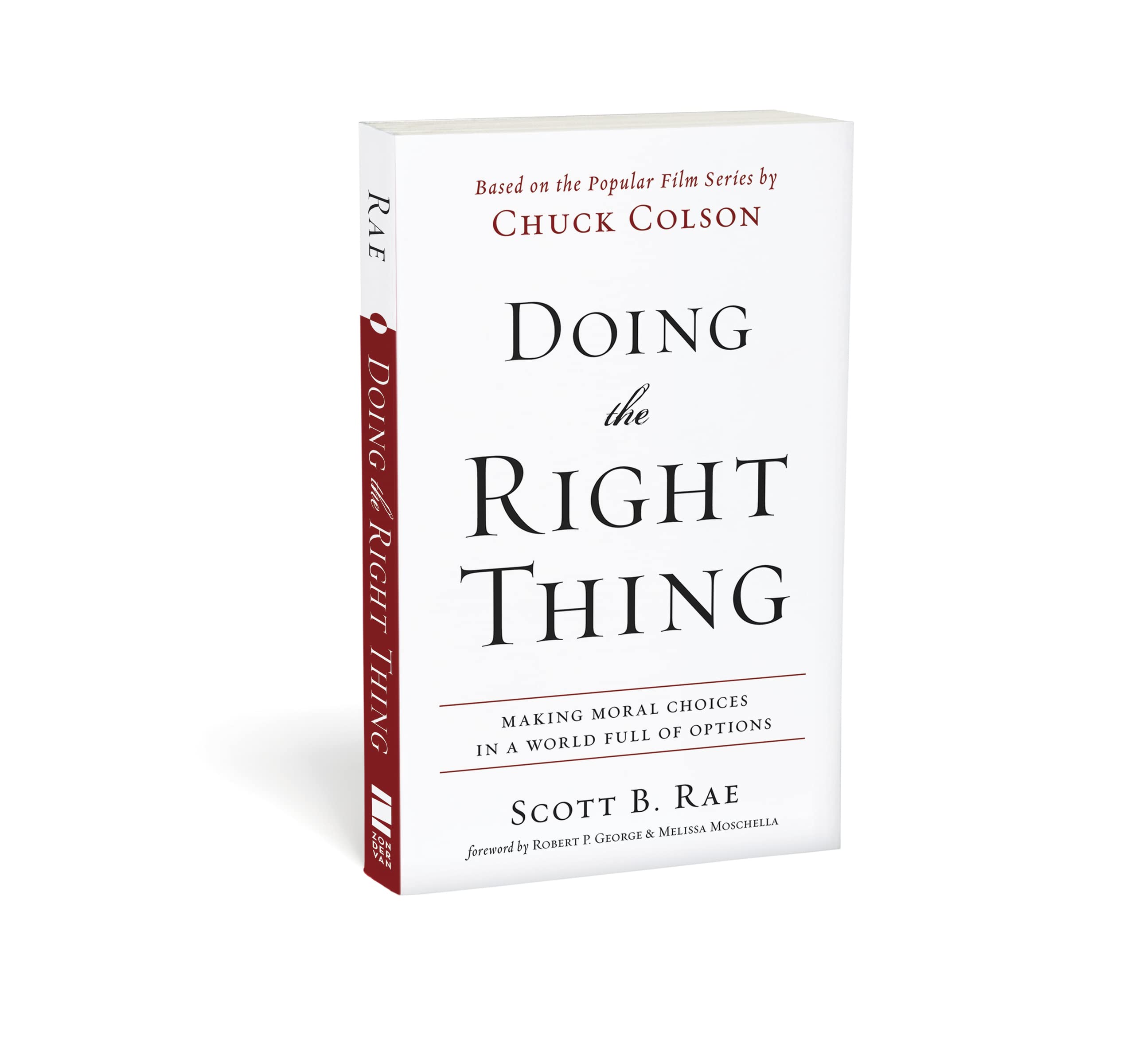



According to author Scott B. Rae in Doing the Right Thing , our culture is in an ethical mess because we’ve neglected moral training and education. This book proposes that there is such a thing as moral truth, that it can be known, and that it can be put into practice. Looking specifically at the areas of medicine, the marketplace, public life, education, and the family, Rae shows how foundational ethical principles can guide you in making moral day-to-day decisions. Informed by Scripture and calling for a renewed understanding of the importance of the Christian faith in moral training, Doing the Right Thing issues a call for cultivated virtue that can bring about both better lives and a better society. You will find yourself examining the ways in which ethical and character issues relate to your life. As a result, you will be better equipped to promote virtue in your own spheres of influence and the culture at large. Scott B. Rae (PhD, University of Southern California) is Professor of Christian Ethics at Talbot School of Theology, Biola University, La Mirada, California. Doing the Right Thing By Scott B. Rae ZONDERVAN Copyright © 2013 Chuck Colson Center for Christian Worldview All rights reserved. ISBN: 978-0-310-51399-5 Contents Foreword by Robert P. George and Melissa Moschella.........................9Introduction...............................................................131. We're in an Ethical Mess!...............................................192. Is There a Moral Law We Can Know?.......................................393. If We Know What's Right, Can We Do It?..................................614. What Does It Mean to Be Human?..........................................835. Ethics in the Marketplace...............................................1156. Ethics in Public Life...................................................149Conclusion.................................................................169Acknowledgments............................................................173Notes......................................................................175 CHAPTER 1 We're in anEthical Mess! One of evangelical Christian leader Chuck Colson's favoriteways to start a conversation about ethics was to ask someone,"What do you think caused the financial crisis?" He was, ofcourse, referring to the meltdown of the US financial system thatbegan in 2008 and caused a worldwide recession worse than anysince the Great Depression of the 1920s and '30s. The effects ofthis recession are still with us today in the lost jobs, foreclosedhomes, and large number of people who have either given up tryingto find work or are underemployed. What do you think caused the financial crisis? Think aboutthat question for a minute. How would you have answered Chuck?My guess is that whatever your answer, it will have something todo with ethics—specifically, the collapse of ethics. Let's look a bit more closely at the financial crisis and the variousplayers in it and what happened to each of them. The financialmeltdown centered on the home mortgage industry but infectedthe entire financial system, coming within a few days of bringingit to a collapse. The following chart will help us see what tookplace. Here, in a very simplified way, is how the collapse occurred.Borrowers took out home loans from lenders, or mortgage brokers,who usually sold the loans to the packagers, the banks—mainlythose on Wall Street—but also to what are called "government-sponsoredentities" (GSEs) that go by the abbreviations FannieMae and Freddie Mac. These organizations would buy most mortgageloans and package them into investments. The interest borrowerspaid on these mortgages was the income the investors wereinterested in. Remember, in the early 2000s when this started, thestock market was very volatile, having just come out of the dot.com crash and the economic problems created by the 9/11 terroristattacks. As a result, the Federal Reserve kept interest ratesvery low, and they are still very low today. That's why you can'tearn much more than 1 percent interest on most savings accountstoday. Investors were understandably nervous about the rollercoasterride the stock market had become, and investing in bondsthat had very low interest rates was not attractive, so they werelooking for other investments that were more secure than stocksbut paid more than most bonds. The banks were buying up mortgage loans that paid 5 to 7percent interest and repackaging them into investment securitiesthey sold to investors. The packagers would bundle togetherthousands of mortgages and sell them off in pieces to investorswho were eager to have high returns without the volatility ofthe stock market. The ratings agencies gave these investments(called "mortgage-backed securities," or MBS) their highest ratings(AAA), which assured investors they were safe. The mortgagebrokers, banks, and ratings agencies were paid handsome fees fortheir r