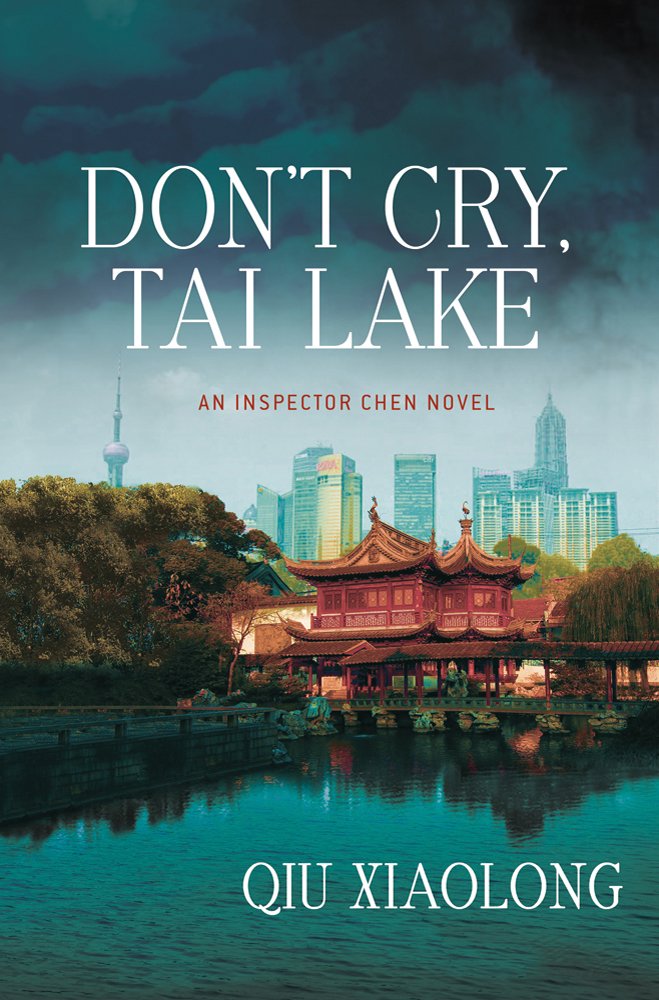



"Dark, gorgeous…feels authentically Chinese and it works like a charm." -- Washington Post Book World on A Case of Two Cities Chief Inspector Chen Cao of the Shanghai Police Department is offered a bit of luxury by friends and supporters within the Party - a week's vacation at a luxurious resort near Lake Tai, a week where he can relax, and recover, undisturbed by outside demands or disruptions. Unfortunately, the once beautiful Lake Tai, renowned for its clear waters, is now covered by fetid algae, its waters polluted by toxic runoff from local manufacturing plants. Then the director of one of the manufacturing plants responsible for the pollution is murdered and the leader of the local ecological group is the primary suspect of the local police. Now Inspector Chen must tread carefully if he is to uncover the truth behind the brutal murder and find a measure of justice for both the victim and the accused. *Starred Review* This environmental mystery is also an example of hard-hitting investigative reporting. Qiu, a poet, novelist, and former native of Shanghai, presents a compelling portrait of the far-ranging effects of chemical dumping into bodies of water, which officials in China have ignored for decades, by focusing on one lake and many tragedies. Tai Lake, an actual lake in the Yangtze Delta Plain, famous for its succulent fish and clear waters, is now covered by toxic, blue-green algae. Qiu, like Upton Sinclair in The Jungle, brings this abuse to life by framing it in a novel. The mystery format is especially conducive to giving readers a growing sense of something very wrong. Chief Inspector Chen Cao, of the Special Case Squad in the Shanghai Police Department, is given a reward. A party dignitary who can’t take his scheduled vacation at the resort bordering Tai Lake insists that Chen go in his place. Chen is disturbed by the fetid condition of the lake and concerned by what a young woman, an environmental protection engineer he meets at a local fish stand, tells him about the effects of toxic dumping. Further, he is within miles of a director of one of the lakeside factories when the director is murdered. Chen’s friend, the environmental protection engineer, is the prime suspect because of her criticism of the dumping, and Chen must solve the mystery without incurring wrath from party higher-ups. Despite the grim subject matter, the novel is filled with beautiful descriptions and poetry (Chen is poet as well as detective) that reinforce the beauty that is being polluted and lost. Magnificent. --Connie Fletcher Thought-provoking, poetic and suspenseful. ( The Wall Street Journal ) A meticulously crafted whodunit. ( The Japan Times ) Enjoyable! ( Publishers Weekly ) This environmental mystery is also an example of hard-hitting investigative reporting…. Despite the grim subject matter, the novel is filled with beautiful descriptions and poetry (Chen is poet as well as detective) that reinforce the beauty that is being polluted and lost. Magnificent. ( Booklist (starred) ) Peppered with poetry and told with clarity and elegance. ( Kirkus Reviews ) QIU XIAOLONG is a poet and author of several previous novels featuring Inspector Chen as well as Years of Red Dust , a Publishers Weekly Best Books of 2010. Born and raised in Shanghai, Qiu lives with his family in St. Louis, Missouri. Don't Cry, Tai Lake An Inspector Chen Novel By Qiu Xiaolong Minotaur Books Copyright © 2012 Qiu Xiaolong All right reserved. ISBN: 9780312550646 ONE CHIEF INSPECTOR CHEN CAO of the Shanghai Police Bureau found himself standing in front of the gate to the Wuxi Cadre Recreation Center. His vacation in the city of Wuxi was totally unexpected. Earlier that Sunday morning, Chen was in Zhenjiang, attending an intensive political seminar for emerging Party officials training for “new responsibilities,” when he got a phone call from Comrade Secretary Zhao, the former second secretary of the Central Party Discipline Committee. Though retired, Zhao remained one of the most influential figures in Beijing. Zhao was too busy to take a vacation arranged for him at the center in Wuxi, so he offered it to Chen instead. Chen was in no position to decline such a well-meant offer, coming from the Forbidden City. So he immediately left the seminar at the Zhenjiang Party School, took a long-distance bus to Wuxi station, and then a taxi to the center. He had heard a lot about the center, which was located in a scenic area of the city. It was something like a combination of a resort and a sanatorium, known for its special service to high-ranking cadres. There were strict regulations about the Party cadre rank required for admission, and Chen was nowhere close to that rank. Chen knew an exception was being made because of Zhao. Qiao Liangxing, the director of the center, was not around when Chen arrived. A front desk receptionist greeted Chen and led him to a white European-style villa, with tall marble columns in