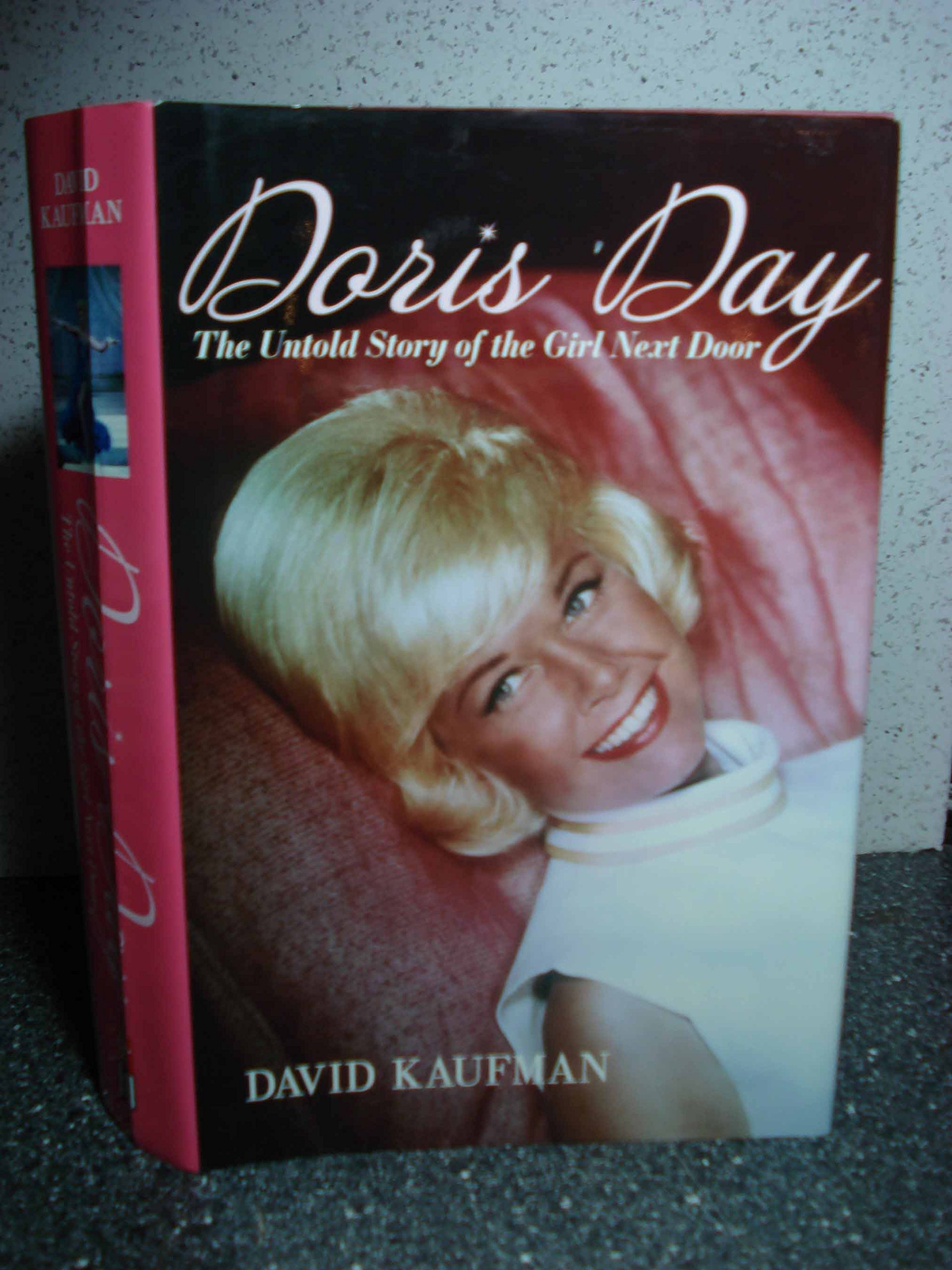



David Kaufman has now written the long-awaited, definitive biography of Doris Day. By telling Days incredible, previously untold story, Kaufman takes the reader to the epicenter of American popular culture a roller-coaster saga, from the 1940s to the 1980s. While Day symbolized virtuous America to the rest of the worldespecially in her heyday, the 1950s and early 1960sboth she and that era are still perceived as being far more innocent and carefree than they really were. Indeed, what makes Days story so richly fascinating is the fact that she was in many ways the opposite of her image as the girl next door. She was also a real-life Cinderella who regretted having gone to the ball and who found a series of princes who proved far less than charming.Thanks to Kaufmans dogged diligence in tracking down countless colleagues and intimates, he gives us: Scintillating tales of fame, beauty, money, tragedy, sexual ambiguity, and sexual conquests. Anecdotes about a vast array of major subsidiary players in Days life, including Ronald Reagan, Frank Sinatra, Alfred Hitchcock, Jimmy Stewart, Cary Grant, Charles Manson, Mickey Mantle, Candice Bergen, and Rock Hudson. Kaufman reveals Days demons while emphasizing the extraordinary credit she deserves as an artist. In the tradition of great biographies, Kaufmans detailed work not only reveals the surprising story of one of Americas most beloved icons, but also compels us to rush back and see her best filmsincluding The Man Who Knew Too Much, Pillow Talk, Love Me or Leave Me and to listen to her unforgettable songsSentimental Journey, Secret Love, Que Sera, Sera. Though she made more than 550 recordings and starred in 39 moviesnot to mention her own TV show for five yearsthe epic story of Doris Days life has never been told . . . until now. After reading Doris Day’s own memoir, Doris Day: Her Own Story (1975), Kaufman decided to research and write his own biography, seeking to tell the definitive tale of the box-office queen. Day enjoyed a brilliant career as queen of the all-American, wholesome, girl-next door types, but, as Kaufman reveals, her personal life was much more dramatic. The actress started life in Cincinnati, the product of an overly ambitious stage mother and a withdrawn, taciturn father who eventually left the family. Conducting extensive interviews with many of Day’s family members, friends, and peers in the acting world, Kaufman goes beyond the sanitized version in the star’s autobiography. The result is fascinating, as Kaufman weaves anecdotes about famous players involved in Day’s life, including Ronald Reagan, Frank Sinatra, Jimmy Stewart, Rock Hudson, and many others. Kaufman also explores Day’s relationships with her four husbands, including Martin Melcher, whose business dealings left her nearly bankrupt, and her tireless activism on behalf of animal welfare. Readers, especially fans of the star, will thoroughly enjoy this meaty, well-written, entertaining look at the surprisingly tumultuous life of an American icon. --Kathleen Hughes The New York Times praised David Kaufmans first book, Ridiculous: The Theatrical Life and Times of Charles Ludlam, as informed and passionate. Kaufman, a long-time theater critic and contributor to The New York Times, The Nation, and Vanity Fair, lives in New Y ork City. Reviewed by Gerald Bartell David Kaufman comes right to the point at the start of his life of Doris Day: "Day has been largely and unfairly neglected by cultural arbiters." Day's career is not something to neglect lightly. After paying her dues as a big band singer, the former Doris Kappelhoff scored big in a series of pleasant but innocuous Warner Bros. musicals: "Romance on the High Seas" (1948), "My Dream is Yours" (1949), "It's a Great Feeling" (1949). Audiences warmed to this fresh-faced, smiling girl who sang in clear, soothing tones. With more complex roles and the push of Martin Melcher, her aggressive husband-manager, Day climbed higher. She played masochistic real-life singer Ruth Etting in "Love Me or Leave Me " (1955), trembled as the mother of a kidnapped son in "The Man Who Knew Too Much" (1956), and wowed 'em singing and dancing in "The Pajama Game" (1957). Then came a series of glossy comedies, including "Teacher's Pet" (1958), "Pillow Talk" (1959) and "Lover Come Back" (1962). For 10 years, Day reigned as Hollywood's number-one female box-office attraction. But when Mike Nichols suggested that Day bare body and soul as Mrs. Robinson in "The Graduate" (1967), she hung a Do Not Disturb sign on the door. She made trite films like "Where Were You When the Lights Went Out?" (1968) and "With Six You Get Eggroll" (1968). A tepid TV series and a talk show marked her career glide-path. Kaufman, also the author of a biography of actor-playwright Charles Ludlum, offers a tour of Day's life, but it's not always a guided tour. God may dwell in details, but keen writers sort, omit and evaluate them. Kaufman aval