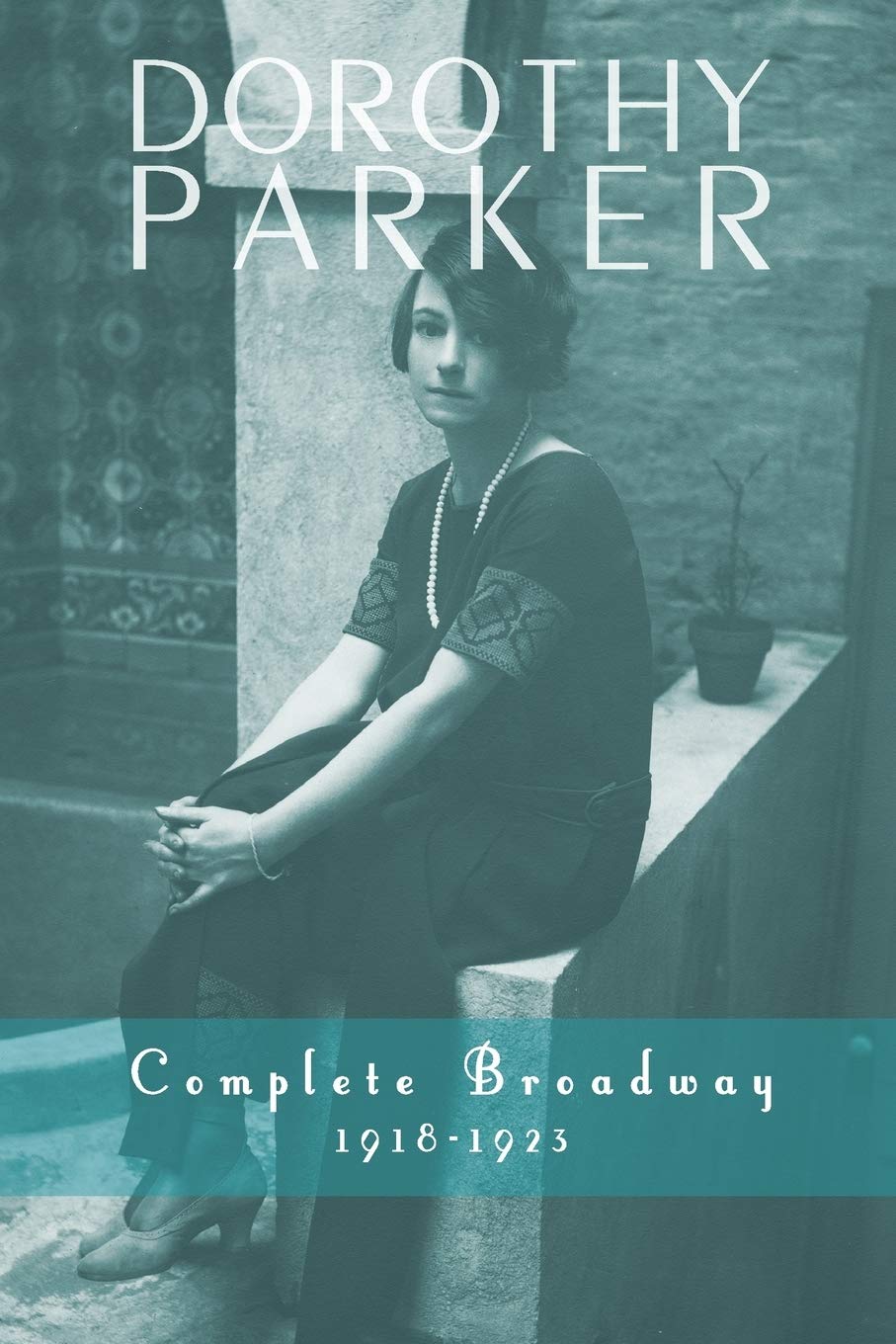



Dorothy Parker holds a place in history as one of New York's most beloved writers. Now, for the first time in nearly a century, the public is invited to enjoy Mrs. Parker's sharp wit and biting commentary on the Jazz Age hits and flops in this first-ever published collection of her groundbreaking Broadway reviews. Starting when she was twenty-four at Vanity Fair as New York's only female theatre critic, Mrs. Parker reviewed some of the biggest names of the era: the Barrymores, George M. Cohan, W.C. Fields, Helen Hayes, Al Jolson, Eugene O'Neil, Will Rogers, and the Ziegfeld Follies. Her words of praise-and contempt-for the dramas, comedies, musicals, and revues are just as fresh and funny today as they were in the age of speakeasies and bathtub gin. Annotated with a notes section by Kevin C. Fitzpatrick, president of the Dorothy Parker Society, the volume shares Parker's outspoken opinions of a great era of live theatre in America, from a time before radio, talking pictures, and television decimated attendance. Dorothy Parker: Complete Broadway, 1918-1923 provides a fascinating glimpse of Broadway in its Golden Era and literary life in New York through the eyes of a renowned theatre critic. Dorothy Parker Complete Broadway 1918-1923 By Dorothy Parker, Kevin C. Fitzpatrick iUniverse LLC Copyright © 2014 Dorothy Parker All rights reserved. ISBN: 978-1-4917-2265-7 Contents Acknowledgements, ix, A Note on Notes (Or, Who Was Laddie Boy?), xi, Introduction: In the Aisle Seat with Dorothy Parker, xiii, Chapter 1: 1918, 1, Chapter 2: 1919, 50, Chapter 3: 1920, 115, Chapter 4: 1921, 178, Chapter 5: 1922, 256, Chapter 6: 1923, 335, A Note on the Text, 383, Notes, 385, Index, 463, For Further Reading, 481, About the Author, 483, About the Editor, 483, CHAPTER 1 1918 A Succession of Musical Comedies: The Innocent Diversions of a Tired Business Woman Vanity Fair, April 1918 Well, Wodehouse and Bolton and Kern have done it again. Every time these three are gathered together, the Princess Theatre is sold out for months in advance. This thing of writing successes is just getting to be a perfect bore with them. They get up in the morning, look out of the window, and remark wearily, stifling a yawn, "Oh, Lord—nothing to do outdoors on a day like this. I suppose we might as well put over another Oh, Boy! " From all present indications, Oh, Lady! Lady!! —they do love to work off their superfluous punctuation on their titles—is going to run for the duration of the war, anyway. You can get a seat at the Princess, somewhere along around the middle of August, for just about the price of one on the Stock Exchange. Only moving picture artists and food profiteers will be able to attend for the first six months; After that, owners of ammunition plants may, by trading in their Thrift Stamps, may be able to get a couple of standing rooms. Of course, if you want to be mean about it, you can talk about the capacity of the theatre, which is nearly that of a good-sized grain elevator. But I still insist that Tyson would be exacting staggering rentals for seats for Oh, Lady! Lady!! if it were playing in Madison Square Garden. If you ask me, I will look you fearlessly in the eye and tell you, in low, throbbing tones, that it has it all over any other musical comedy in town. I was completely sold on it. Not even the presence in the first-night audience of Mr. William Randolph Hearst, wearing an American flag on his conventional black lapel, could spoil my evening. But then Wodehouse and Bolton and Kern are my favorite indoor sport, anyway. I like the way they go about a musical comedy. I love the soothing quiet—the absence of revolver shots, and jazz orchestration, and "scenic" effects, and patriotic songs with the members of the chorus draped in the flags of the Allies, and jokes about matrimony and Camembert cheese. I like the way the action slides casually into the songs without the usual "Just think, Harry is coming home again! I wonder if he'll remember that little song we used to sing together? It went something like this." I like the deft rhyming of the song that is always sung in the last act, by two comedians and one comedienne. And oh, how do I like Jerome Kern's music—those nice, soft, polite little tunes that always make me wish I'd been a better girl. And all these things are even more so in Oh, Lady! Lady!! that they were in Oh, Boy! (At least one reference to Oh, Boy! must be made in any mention of any other Wodehouse, Bolton, and Kern musical comedy. Now I've done mine—twice.) The cast of Oh, Lady! Lady!! certainly does the right thing by it. Carl Randall, who dances like a clothed member of the Ballet Russe, is the Boy Wonder of the occasion. He does practically everything, except double in brass, and he has that worried look which is the greatest asset of a comedian. He is the only musical comedy hero in captivity who can dance his way down the stage, while the lined-