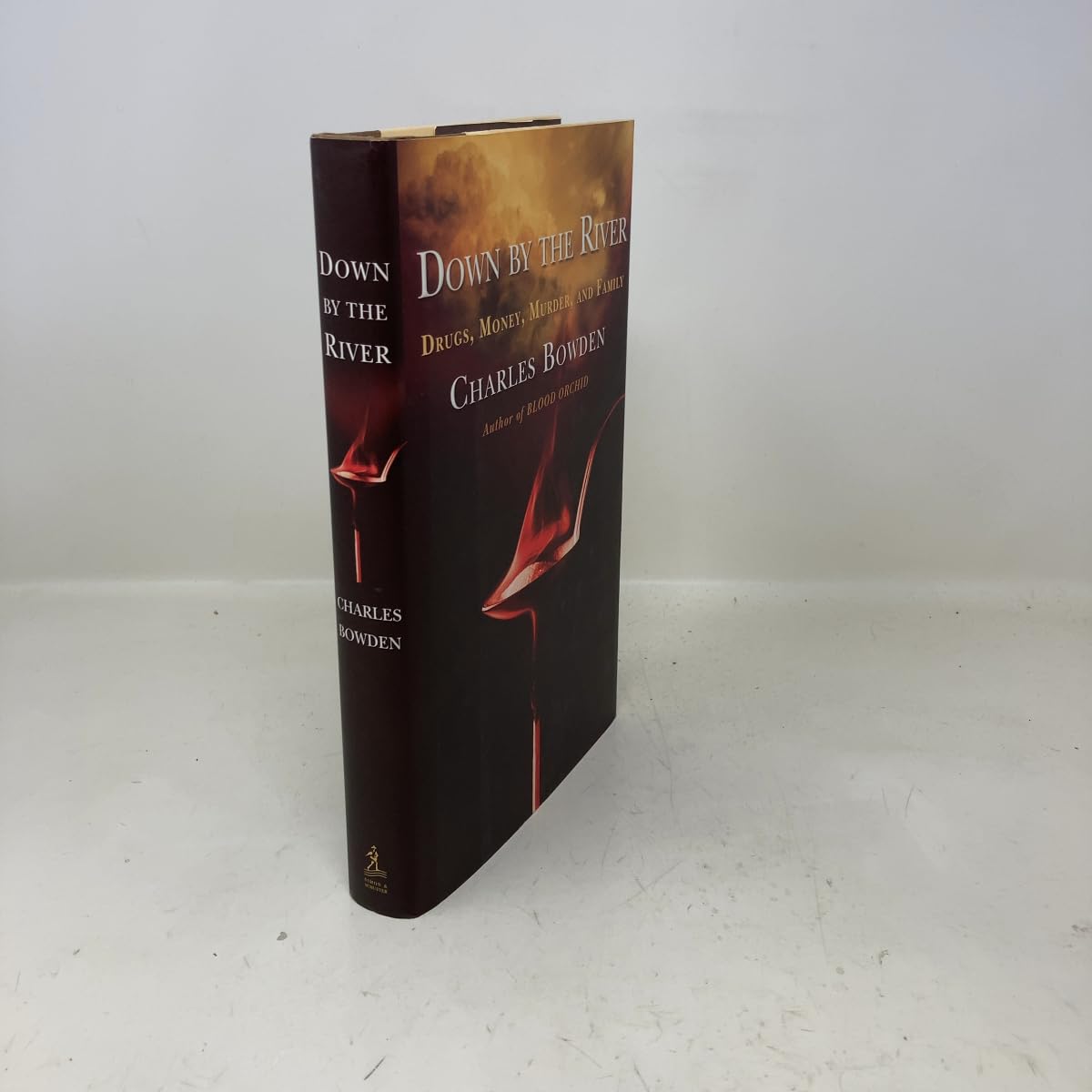



Offers an illuminating tour of the drug war, revealing the dark, troubling recesses of drug lords, high-level corruption, and ultra-violence that respects no borders. Journalist Bowden uses a 1995 drug-related murder case (the reputed hit man was 13 years old) to explicate the drug war in this country and beyond. Copyright 2002 Reed Business Information, Inc. This brutal and brilliantly reported account of life in the drug trade on the Mexican-American border turns the story of one El Paso family into an excavation of the relationship between commerce and corruption. For Bowden, Mexico is a place where narcotics money can buy anything, including access to the highest reaches of government, and where the flow of drugs is one of the only things keeping the economy afloat, while America—with its insatiable demand and its ready cash—is the engine that keeps the system running. Bowden has never met a conspiracy theory he didn't like, and his overwrought prose has a paranoid air, substituting loosely connected assertions for coherent argument. But his characters—including a D.E.A. agent who has gone off the rails and a drug lord who suddenly finds himself dispensable—are remarkably vivid, and he captures the way greed, ethnicity, and an old-school emphasis on honor interact to create a world in which violence is the only constant. Copyright © 2005 The New Yorker *Starred Review* Acclaimed author and journalist Bowden offers a gripping, very disturbing look at the drug trade and international relations between Mexico and the U.S., seen through the tragic killing of the younger brother of a DEA agent, the subsequent investigation, and the nagging lack of resolution that is tearing the family apart. The Jordans are certain that the killing of Bruno in a reported carjacking is actually tied to his older brother's work with the DEA. Bowden details how the evasive and shadowy figures who head drug trafficking between Mexico and the U.S. operate with the full approval and active participation of government officials, both high and low, on both sides of the border, resulting in an astonishing level of corruption. Bowden provides a glimpse of these powerful interests, which place international commerce ahead of any efforts at enforcing U.S. drug laws. He also shows how those laws and the investigative forces meant to enforce them are more political imagery than reality. Readers are unlikely to forget the gallery of characters, law enforcers and law-breakers, who proceed with swagger and grit in the endless, often pointless, war on drugs. Vanessa Bush Copyright © American Library Association. All rights reserved William Kittredge Los Angeles Times Bowden says what he means, hang the consequences. He is becoming one of our most important voices in the so-called New West. -- Review Journalist Charles Bowden has written eleven previous nonfiction books, including Blood Orchid, Trust Me, Desierto, The Sonoran Desert, Frog Mountain Blues, and Killing the Hidden Waters. Winner of the 1996 Lannan Literary Award for Nonfiction, he lives in Tucson, Arizona. another country We are in the safe house. The sun bakes at ninety and the humidity keeps stride with the sun. Texas wobbles under the blows of summer, the storms threaten, the whiff of tornadoes gives a tang to the changing skies. The street is tree-clogged, narrow, and lined with stretch versions of ranch-style houses. Plano, hugging the north flank of Dallas, is one of the richest suburbs in the United States. This section of that sanctuary houses managers, the lower end of the Plano pecking order. Weekends reverberate with lawn mowers, weekdays find the street abandoned as couples work to pay for their homes. The woman scrubs diligently in the kitchen. Not compulsively, she notes, just rigorously. She is short and friendly. She was born in Mexico and raised in the United States and most of her life has revolved around the Drug Enforcement Administration, DEA. This is not her home, she is just helping out. This could never be her home. Everything about the house is wrong. It reeks of a failed marriage, of depression. And of Anglos. This last failing is never mentioned, it is too obvious for mention. Anglos mean a cold world, a soulless world, a place where there may be money but something essential is always missing. That is why she is here. He's gone now, doing errands, but she is here to fill this missing thing, unnamed, unmentioned, but obvious. Too obvious to discuss. She has been tied to him most of his life, through his single time, the second marriage, and now with the new divorce she is, well, back in the picture. She is bright and works hard. And she prides herself on being practical, on not succumbing to the fatal temptations of the imagination, and this house is not practical nor is this place. Nor is this thing about the death. "They have to let Bruno go, leave him in peace," she offers. "But that's hard when he's your own brother," I reply