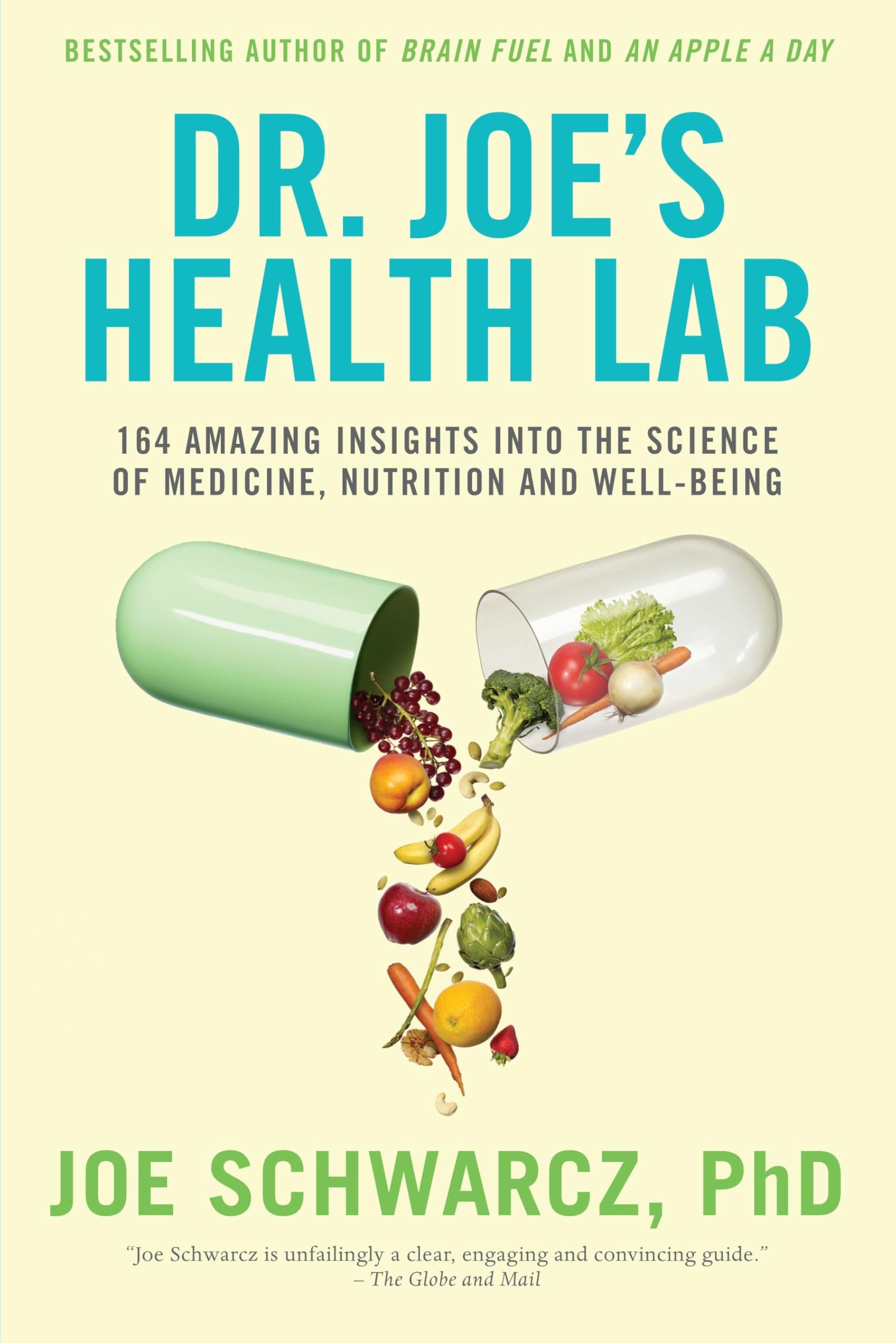
Dr. Joe's Health Lab: 164 Amazing Insights into the Science of Medicine, Nutrition and Well-being
$19.01
by Joe Schwarcz



The bestselling author of Brain Fuel and An Apple a Day reveals the science of being well, eating well, and staying well clear of "alternative therapy" charlatans. Health Lab 's theme is the most popular of Dr Joe's specialities. There are riveting and sometimes hair-raising vignettes from the history of medicine and food production. There are reports aimed at equipping readers to recognize and beware muddled thinking, misunderstandings and deceptions in media stories about health and nutrition and in the claims made by the peddlars of "alternative" therapies. There is a wealth of information on the science of inner well-being and outer beauty. The secret to good health lies in understanding the chemistry involved. Ask Dr. Joe. DR. JOE SCHWARCZ is director of McGill University's Office of Science and Society, where he teaches courses on nutrition and the applications of chemistry to everyday life. Among his many honours are the Royal Society of Canada's McNeil Award, and the American Chemistry Society's renowned Grady-Stack Award, of which he is the only non-American recipient. Dr. Schwarcz is the host of a weekly radio show on CFRB in Toronto and CJAD in Montreal, and writes a weekly column for the Montreal Gazette . Why would you want to consume beta-glucan? The traditional answer is to lower your cholesterol. But there is accumulating evidence that this form of soluble fibre—found, for example, in oat bran—can perk up our immune system. Fibre is the indigestible part of the oat grain, meaning that it isn’t broken down into components that can be absorbed into the bloodstream. So if it isn’t absorbed, how can it have an effect on blood cholesterol? As betaglucan travels through the digestive system, it binds bile acids—compounds synthesized in the liver and then secreted into the small intestine to aid in the processing of dietary fats. These bile acids are usually reabsorbed and recycled. But when they are bound by betaglucan, they end up being eliminated from the body and therefore have to be replaced. This means that the liver has to make fresh bile acids, and since the raw material for this synthesis is cholesterol, the result is that blood cholesterol levels drop. There’s a second mechanism that operates as well. Bacteria that live in the large colon recognize beta-glucan as a tasty morsel. As they dine on it, they excrete compounds called short chain fatty acids that are absorbed into the bloodstream. Short chain fatty acids can impair cholesterol synthesis, so the liver has to use existing cholesterol to make bile acids. The problem, though, is that it takes a fair bit, about five to six grams, to trigger a significant lowering of cholesterol levels. That translates to a lot of oat bran—about three servings, quite a challenge. But beta-glucan is also available as a dietary supplement, and interestingly may serve a purpose beyond just lowering cholesterol, even at a reduced intake. Over the last thirty or so years, beta-glucan has received a lot of attention from researchers because of its purported ability to activate the immune system. Certain immune cells recognize invaders such as yeasts, fungi and bacteria by the polysaccharides they harbour on their surface. When the immune cells sense these compounds, they are activated to attack the intruders. Beta-glucan is a polysaccharide composed of glucose units linked together in a chain similar to that found in microbes. When immune cells encounter beta-glucan in the bloodstream, they are tricked into greater activity, mistaking beta-glucan for microbial polysaccharides. These activated cells then go and seek out invaders that they otherwise may not have found. Macrophages, for example, are white blood cells that destroy invaders by engulfing them and pummelling them with chemicals that break them down. But first they have to be activated. Betaglucan can do this by binding to their surface and stimulating the production of free radicals. These in turn signal the immune cells to engulf and destroy intruders such as bacteria, viruses and even tumour cells. Studies have shown that beta-glucan can reduce postoperative infections after high-risk surgery, and studies in mice have shown that animals treated with beta-glucan have a higher survival rate when injected with aggressive tumour cells. In Japan, a beta-glucan preparation known as Lentinan, isolated from the shiitake mushroom, is used as an intravenous adjuvant to chemotherapy. Shiitake mushrooms themselves have a long folkloric history of use against infections of all types, including the common cold. Experiments have shown that shiitake promotes the production of interleukin, a hormone that stimulates the immune system to produce B-cells that create antibodies as well as helper T-cells that coordinate the immune response. So far, though, evidence of any sort of practical immune boost by taking oral supplements of beta-glucan is pretty thin, and the European Food Safety Authority