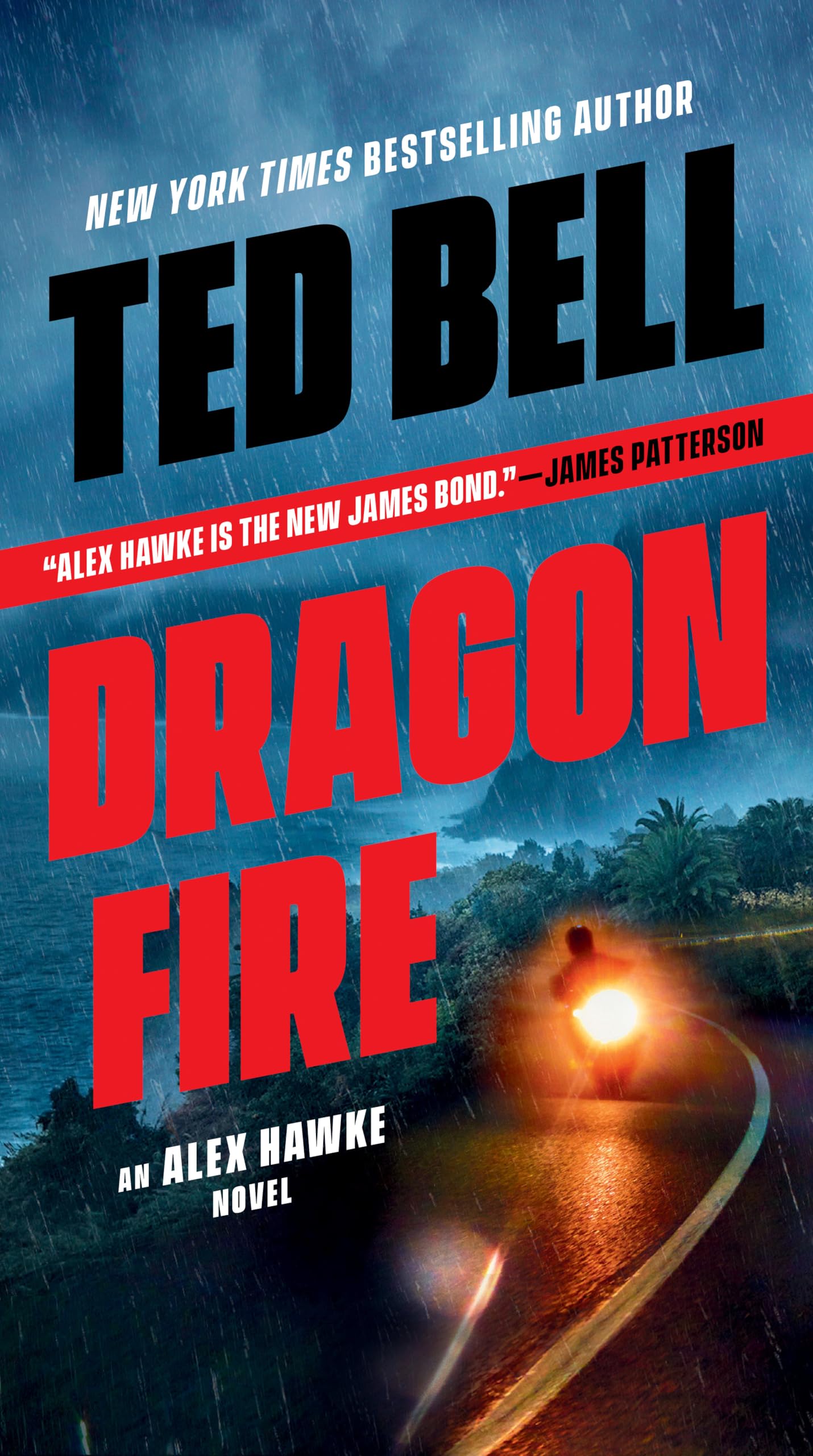



Alex Hawke, British lord and gentleman spy, is looking for the Queen's missing grandson, whose disappearance may be the culmination of a century-old plot in this breathtaking new adventure from New York Times bestselling novelist Ted Bell . December 8, 1941, Washington, D.C. The new Chinese ambassador to the United States, Tiger Tang, meets with President Roosevelt one day after the attack on Pearl Harbor. For the next four years, China and the U.S. will be wartime allies, but the charming, sophisticated ambassador may be playing his own treacherous game. Today, the Bahamas Alex Hawke is recovering from serious injuries incurred during a battle with a malevolent enemy. His recuperation is interrupted by a desperate call from the Queen. Her favorite grandson has disappeared in the Bahamas. Lord Hawke is the only man she trusts with a mission this sensitive. All she knows is that the young prince was last seen at the exclusive resort the Dragonfire Club, owned by the nefarious Tang brothers, grandsons of Ambassador Tiger Tang. Ted Bell is the former chairman of the board and creative director of Young & Rubicam, one of the world's largest advertising agencies. He is the New York Times bestselling author of the Alex Hawke series as well as the YA adventure novels Nick of Time and The Time Pirate . He has recently been writer-in-residence at Cambridge University (UK) and visiting scholar at the Department of Politics and International Relations. Chapter 1 Washington, D.C. December 6, 1941 A very good morning to you, gentlemen!" President Franklin Delano Roosevelt said, appearing in the White House cabinet room all hale and hearty. The president then lit a cigarette and fixed it into a tortoiseshell holder and placed it in his mouth at the jaunty angle that the press liked so much. The act served as a signal for everyone to light up as well. Missy LeHand, the president's secretary and the woman closest to him on the White House staff, handed round the coffee. Then Roosevelt got right down to cases. Winston Churchill wanted a face-to-face meeting with him as soon as humanly possible. Harry Hopkins had passed on the message and urged FDR to agree to such a meeting. The president sensed a ripple of unease among the cabinet members, including a deep frown on the face of Secretary of State, Cordell Hull. Old Hopkins had gotten his way again, jamming up the cabinet members' diplomatic channels with his own private agenda. FDR was well aware that his cabinet resented Hopkins, but then so did all the other politicians in town. He also knew that every man in front of him, on this cold and sunny Saturday morning, was engaged in some sort of feud or other with their own deputies or rivals. He could step in at any time and replace any one of them. And they damn well knew it! So they could listen to what Harry was reporting back and advise their president on what he should do. He cleared his throat loudly and said, "Well, gentlemen, what do you think?" One by one, they spoke in turn. Cordell Hull's cautious view was reinforced by an even more negative reaction from Ickes. He said, "What would America gain from such a public meeting, one which would be feted by the British press and interpreted as just one more step down the road to war? Lindbergh and all the other isolationists would absolutely crucify this administration. I'll tell you that much, Mr. President!" Even Knox, who was the most pro-British, came out against such a meeting. He said, "The merest suggestion that the president was going to such a meeting would only strengthen the isolationist case and swing public opinion further behind them." When wrapping up a discussion, Roosevelt always made sure that everyone had had their say. He listened carefully to the balance of the men in the room. "Well, does anyone have anything else to add?" "I certainly do, Mr. President," Cordell Hull said. "I wonder, is that really all that Harry Hopkins had to say?" "Yes, he said a good deal. Now, anyone got anything else?" There was silence. "Good," said the president. "That's decided, then." Hull fired back, "What's been decided?" "I've decided that I'm going to think about it," said Roosevelt, looking down his nose at the man. At 9:30 p.m., on that December 6, a certain Lieutenant Lester Schulz, paunchy and slightly out of breath, arrived at the White House with a locked pouch containing a top secret document. The leather pouch contained thirteen parts of the fourteen-part Japanese reply to the hard-line U.S. proposal presented to Japan in November. The messages had been sent from Tokyo to the Japanese Embassy in Washington, but they had been intercepted by American intelligence. The United States had cracked the Japanese diplomatic code, code-named ÒPurpleÓ in August 1940. American officials had been reading top secret Japanese messages before her diplomats received them, meaning that President Roosevelt had the advantage of