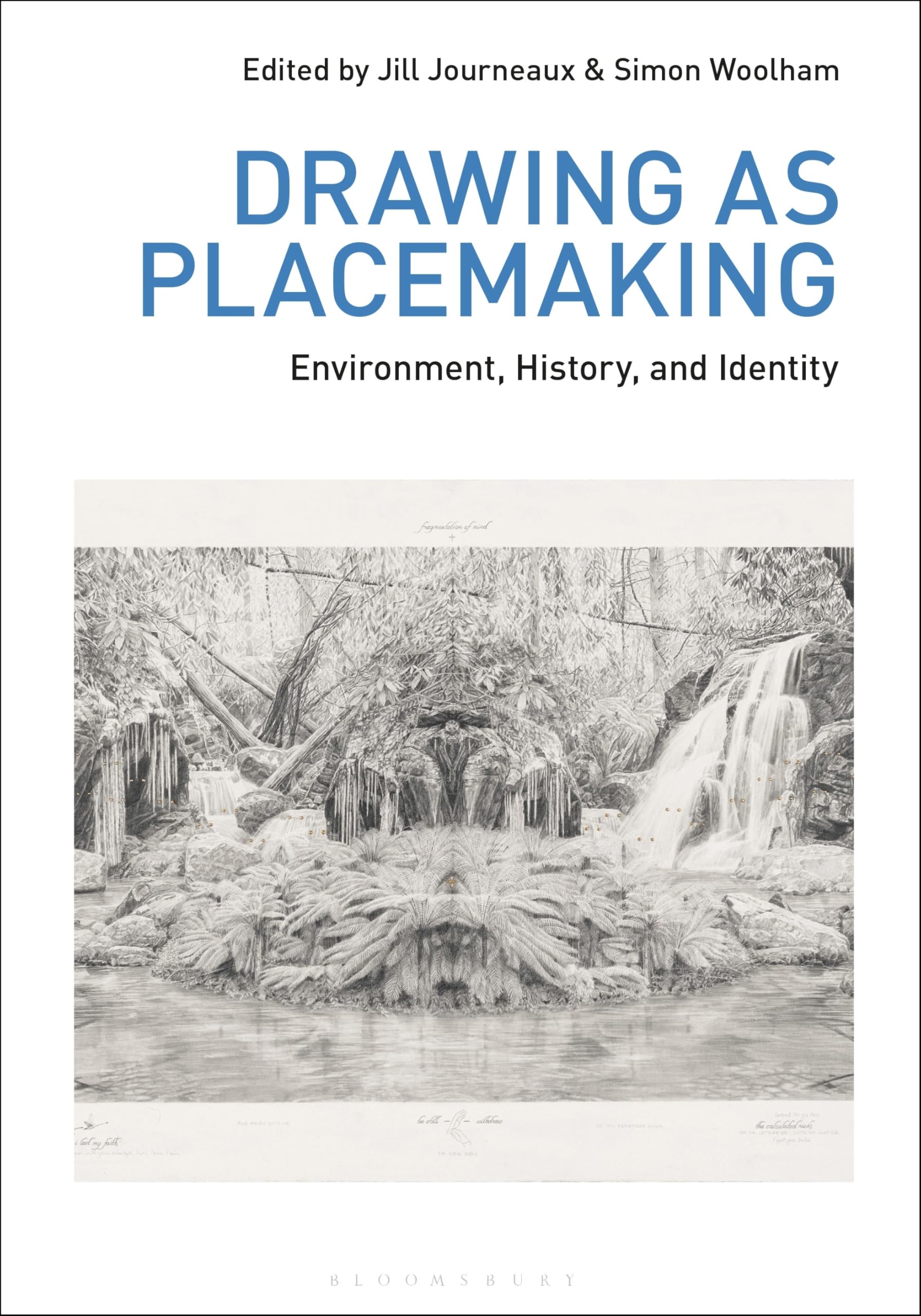
Drawing as Placemaking: Environment, History and Identity (Drawing In)
$115.00
by Jill Journeaux



Using a combination of articles and interviews, the book introduces nine contemporary drawing projects that embrace an expansive definition of the discipline, and use their drawing practice to consider how place is understood and made. Drawing as Placemaking focuses on how drawings and drawing processes can examine and articulate our relationships to placemaking, to our concepts of home, to historical and memorial sites, to our personal histories, and to imagined and actual places. The contributing artists (from the USA, Canada, Portugal, Germany, Turkey, Japan, New Zealand, Australia and the UK) use expanded drawing approaches to present different perspectives on how drawings are made, and how they can be used to describe, analyse, reimagine, transform and to make new actual, historical, and psychological places. The artist-authored chapters and the conversations with artists are interwoven to facilitate broader conversations about our human interactions with place, through all our senses; what we can see, touch, feel and hear, alongside what we know, theorise or imagine. The re-evaluation of placemaking from a range of cultural perspectives highlights new stories whilst reconsidering older ones. The book reveals new and contemporary insights into the long historical connection between drawing and placemaking and contributes to new debates around placemaking. It offers a deeper understanding of how we use drawing to better define ourselves and our place in the world. “Drawing is an activity of marking oneself in the world, placing the drawer in space and time. Through scholarly essays, artist examples and interviews with artists, this book presents a rich variety of different perspectives on the topic of drawing and placemaking, asking how can drawing examine relationships to inhabited environments and make visible imaginative realms of the mind” ― Sarah Casey, Professor in Fine Arts and its Histories, Lancaster University, UK Jill Journeaux is an artist and researcher who was Professor of Fine Art at Coventry University, UK from 2004 until 2024. She is Director of Drawing Conversations and has published on expanded drawing practices, including Collective and Collaborative Drawing in Contemporary Practice (2017) and Body, Space and Place in Collective and Collaborative Drawing (2020). She co-edited The Artist at Home (Bloomsbury, 2024). Simon Woolham is an artist, curator at PAPER Gallery in Manchester and lecturer in Contemporary Art at the University of Huddersfield, UK. His practice-led research PhD explored drawing/walking and narrative in physical, virtual, and psychological space, expanding on artists' residency of the mind. He has exhibited widely, including residencies and exhibitions at The Lowry in Salford and Chapter Gallery in Cardiff, Baltic - Centre for Contemporary Art in Gateshead. Marsha Meskimmon is Professor of Modern and Contemporary Art History & Theory at Loughborough University, UK.