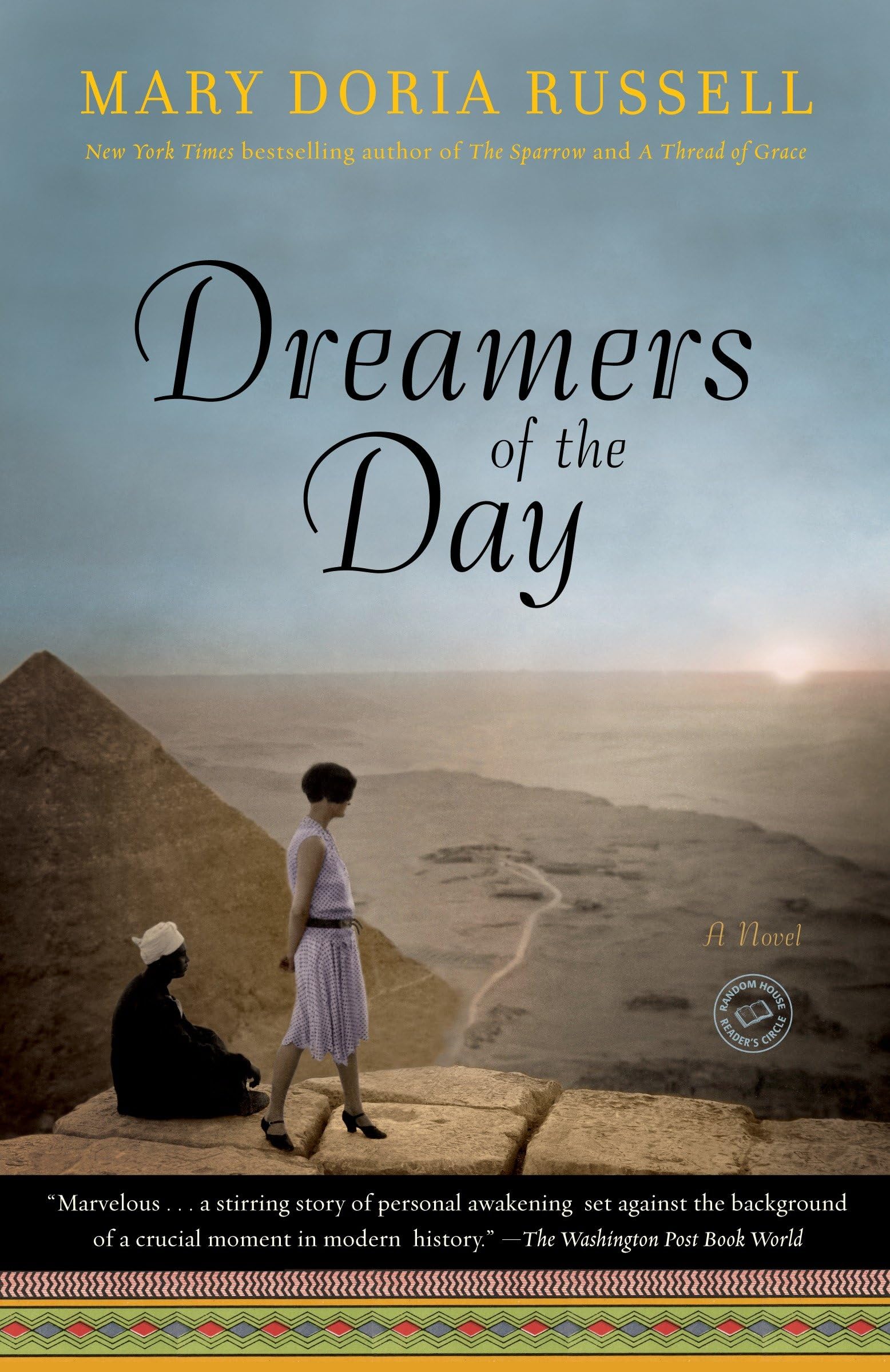



A schoolteacher still reeling from the tragedies of the Great War and the influenza epidemic travels to the Middle East in this memorable and passionate novel “Marvelous . . . a stirring story of personal awakening set against the background of a crucial moment in modern history.”— The Washington Post Agnes Shanklin, a forty-year-old schoolteacher from Ohio, has come into a modest inheritance that allows her to take the trip of a lifetime to Egypt and the Holy Land. Arriving at the Semiramis Hotel just as the 1921 Cairo Peace Conference convenes, she is freed for the first time from her mother’s withering influence and finds herself being wooed by a handsome, mysterious German. At the same time, Agnes—with her plainspoken American opinions—is drawn into the company of Winston Churchill, T. E. Lawrence, and Lady Gertrude Bell, who will, in the space of a few days, redraw the world map to create the modern Middle East. As they change history, Agnes too will find her own life transformed forever. With prose as graceful and effortless as a seductive float down the Nile, Mary Doria Russell illuminates the long, rich history of the Middle East with a story that brilliantly elucidates today’s headlines. Mary Doria Russell is the author of The Sparrow, Children of God , and A Thread of Grace . Her novels have won nine national and international literary awards, including the Arthur C. Clarke Award, the James Tiptree Award, and the American Library Association Readers Choice Award. The Sparrow was selected as one of Entertainment Weekly’ s ten best books of the year, and A Thread of Grace was nominated for a Pulitzer Prize. Russell lives in Cleveland, Ohio. Chapter One I suppose i ought to warn you at the outset that my present circumstances are puzzling, even to me. Nevertheless, I am sure of this much: my little story has become your history. You won’t really understand your times until you understand mine. You must try to feel the hope and amazement of those years. Anything seemed possible—the end of ignorance, the end of disease, the end of poverty. Physics and chemistry, medicine and engineering were breaking through old boundaries. In the cities, skyscrapers shredded clouds. Trucks and automobiles were crowding out horse-drawn cabs and drays in the boulevards below. The pavement was clean: no stinking piles of dung, no buzz of flies. In 1913, America had a professor-president in the White House—a man of intelligence and principle, elected to clean up the corruption that had flourished in the muck of politics for so long. Public health and public schools were beating back the darkness in slums and settlements. The poor were lifted up and the proud brought down as Progressives reined in the power of Big Money. In the homes of the middle class, our lives ticked along like clocks, well regulated and precise. We had electric lights, electric toasters, electric fans. On Sundays, there were newspaper advertisements for vacuum cleaners, wringer-washers, radios, and automobiles. Our bathrooms were clean, modern, and indoors. We believed that good nutrition and good moral hygiene would make us healthy, wealthy, and wise. We had every reason to think that tomorrow would be better than today. And the day after that? Better yet! The Great War and the Great Influenza fell on our placid world almost without warning. Imagine: around the world, millions and millions and millions vital and alive one day, slack-jawed dead the next. Imagine people dying in such numbers that they had to be buried in mass graves dug with steam shovels—dying not of some ancient plague or in some faraway land, but dying here and now, right in front of you. Imagine knowing that nothing could ensure your survival. Imagine that you know this not in theory, not from reading about it in books, but from how it feels to lift your own foot high and step wide over a corpse. What would you do? I’ll tell you what a lot of us did. We boozed and screwed like there was no tomorrow. We shed encumbrances and avoided entanglements.We were tough cookies, slim customers, swell guys, real dolls. We made our own fun and our own gin, drinking lakes of the stuff, drinking until we could Charleston on the graves. Life is for the living! Pooh, pooh, skiddoo! Drink up—the night is young! “I don’t want children,” said one celebrated writer after an abortion. “We’d have nothing in common. Children don’t drink.” Does such callousness shock you? But I suppose it does. You see, by that time the plain stale fact of mortality had become so commonplace, so tedious . . . Well, mourning simply went out of style. And just between you and me? Even if you find yourself among illustrious souls, you can get awfully tired of the dead. Let me count my own. Lillian and Douglas, and their two dear boys. Uncle John. And Mumma, of course. Six. No, wait! Seven. My brother, Ernest, was the first. I last saw Ernest in September of 1918. Slim in khaki, a mustach