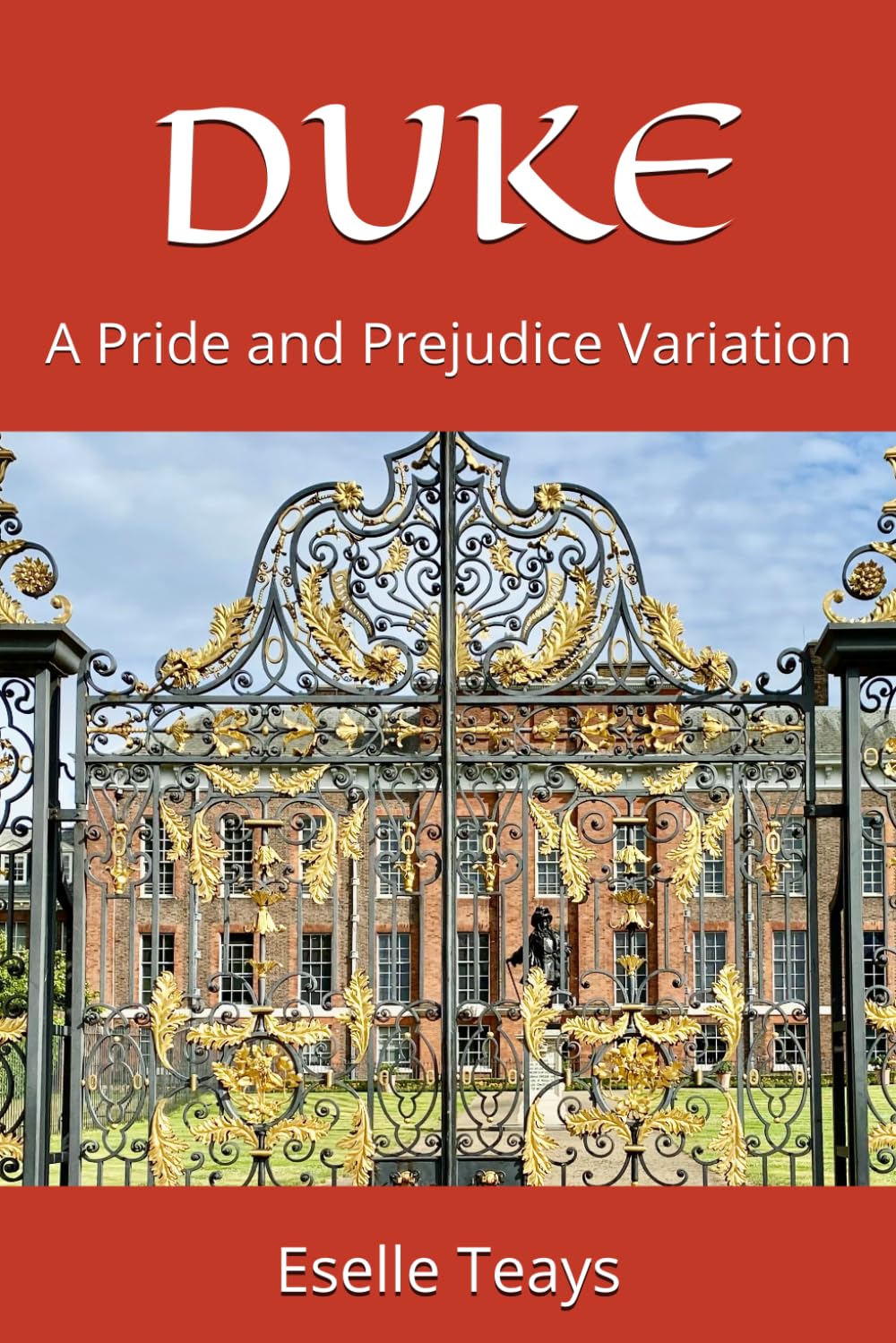



In Pride and Prejudice, Mr. Darcy dramatically changes his attitude toward Elizabeth between his leaving Netherfield Park and encountering her again at Rosings, culminating in his proposal of marriage. In this variation, the author has created circumstances that might induce such a seismic change. Ironically, these circumstances also make their eventual happily ever after virtually impossible. Mr. Darcy, out of family obligations to save Rosings for the family and a misguided plan to gain Elizabeth’s hand for himself, has married his deathly ill cousin, Anne de Bourgh, in a marriage of convenience. Shortly after his marriage, Mr. Thomas Bennet of Longbourn inherits a dukedom, elevating the family to the pinnacle of society, and his daughters to be among the richest heiresses pursued by every eligible man of the haut ton. Mr. Darcy, though rich and proud, is not eligible not only because he is already married but also because he antagonized Elizabeth by his haughtiness and disdain for others while in Hertfordshire. Could these two beloved Austen characters, considered destined for each other by fans since their creation two centuries ago, breach this enormous chasm to be together in the end without trespassing on the morals of the Regency period? How will Mr. Darcy be redeemed for his wrong-headed decisions? As in her previous three stories, the author intertwines the lives of real historical figures such as Lady Caroline Lamb, the sixth Duke of Devonshire, and even the Prince Regent with those of the beloved cast of Pride and Prejudice. The backdrop of the Bennet/Darcy saga moves from the unvaried but comfortable environs of the Meryton backwater to the glamor and the peculiar social mores of the highest circles of Regency England. How will the new ducal family adjust to these enormous changes? The author sincerely hopes that these Pride and Prejudice characters, even though they are in a drastically altered setting, are faithfully depicted as in canon. This author enjoys researching the Regency people, places, events, and injecting the various aspects of Regency life into her variations on Pride and Prejudice—not at all confined to the 'three or four families in a country village' that Jane Austen favored. This may be considered the common theme of all her stories starting from the very first one. Pride Under Good Regulation —Against a backdrop of the Industrial Revolution and the science and technology of the time, Elizabeth Bennet, who is intellectually curious, acquires accomplishments comparable, but by no means, exceeding, the most brilliant women of her time such as Mrs. Elizabeth Carter and Lady Caroline Lamb before her torrid affair with Byron. Such Novel Notions —This is meant to be a satire of how modern day lives centered around the virtual world provided by the internet could have manifested themselves for an intelligent but extremely sheltered woman during the Regency. Anne de Bourgh conjures a world based on the novels she reads. From the Hedgerows to Windsor —The author had a great deal of fun weaving Elizabeth Bennet's life into Jane Austen's creation of Pride and Prejudice. A bit of the Napoleonic Wars and the Royal Court are thrown in for good measure. Duke —The high society of Regency England is the setting of this story through Mr. Bennet's elevation to a dukedom. The ducal household encounters societal mores that are not only foreign, but may even be repulsive to them, just like the reactions of some of the readers who have not been exposed to these aspects of Regency England, and find Mr.Darcy's marriage of convenience, a staple in the highest circles of the land and the times, equally unpalatable. If these readers put away their modern lens and try to see Mr. Darcy as an honorable gentleman born and bred in these traditions, they will, as Lady Elizabeth and the Duke have in the story, be able to appreciate his struggle to comply with, and at the same time, combat against the prevailing values. 'Presentism,' however, could be impossible to resist. The author completely understands if some readers decide that they prefer to avoid having unwanted emotions triggered by what was considered acceptable societal mores two hundred years ago. By the way, Victorian morals reverted to much stricter standards, possibly as a reaction to the lax practices during the Regency preceding Queen Victoria's reign.