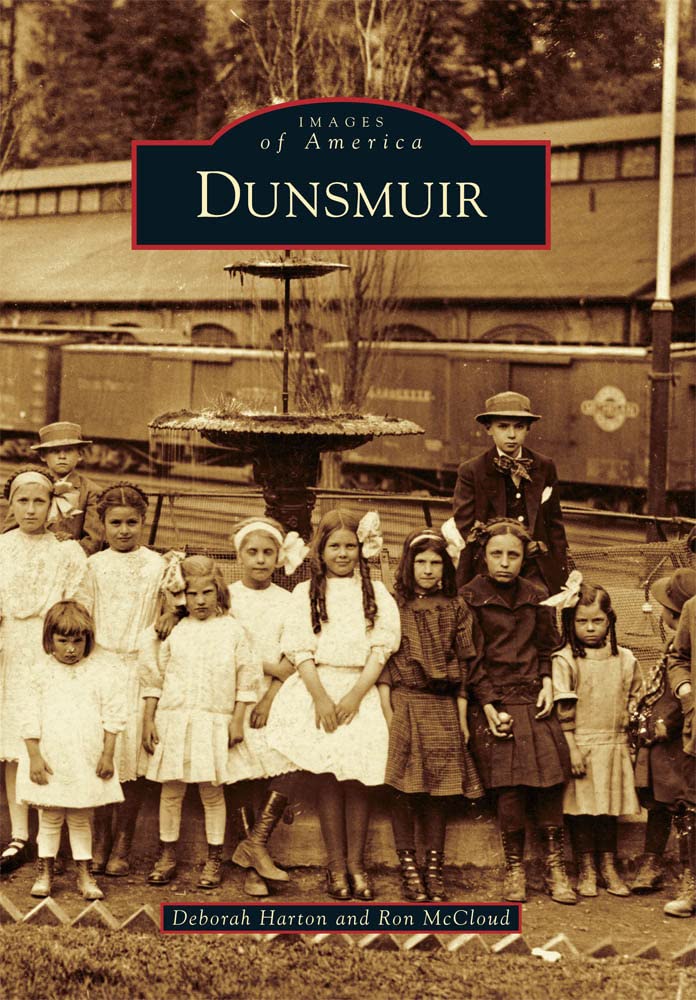



In the 1880s, the Central Pacific Railroad labored through the rugged upper Sacramento River canyon to connect California with the far northwest. Where the canyon's steep walls open up to a view of snowcapped Mount Shasta, a railroad switching yard, a depot, a roundhouse, a turntable, and repair shops were constructed. Surrounded by virgin timber, rushing waters, and dramatic geologic formations, this railhead camp--named for a Canadian collier--grew. ?Completion of the rail line brought commerce and growth as timber was harvested and streams were prospected for gold. Visitors were, and continue to be, drawn by the pure mountain air, scenic beauty, healing mineral waters, hunting, and world-class trout fishing. Though facing many obstacles, including storms, fires, and floods, the town thrived. Incorporated in 1909, Dunsmuir became the headquarters for the Southern Pacific Railroad's fabled Shasta Division in 1916. Today Dunsmuir is known as California's Historic Railroad Town and is recognized in the National Register of Historic Places. Title: Authors preserve small part of Dunsmuir history Author: Richard DuPertuis Publisher: Mt. Shasta News Date: 5/26/2010 Deborah Harton had long been an avid eBayer who collected relics and stories of the past. About a year ago, while delivering a vintage Siskiyou County yearbook to her buyer in Yreka, a thought she had been harboring for quite some time emerged in words, "I want to write a book." To her surprise, her buyer, Claudia East, brought out a book that East had written titled "Yreka." "As soon as I saw 'Yreka,' I knew I was going to write a book about Dunsmuir," Harton said. Meanwhile, a mild-mannered hardware store proprietor in Dunsmuir found himself besieged by a question customers posed with more and more frequency. Looking at the selection of historic Images of America books sold there, they asked why one title in particular was missing. Dunsmuir Hardware Store owner Ron McCloud had no answer. "We carried the Arcadia books 'Mt. Shasta,' 'McCloud,' 'Yreka' -- people wanted to know why there wasn't one on Dunsmuir," he said. Harton knew she couldn't write the book on her own. When she began inquiring in downtown Dunsmuir into who might be interested in contributing, she was quickly referred to McCloud. It was the first time they had ever met. McCloud said, "The time was right. We both agreed right away, 'Yeah!'" Harton laughed, "We actually swapped applications, to see if we could work together. We listed the pluses and minuses." What happened next is that two people came together to create something greater than the sum of their individual parts. Each took a distinct role. Harton worked the field, interviewing, gathering documents, searching online. McCloud worked in his store, receiving the materials, identifying, sorting. Then they would get together in the back of the store and work with a chemistry that startled them both. "It was like a Roman candle going off," McCloud said. "After a while we called it telepathy. We'd have the same idea at the same time and laugh and say, 'There we go again!'" Harton agreed. "We'd work for hours like that and then look at each other and wonder if we actually got anything done." There was never a shortage of material. After word on the project started circulating around town, the book became a community effort, with people bringing Dunsmuir photographs, stories and memorabilia to the sorting station at the hardware store. Soon Harton and McCloud had amassed hundreds of pictures and enough stories for several books. "The editing sessions were brutal," Harton said. McCloud nodded. "We managed to get more than 200 pictures in, but it really hurt not to include 40 that we had already written story for. There just wasn't enough room." Adding to the stress was their tremendous effort to ensure accuracy. Said McCloud, "We knew we were going to have to pass the closest scrutiny. Train enthusiast standards. They come in the store, look at train models and point out the wrong number of rivets in a boiler." Harton added, "We always worried it would be rejected by the experts. It was so great when it wasn't." Both Harton and McCloud emphasized a lesson they learned during production, how easily things get lost. Within its 128 pages their book preserved some of Dunsmuir's heritage, but much more was gone forever. "Hopefully our work will motivate people to take care of the town," said Harton. The fledgling authors were buoyed by excitement from their accomplishment. They grinned at each other and cried out, "We did it! We did it!" Authors Deborah Harton and Ron McCloud remain fascinated by Dunsmuir's rich history and colorful stories. With the help of others who treasure Dunsmuir's heritage, they have drawn together its images and stories in tribute to the town's spirit, times, people, growth, and challenges.