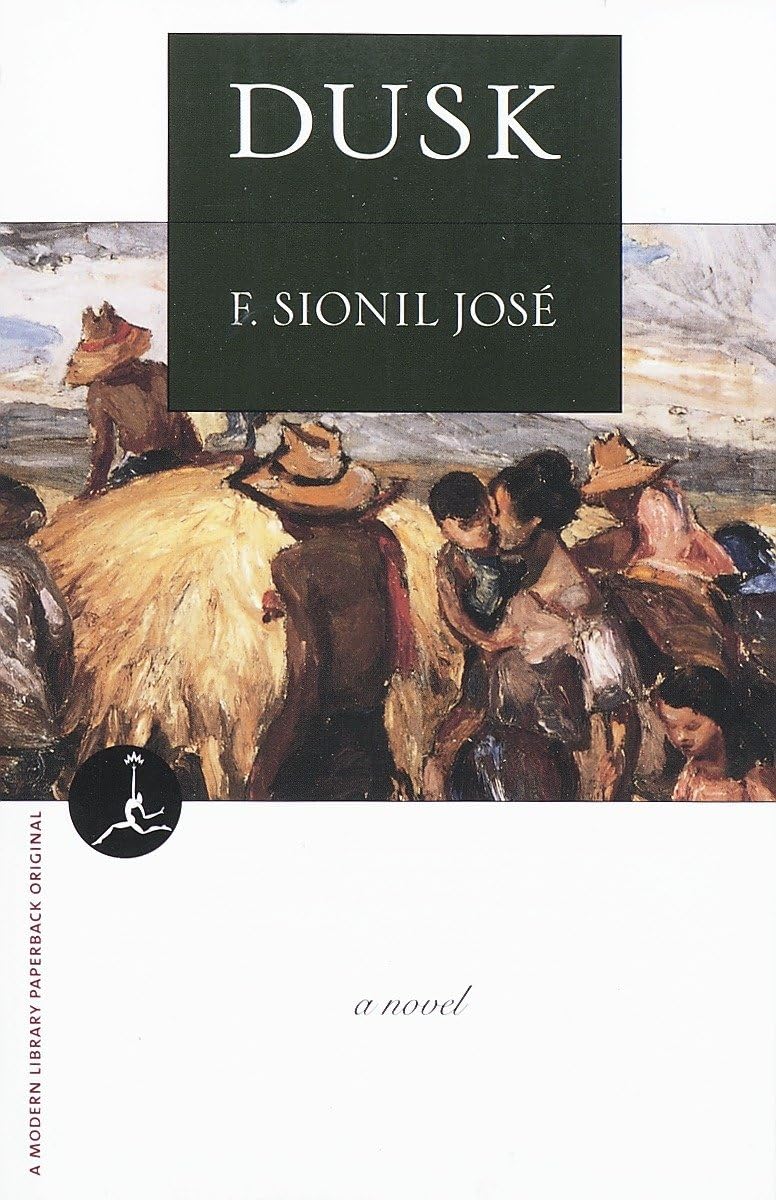



With Dusk (originally published in the Philippines as Po-on ), F. Sionil Jose begins his five-novel Rosales Saga, which the poet and critic Ricaredo Demetillo called "the first great Filipino novels written in English." Set in the 1880s, Dusk records the exile of a tenant family from its village and the new life it attempts to make in the small town of Rosales. Here commences the epic tale of a family unwillingly thrown into the turmoil of history. But this is more than a historical novel; it is also the eternal story of man's tortured search for true faith and the larger meaning of existence. Jose has achieved a fiction of extraordinary scope and passion, a book as meaningful to Philippine literature as One Hundred Years of Solitude is to Latin American literature. "The foremost Filipino novelist in English, his novels deserve a much wider readership than the Philippines can offer."--Ian Buruma, New York Review of Books "Tolstoy himself, not to mention Italo Svevo, would envy the author of this story."--Chicago Tribune The Philippines are an Asian anomaly: a primarily Catholic nation bred on European and American culture, the country has long been subjugated by foreign powers and homegrown dictators alike, leaving the people to quietly endure. But as F. Sionil José proves, they have never been silenced. One of the premier novelists in the Philippines (he won the Magsaysay Award, the Asian equivalent of the Nobel, in 1980), José's acclaimed Rosales saga chronicles the Filipino struggles and triumphs during the 20th century. Dusk , the fifth book in the saga but the first released in the United States, showcases a writer who deserves a much wider audience. This rich historical novel takes place at the end of the 19th century as the Filipinos, with the aid of the Americans, finally expelled the Spanish after three centuries of often brutal rule. Major themes are on display here--war and peace; rich versus poor; tyranny versus freedom--all passionately presented within the context of one man and his family. After being unjustly dismissed from the seminary by a corrupt priest and then suffering the death of his brother at the hands of Spanish authorities, Istak Samson is forced to flee from increasing oppression and lead his family on a journey for a new home. This harsh quest from the coast to the central plains eventually leads Samson to find love, peace, and relative prosperity, as well as provide a device for José to vividly describe the beauty and complexity of his homeland and to elaborate on the cultural effects of Spanish occupation. The joy Samson finds, like Philippine independence, is short-lived, as the Filipinos soon engage in a bloody conflict with the Americans, who have substituted Spanish imperialism with their own. Unable to reconcile his pacifist nature with his sense of duty to his country, Samson reluctantly joins the rebel forces in their battle to reassert their freedom. After setting the stage for tragedy, José does not follow an easy route to a happy ending but instead builds to a climax that is moving, if not unexpected. In telling his epic tale from the perspective of a common peasant, José lends a powerful voice to a people long trapped in the midst of historical upheaval. Dusk demonstrates why many claim that Jos? (Sins, LJ 4/1/96) could be the first Filipino writer to win a Nobel prize. The opening work of a five-novel series, the "Rosales Saga," it lures readers into its 19th-century setting in the Philippines and soon introduces Istak and his family as they flee from their home in Ilokos and try to regain even a meager existence in another region, Pangasinan. Jos? says he examined Filipino history in this novel to give the "`little people'a nobler image of themselves." He achieves that aim, especially with the unforgettable and admirable Istak. Jos? also succeeds in personalizing his nation's attempt to shrug off the deleterious effects of Spanish colonialism only to face an equally unattractive foeAAmerican imperialism. One only hopes that the publisher does not linger long in its plans to issue the entire "Rosales Saga." Highly recommended.AFaye A. Chadwell, Univ. of Oregon Lib. System, Eugene Copyright 1998 Reed Business Information, Inc. From Filipino writer Jos, the first novel in the acclaimed Rosales Saga makes its American debut. Chronicling a century of Philippine history as experienced by one family, the story begins in the late 1800s as, in response to a growing indigenous revolutionary movement, the ruling Spanish increase their oppression. And it ends as American forces, after ousting Spain from Cuba in 1898, battle Philippine rebels who want to establish a government independent of American suzerainty. Jos is one of those writers for whom sociopolitical message--here, the sorry record of injustice--is as important as purely literary concerns. This means that character and plot are shaped by issues, not just imagination. The hero is Istak, a would-be s