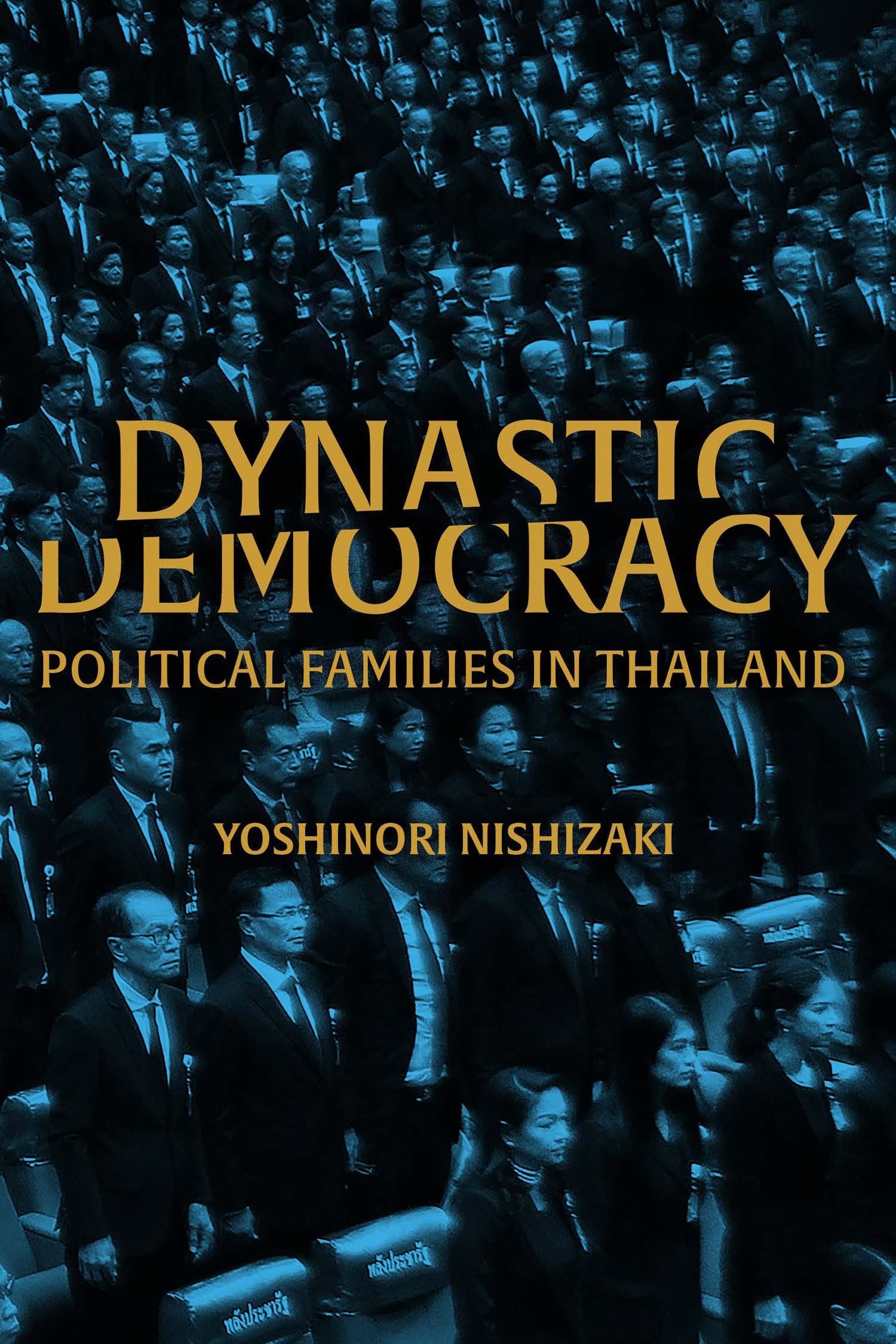
Dynastic Democracy: Political Families of Thailand (New Perspectives in Southeast Asian Studies)
$72.44
by Yoshinori Nishizaki



The political history of Thailand since the overthrow of absolute monarchy in 1932 has conventionally been interpreted as a long series of popular struggles for representative democracy and against military authoritarian rule. Yoshinori Nishizaki argues that this history can be better understood as one of struggles by elite political families for and against “dynastic democracy”—a form of democracy that is characterized by the patrimonial transmission of power between members of select ruling families. Dynastic Democracy suggests it is these familial-based contestations for political ascendancy that underlie the tumultuous politics of Thailand, a country that has experienced no fewer than twenty-two coups over the course of the past century. Drawing extensively on Thai-language primary sources, including assets documents and cremation volumes for deceased politicians and their kin, Nishizaki traces the intricate blood and marriage connections among Thailand’s political families. These families may fall into two categories: influential commoner families that have held parliamentary seats since 1932 and form the core of Thailand’s dynastic democracy; and upper-class families that are kin to or aligned ideologically with the royal family and have repeatedly challenged dynastic democracy through coups, constitutional changes, and other political maneuvers. Nishizaki’s exploration of dynastic democracy illustrates how democratic pluralism in Thailand has been consistently stifled, to the detriment of ordinary citizens. Dynastic Democracy fleshes out a widely acknowledged yet heretofore empirically unsubstantiated facet of Thai political history—that in Thai politics, family matters. “Nishizaki is one of the keenest analysts of Thai politics working today, and Dynastic Democracy just reinforces that opinion. This is a welcome addition to a growing political science and sociology literature on the causes and consequences of political dynasties.”—Allen Hicken, University of Michigan “A tour de force. . . . This book should be a critical reference for scholars of Thai politics. The detailed information on kinship networks presented in this book is an invaluable source for understanding the intricate connections of influential families, which are integral to the contemporary Thai political fabric. Yoshinori Nishizaki’s creativity and tenacity in collecting, coding, analysing, and visualising data from various archival sources serve as an excellent example for history, sociology, and political science students who want to conduct similar research in different contexts.”— Journal of Southeast Asian Studies “Nishizaki argues that Thailand has evolved a ‘patrimonial dynastic democracy,’ a political system in which family connections and authoritarian structures obstruct the political will of the majority. This thoroughly researched revisionist study ranging from the 1930s to the present day will be a work of reference for those interested in Thai politics and political networks for a long time to come.”—Chris Baker, coauthor of A History of Thailand “[A] major work that is poised to become an important resource for anyone interested in modern Thai politics. . . . A fascinating book. Nishizaki’s reinterpretation of the entire period of modern Thai political history through a family-based paradigm represents an admirable endeavor to break away from a very limited set of approaches that have long shaped our understanding of Thailand’s political dynamics. His book, in this sense, injects a breath of fresh air into the field of Thai studies.”— Contemporary Southeast Asia “A smart and engaging study of modern Thai politics that places political families at the center of the action. . . . Provides a valuable corrective to existing scholarship on Thailand that downplays or misunderstands the significance of political families and contributes theoretically to the study of democracy and democratic breakdown. . . . A successful study chock-full of insights.”— Democracy and Autocracy “Offers an important and illuminating analytical lens through which to understand Thai politics over the past century. . . . Provides an eye-opening refinement of existing understandings of both state power and class relations in Thailand and a fine-grained sociological analysis of dynastic entrenchment and endurance unmatched in studies of South East Asia for its rigour and richness.”— South East Asia Research “Unprecedented in providing long, detailed specifications of numerous political families and their interlinkages with other clans. . . . As the first book of its kind to construct lineages of Thai political elite families linking past to present, as well as their crucial significance to contemporary Thai politics, this work is an excellent read.”— Asian Affairs “A grand work of applied theory, expanding a provincial power-structure analysis across the whole Thai nation. . . . Nishizaki has constructed a study here that is