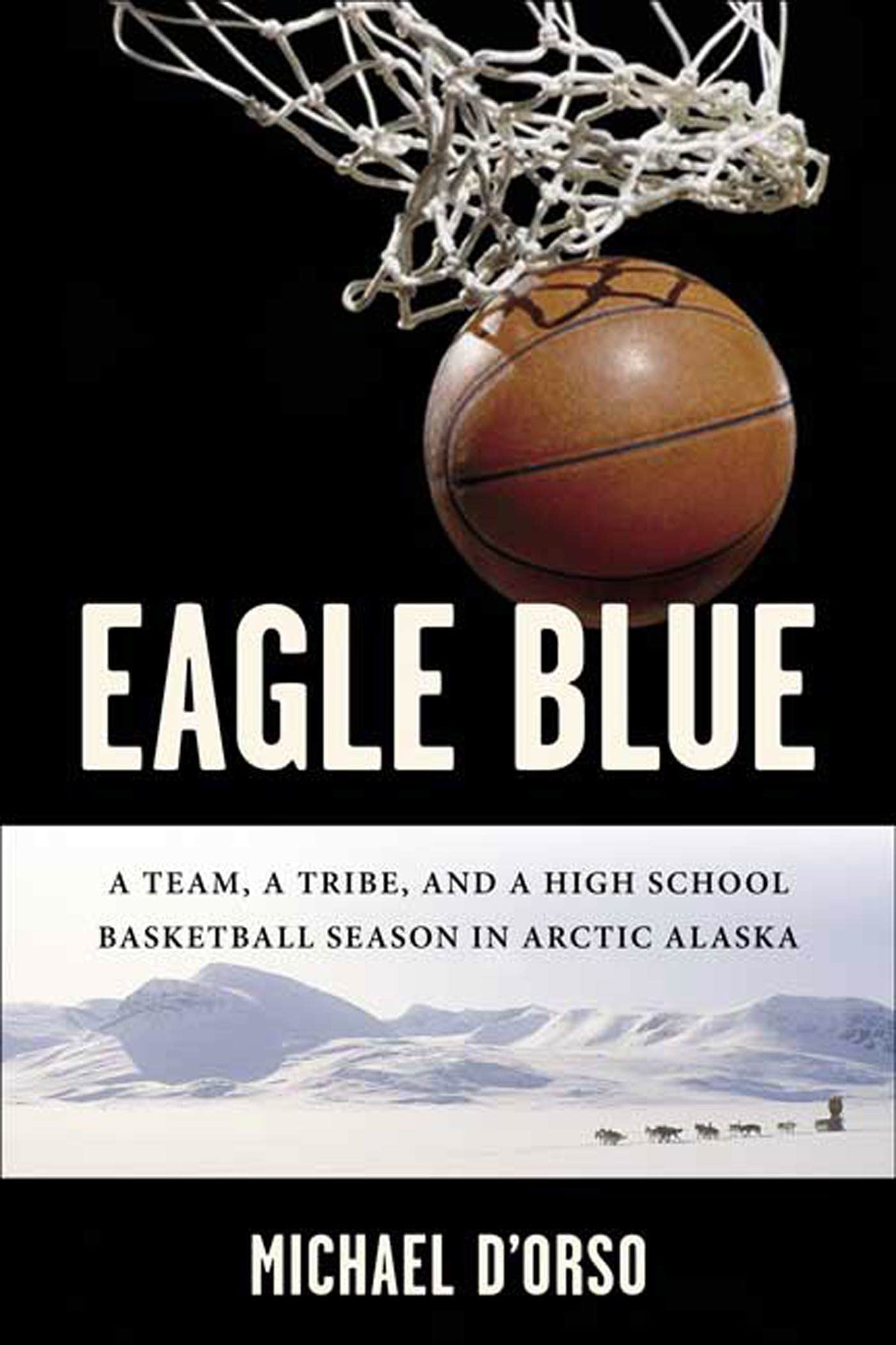
Eagle Blue: A Team, a Tribe, and a High School Basketball Season in Arctic Alaska
$41.20
by Michael D'Orso



n the tradition of Friday Night Lights , an extraordinary journey into the basketball-crazed culture of remote Arctic Alaska . The village of Fort Yukon sits eight miles above the Arctic Circle, deep in Alaska's "bush" country. The six hundred men, women and children who live there―almost all of them Athabascan Gwich'in Natives―have little to cheer for. Their traditional Indian ways of life are rapidly vanishing in the face of a modern culture that is closing in on all sides, threatening to destroy their community and their identity. The one source of pride they can count on is their boys' high school basketball team―the Fort Yukon Eagles. Eagle Blue follows the Eagles, winners of six regional championships in a row, through the course of an entire 28-game season, from their first day of practice in late November to the Alaska State Championship Tournament in March. With insight, frankness, and compassion, Michael D'Orso climbs into the lives of these fourteen boys, their families, and their coach, shadowing them through an Arctic winter of fifty-below-zero temperatures and near-round-the-clock darkness as the Eagles criss-cross Alaska by air, van, and snow machine in pursuit of their―and their village's―dream. *Starred Review* Everything in Alaska's bush is tough, from earning a living to surviving the elements. One thing that helps citizens in the isolated, mostly Native American bush communities cope with the long winters is high-school basketball. Fort Yukon High School had 32 students enrolled in 2004, and of those, 14 boys and 7 girls were on the respective basketball teams. The boys program is one of the most successful in the state: the preceding eight seasons, they won regional titles and most recently advanced to the finals before losing. With the OK of school officials and the players, D'Orso imbedded himself with the team for the 2004-05 season. He lived in a small Fort Yukon cabin, attended all the practices and games, and tried to learn as much as possible about the culture of the town in which the players live. The result is a thoroughly fascinating mix of sports and cultural anthropology. The basketball narrative is fascinating as D'Orso examines the team dynamic, a la John Feinstein, but the real beauty of the book emerges in the contextual portrait of life in a small bush town where the traditions of hunting, trapping, and fishing are slowly eroded by the culture of snowmobiles, video games, and television. An inspiring, sometimes disturbing portrait of a culture in crisis. Wes Lukowsky Copyright © American Library Association. All rights reserved Michael D'Orso is the author of more than a dozen books, including Plundering Paradise , Like Judgment Day, Like No Other Time (with Tom Daschle), and Walking with the Wind (with John Lewis). You can't help losing your heart to the Gwich'in kids of Eagle Blue, Michael D'Orso's captivating literary documentary of the 2004 Fort Yukon High School basketball season. The Gwich'in are Indians, not Eskimos or Inuit; though nowadays many of them are children or grandchildren of interracial marriages, they are related to the Navajo and the Apache. Their town lies just inside the Arctic Circle, 150 miles northeast of Fairbanks, Alaska, and in 2004 their high school had an enrollment of 32. Fort Yukon is not free of the alcoholism, cultural confusion and defeatism that poison so much of Native American life. "That's one thing that really sucks about life here, [a student named Matt Shewfelt] will tell you straight up. Whenever someone tries to do something worthwhile, to make something of themselves -- and this is true of the grownups as well as the kids -- it seems like everyone else tries to pull them back down." But the town has a tradition of good basketball, thanks in no small part to coach Dave Bridges, who has repeatedly taken his boys to Anchorage for the state tournament in their small-school division. The 2004 crop showed exceptional promise. They weren't tall -- only two players were a bit over six feet -- but they were fast, with some standout shooters, especially from beyond the three-point line. They had bench strength, and, at Bridges's insistence, they were in terrific shape. (Before the season was over, they came from behind to win more than once, their stamina helping them overtake wobbling opponents.) D'Orso is such a spirited writer that he could surely make the reader empathize with boys from any of the teams Fort Yukon played over the season, including the one from a town of Russian Old Believers where the people still wear Amish-like garb. But he persuades us that there was something special about these Eagles, a blend of selflessness and maturity that kicked in when the boys took the court. Many of them came from broken homes, or had grown up seeing their once-athletic fathers go to seed, or had themselves already gotten into trouble. The boys might claim that they shot hoops to attract babes, but for virtually all o