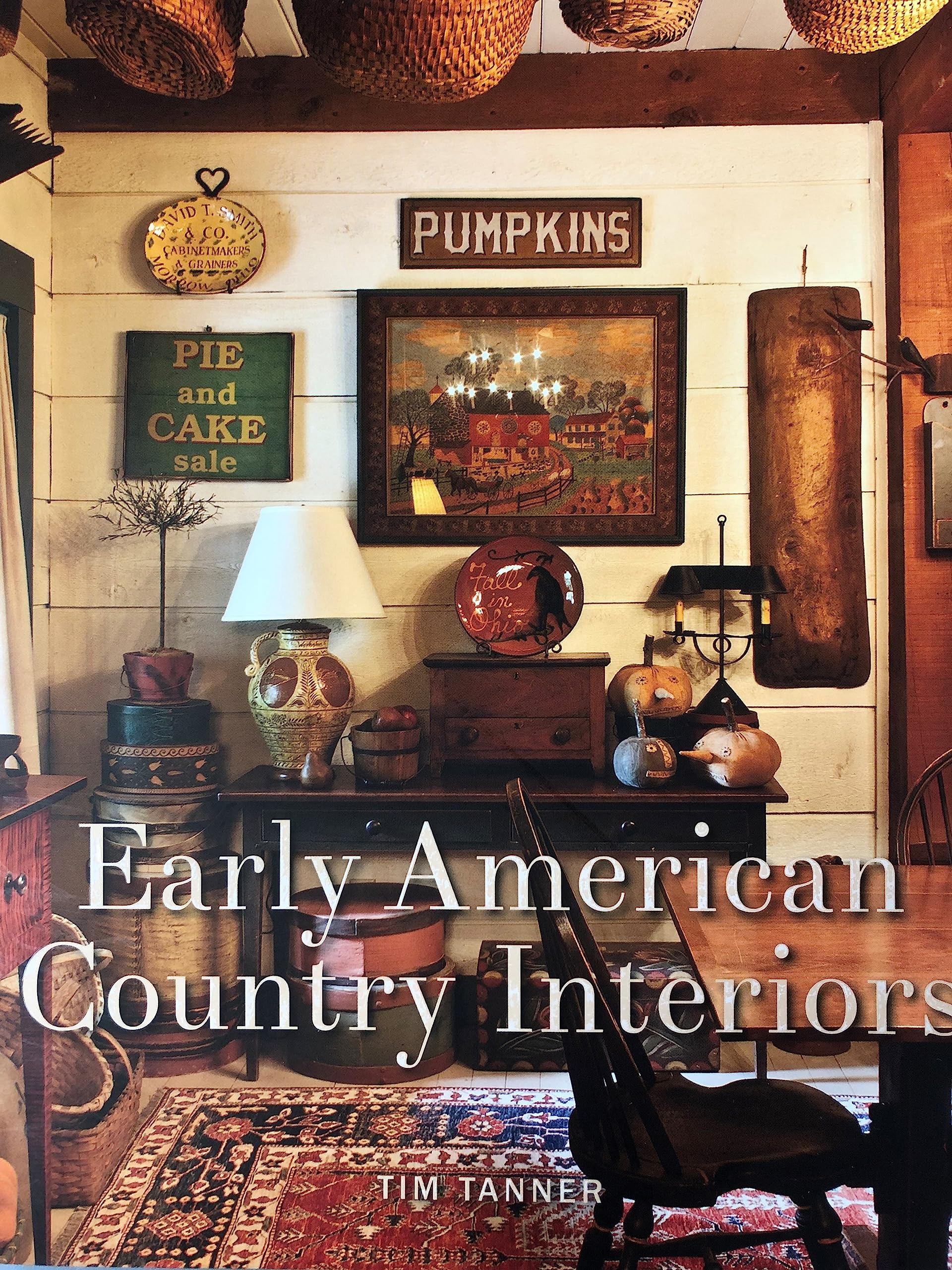



Inviting designs that have stood the test of time An idea book for designing beautiful interiors that embody the essence of early American country style―a sense of warmth, comfort, and familiarity. As an advocate that something well designed will stand the test of time, author Tim Tanner has coupled basic design principles with a wealth of examples using wonderful old objects and materials, illuminating effective design ideas for bedrooms, bathrooms, kitchens, living rooms, dining rooms, pantries, and other spaces. Featured homes are from Maine, Vermont, Massachusetts, Connecticut, New York, Ohio, Michigan, Illinois, Kentucky, Virginia, West Virginia, Idaho, and Utah. Tim Tanner is a graphic designer, artist, and freelance illustrator. He currently teaches art and design at Brigham Young University, Idaho. He’s been involved in home restoration and reproduction using reclaimed materials for more than thirty years. He lives in Teton Valley, Idaho There’s a reason so many old homes are able to maintain their appeal and desirability over decades and even centuries: the reliance of the original builders on classic principles of design. Author Tim Tanner, a staunch advocate that something well designed will stand the test of time, has coupled basic design principles with a wealth of specific examples using wonderful old objects and materials, illuminating effective design ideas for bedrooms, bathrooms, kitchens, living rooms, dining rooms, pantries, and other spaces. The author and his wife, Johnna, restored their first nineteenth-century home in 1988, and have been involved in restoration and reproduction projects using reclaimed materials ever since. This book is meant to be an idea book for designing beautiful interiors that embody the essence of Early American country style―designs that above all include a sense of warmth, comfort, and familiarity. Tim Tanner is an artist, author, educator, builder, and industrial and graphic designer whose work appears in numerous venues―from national bestselling books to award-winning furniture and homes. An avid historian since childhood, he is a founding member of the American Longrifle Association and a member of the American Mountain Men. Tim’s writings have appeared in various publications, including the Rocky Mountain Fur Trade Journal and Muzzleloader Magazine. He is on the art faculty at Brigham Young University, Idaho, and oversees Web design for BYU-I online courses. A native of Utah, he and his family currently reside in Parker, Idaho, where they are in the process of restoring another gem of a home, originally built in 1890. Tim Tanner restored his first ca 1870s home in 1988, and has been involved in restoration and reproduction projects using reclaimed materials ever since then. He is an artist in and around Jackson Hole, Wyoming, and is on the faculty at Brigham Young University Idaho, where he teaches Art and Design. Living Rooms and Keeping Rooms Living and keeping rooms in the Early American home are often the epitome of comfortable living spaces. These rooms, if designed well, embody the ideals spoken of throughout this book. They are warm, inviting, and often display some of the most notable visual treats for the eye, including historical art and artifacts. Here one may escape the hustle and bustle of modern living more fully, surrounded by treasures and stories of bygone years. Living and keeping rooms also potentially offer a wider available palette of historical materials, textures, colors, and furnishings than other spaces in the home, allowing the perfect blend of focal points, repetition with variation, and harmony (some of the principles of design highlighted throughout this book). I’ve also seen living and keeping rooms that perfectly blend modern technologies, with cozy in-floor heating, large-screen entertainment centers hidden imaginatively behind vintage doors, and dramatic, artistic lighting never dreamed of by our ancestors. For these reasons, living and keeping rooms can be some of the most enjoyable spaces to create in the Early American home.