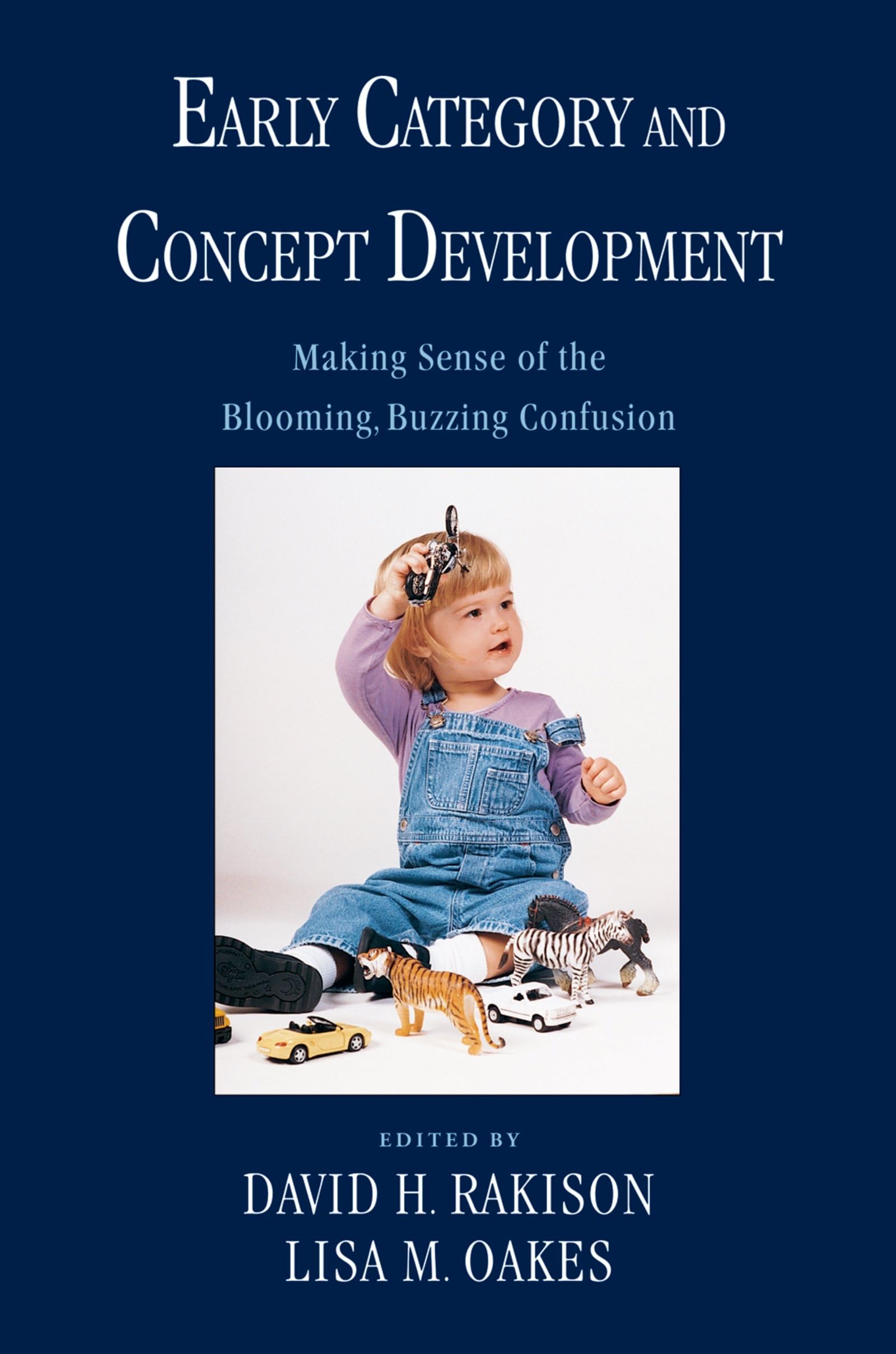



Whether or not infants' earliest perception of the world is a "blooming, buzzing, confusion," it is not long before they come to perceive structure and order among the objects and events around them. At the core of this process, and cognitive development in general, is the ability to categorize--to group events, objects, or properties together--and to form mental representations, or concepts, that encapsulate the commonalities and structure of these categories. Categorization is the primary means of coding experience, underlying not only perceptual and reasoning processes, but also inductive inference and language. The aim of this book is to bring together the most recent findings and theories about the origins and early development of categorization and conceptual abilities. Despite recent advances in our understanding of this area, a number of hotly debated issues remain at the center of the controversy over categorization. Researchers continue to ask questions such as: Which mechanisms for categorization are available at birth and which emerge later? What are the relative roles of perceptual similarity and nonobservable properties in early classification? What is the role of contextual variation in categorization by infants and children? Do different experimental procedures reveal the same kind of knowledge? Can computational models simulate infant and child categorization? How do computational models inform behavioral research? What is the impact of language on category development? How does language partition the world? This book is the first to address these and other key questions within a single volume. The authors present a diverse set of views representing cutting-edge empirical and theoretical advances in the field. The result is a thorough review of empirical contributions to the literature, and a wealth of fresh theoretical perspectives on early categorization. "This clearly written and well-edited book adds to the chorus of opinion that might inform answers to those questions plaguing the study of reality and its construction. This book is a must-read for those who study human categorization and conceptualization. It offers an up-to-date and well-argued compendium of opinion and research from the finest minds in developmental psychology, and illuminates the current status of the empiricist-rationalist debate within psychology."-Shannon M. Pruden, Kathy Hirsh-Pasek, & Julia Parish, Philosophical Psychology This is the first book devoted to early categorization. It provides the reader with an overview of the research on early category and concept development that has accumulated during the past 25 years. It offers insights about the future of the field, and thus will help to guide future research endeavors in this area. David H. Rakison is at Carnegie Mellon University. Lisa M. Oakes is at University of Iowa.