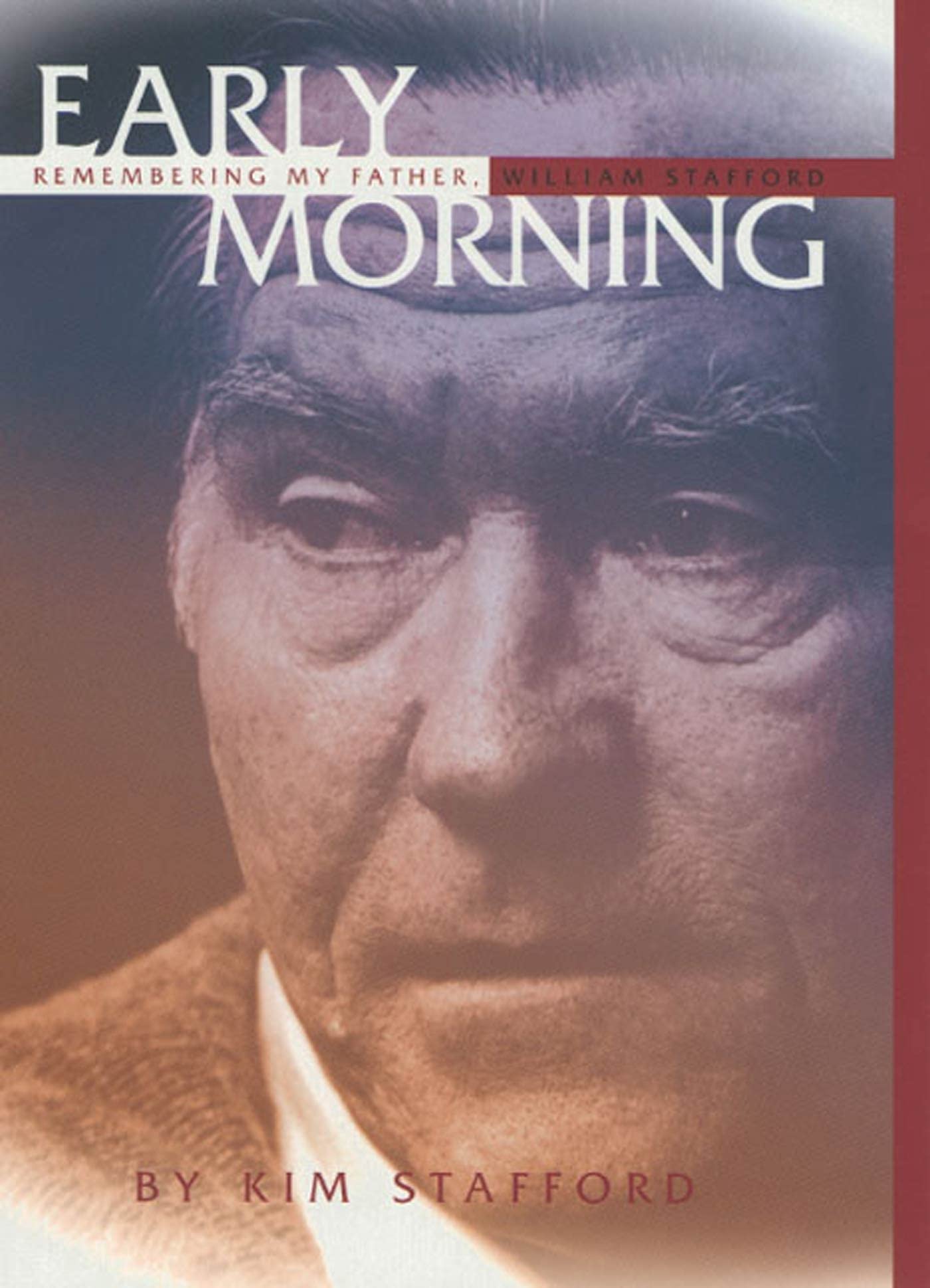



With incredible insight and love, Kim Stafford offers a view into the remarkable life of his father, the poet William Stafford The unspoken deep affection he lived by was like the idea in his poem about the Eskimos―their disdain for "People who talk about God." In his world, a fact so pervasive as love never need be named. William Stafford wrote a poem nearly every day of his life, most often before dawn, as he lay on a much-used couch that bore the imprint of his body after years of use. He was a prolific, highly acclaimed poet, famous pacifist, and extraordinary friend to nearly everyone he met. But Kim was given perhaps his father's greatest gift―and greatest challenge―to be his literary executor. Carefully sifting through his father's papers―thousands of poems written on napkins, grocery receipts, letters―Kim follows a copious trail of words matched only by his father's silences. Kim is able to visit his father's life in a deeply personal way and, as a result, beautifully illuminates William Stafford as someone who was unafraid to stare into emptiness and to live a life so fully in the moment that he was able to touch countless lives with a single poem. Noteworthy American poet William Stafford (1914-93) wrote early in the morning, before the first light. His son, Kim, remembers this and much more in his vivid, affectionate memoir, which approaches its subject in anecdotal rather than linear fashion. Kim, director of the Northwest Writing Institute at Lewis & Clark College in Oregon and himself the author of several books (A Thousand Friends of Rain; Having Everything Right), recalls his father's great love of his childhood home in Kansas, conscientious objector status during World War II, early days as a laborer, later days as a teacher, grueling work ethic, and approach to what he called "the great emergency of being alive." Stafford wrote poetry daily-some critics say he was too prolific-but, as revealed here, father and son shared other interests having nothing to do with writing. Kim's prose is poetic and lyrical, and he makes liberal use of excerpts from his father's poetry as a means of underscoring his own view of his father. Recommended for public and academic libraries. Robert L. Kelly, Fort Wayne Community Schs., IN Copyright 2002 Reed Business Information, Inc. *Starred Review* Writing with the same elegant precision that distinguished his collection of personal essays, Having Everything Right (1986), Stafford remembers his father, poet William Stafford, through a creative blend of memoir, poetry, and criticism. "His words seemed plain to some, his subjects ordinary," Stafford writes of his father's poems, which often celebrated the landscapes of his native Kansas and his inherited Oregon. "His response was to offer as an alternative to the loud and aggressive a quiet language of reconciliation." That profound quiet and that hard-won reconciliation--with nature, with other people, with himself--is everywhere evident in this moving account of the man and his work. Stafford spent WW II in a camp for conscientious objectors and was reviled by friends as a "conchie." His pacifism was unwavering, however, and became one of the hallmarks of his poetry and his character. If Stafford's story is free of confrontation, it is not free of tragedy. Moving fluidly from his father's poems and "daily writing" to memories of his life, Kim recalls the suicide of his older brother and its effect on the family. If quiet brought power to Stafford's poems, his often-protracted silence sometimes brought distance to his relations with his loved ones. And, yet, there is something touching and intimate about witnessing the son using his own words to bridge his father's silence. For anyone who has read William Stafford's verse and marveled at the way he could capture the pulse and power of life, his son's words help reveal the source of that power: "My father used to say that poems are not made of words, but of contexts." This remarkable tribute gives new life to those contexts. Bill Ott Copyright © American Library Association. All rights reserved "I don't want to write good poems. I want to write inevitable poems." Kim Stafford is Emeritus Professor at Lewis and Clark College in Oregon. He writes, teaches, and travels to raise the human spirit through poetry. In 1986, he founded the Northwest Writing Institute, and he has published a dozen books of poetry and prose, including The Muses Among Us: Eloquent Listening and Other Pleasures of the Writer's Craft and 100 Tricks Every Boy Can Do: How My Brother Disappeared . His most recent book is the poetry collection Singer Come from Afar . He has taught writing in dozens of schools and community centers, and in Scotland, Italy, Mexico, and Bhutan. In 2018 he was named Oregon's 9th Poet Laureate for a two-year term. Used Book in Good Condition