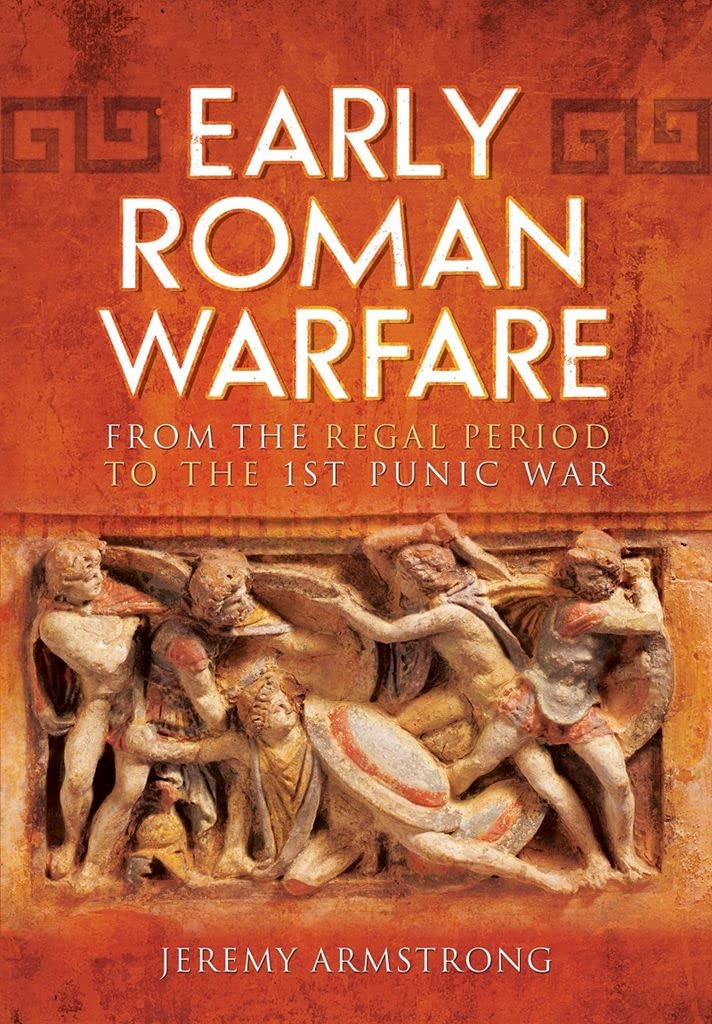
Early Roman Warfare: From the Regal Period to the First Punic War
$29.36
by Jeremy Armstrong



While copious amounts have been written about the Roman army, most study has focussed on the later Republic or the Imperial period when the legionary system was already well-developed. Here Dr Jeremy Armstrong traces the development of Rome's military might from its earliest discernible origins down to the First Punic War. He shows how her armies evolved from ad-hoc forces of warriors organized along clan lines and assembled for the city's survival, to the sophisticated organization of the legions that went on to dominate all of Italy and then (after the period covered) the entire Mediterranean world. The author reviews both the literary sources and the latest archaeological evidence to provide a fresh analysis of Roman military organization, equipment, tactics and strategy. He shows how Rome's military apparatus adapted to meet the changing strategic needs of new enemies and broader ambitions. This study of the origins of the Classical world's most formidable war machine will be welcomed by anyone with an interest in Classical, and especially Roman, military history. “Armstrong approaches the subject of classical warfare with a nuanced touch that is acceptable for readers of the ancient Roman period… Early Roman Warfare is filled with approachable writing that incorporates modern archeology with an toward the historiological developments of the last century.” Owlcation Dr Jeremy Armstrong is a lecturer in Ancient History at the University of Auckland, New Zealand. He is the author of the forthcoming Warlords and Generals: War and Society in Early Rome and co-editor of Kings Clans and Conflict: Italic Warfare in the First Millennium BC. He also contributed several entries to The Blackwell Encyclopaedia of Ancient History.