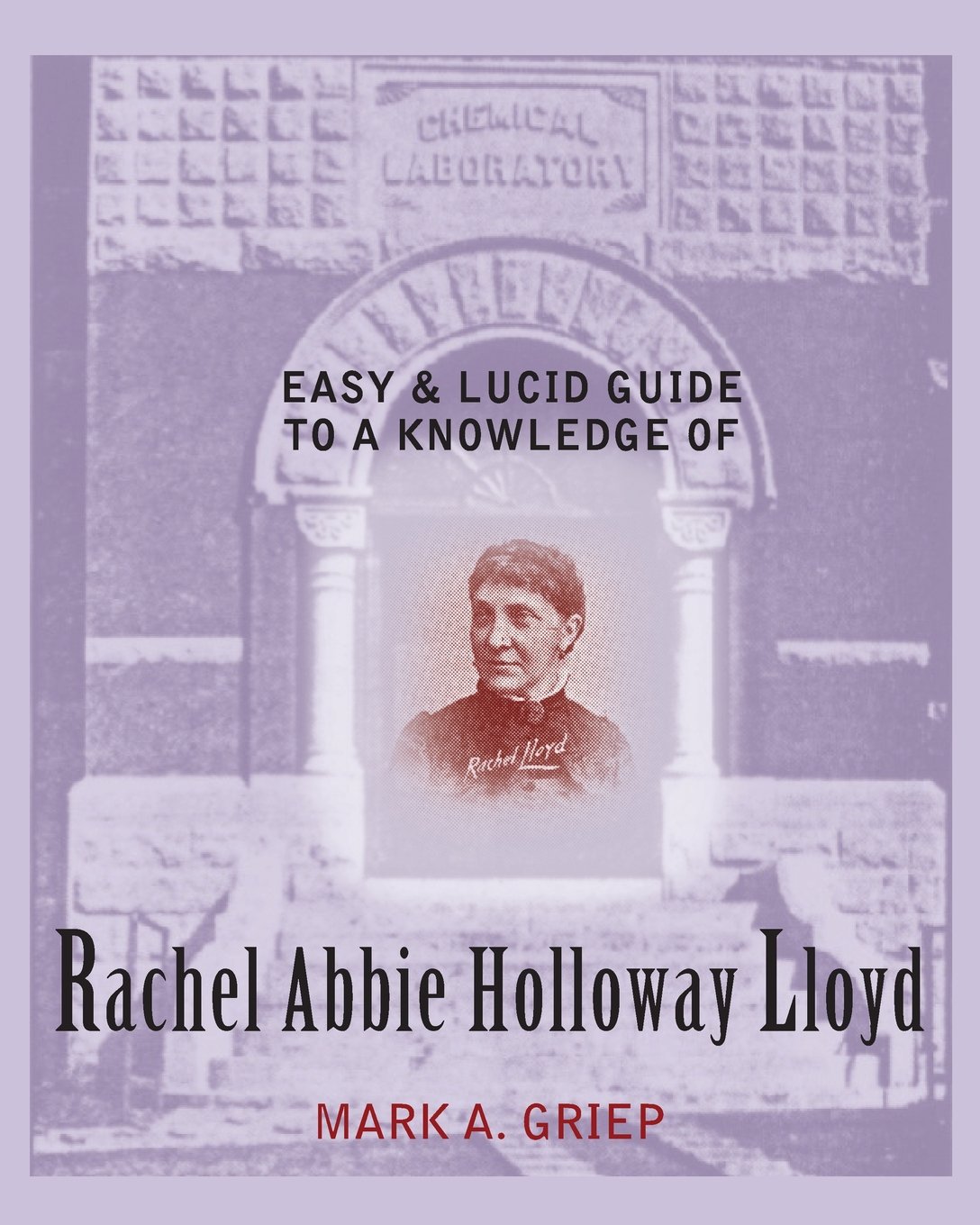



Rachel Lloyd was a world class scientist at a pioneer university. Out of tragic personal loss, she made it her mission to bring chemistry laboratory education first to young ladies, then to female pharmacy students, and finally to all students pursuing higher education on the frontier. The first woman in the United States to earn a Ph.D. in Chemistry (University of Zurich, 1887), she was recruited to the chemistry department at the University of Nebraska. Her knowledge and enthusiasm were instrumental in launching Nebraska’s beet sugar industry and in energizing many young women and men to become chemists.Despite Rachel Lloyd’s many achievements, she was all but forgotten by the mid-20th century. This book tells the story of her remarkable life and career. Mark Griep is a chemistry professor at the University of Nebraska-Lincoln. For his research, he studies the function of the enzymes that duplicate DNA in bacteria and is especially well known for his work with the enzyme named primase, the enzyme that starts the DNA duplication process. In the classroom, he has taught the entire range of courses from introductory chemistry for non-science majors to a graduate level course in chemical biology. He has also taught several honors courses including one for entering freshmen titled The Color Red that explored the abstract concept of "red" from nine academic perspectives. In 2007, he received an Alfred P. Sloan Award in the area of Public Understanding of Science to learn how chemistry and chemical imagery makes its way into the narrative of popular movies. In 2008, he received a Distinguished Teaching Award in recognition of his efforts to make chemistry understandable. In 2010, Oxford University Press published ReAction! Chemistry in the Movies that he co-authored with his wife Marjorie Mikasen. Since then, he has given several keynote lectures across the country about chemistry in the movies. In 2013, he began collaborating with Nebraska's two tribal colleges, Nebraska Indian Community College and Little Priest Tribal College, to indigenize their chemistry courses. Any college that wants to connect its science curriculum to its community can use the methods they are developing. He has been studying his family history since age 13 and the history of his Department since 1997.