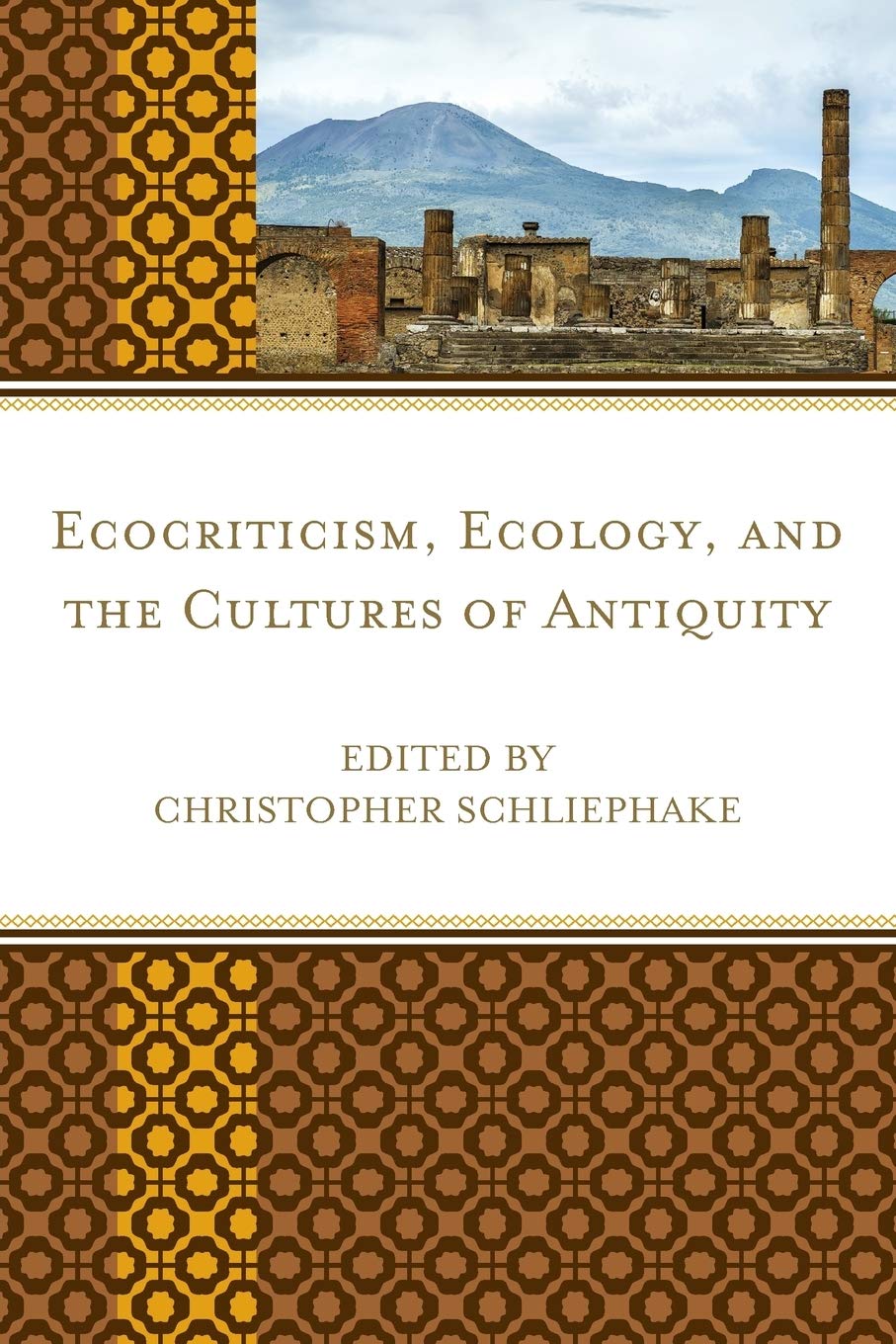
Ecocriticism, Ecology, and the Cultures of Antiquity (Ecocritical Theory and Practice)
$53.99
by Christopher Schliephake



Although current environmental debates lay the focus on the Industrial Revolution as a sociopolitical development that has led to the current environmental crisis, many ecocritical projects have avoided historicizing their concepts or have been characterized by approaches that were either pre-historic or post-historic: while the environmental movement has harbored the dream of restoring nature to a state untouched by human hands, there is also the pessimistic vision of a post-apocalyptic world, exhausted by humanity’s consumption of natural resources. Against this background, the decline of nature has become a narrative template quite common among the public environmental discourse and environmental scientists alike. The volume revisits Antiquity as an epoch which witnessed similar environmental problems and came up with its own interpretations and solutions in dealing with them. This decidedly historical perspective is not only supposed to fill in a blank in ecocritical discourse, but also to question, problematize, and inform our contemporary debates with a completely different take on “nature” and humanity’s place in the world. Thereby, a productive dialogue between contemporary ecocritical theories and the classical tradition is established that highlights similarities as well as differences. This volume is the first book to bring ecocriticism and the classical tradition into a comprehensive dialogue. It assembles recognized experts in the field and advanced scholars as well as young and aspiring ecocritics. In order to ensure a dialogic exchange between the contributions, the volume includes four response essays by established ecocritics which embed the sections within a larger theoretical and practical ecocritical framework and discuss the potential of including the pre-modern world into our environmental debates. “Too many writers assume that ecocriticism and environmental engagement began with the poems of Wordsworth or the writings of Thoreau. This collection of essays well demonstrates that for as long as humans have been creating texts they have been meditating critically upon their place within a natural world that far exceeds them in scale and duration. Of as much interest to those working in the environmental humanities as classists, Ecocriticism, Ecology, and the Cultures of Antiquity demonstrates that the Greek and Latin texts of antiquity have much of importance to say to a critical conversation today.” ―Jeffrey J. Cohen, George Washington University “This is the first volume that systematically addresses the contribution of cultures of antiquity to ecological thought. Written by international experts in the field, the essays cover a broad spectrum of areas ranging from environmental histories to close textual readings, from literary poetics to natural philosophy, from ecophobic to ecoerotic discourses, from green genres to the reception of classical sources in modern ecological contexts. This substantive volume impressively demonstrates the continued significance of cultures of antiquity as a deep-time dimension of contemporary ecological thought, testifying to the sustainability of texts across the boundaries of cultures and historical periods.” ―Hubert Zapf, University of Augsburg Serenella Iovino is Professor of Comparative Literature at the University of Turin, Italy. She is a past president of the European Association for the Study of Literature, Culture and Environment (EASLCE) and her previous books include Ecologia Letteraria (2006) and, as co-editor, Material Ecocriticism (2014). Brooke Holmes is Assistant Professor of Classics at Princeton University, USA. Her first book, The Symptom and the Subject: The Emergence of the Body in Ancient Greece , was published in 2009. She has also written on Lucretius, the Iliad , Euripides' Heracles , Plato, Aelius Aristides' Sacred Tales and the reception of epicureanism. TOC - no copy text Anna Banks grew up in a small town called Niceville (yes, really). She now lives in Crestview, Florida, with her husband and their daughter. She is the author of The Syrena Legacy series: Of Poseidon, Of Triton, and Of Neptune. Roman Bartosch is Full Professor of Teaching Anglophone Literatures and Cultures and Director of the Interdisciplinary Research Centre for Teaching in the Humanities at the University of Cologne, Germany. Terry Gifford is Visiting Scholar at the Centre for Writing and Environment, Bath Spa University, UK.