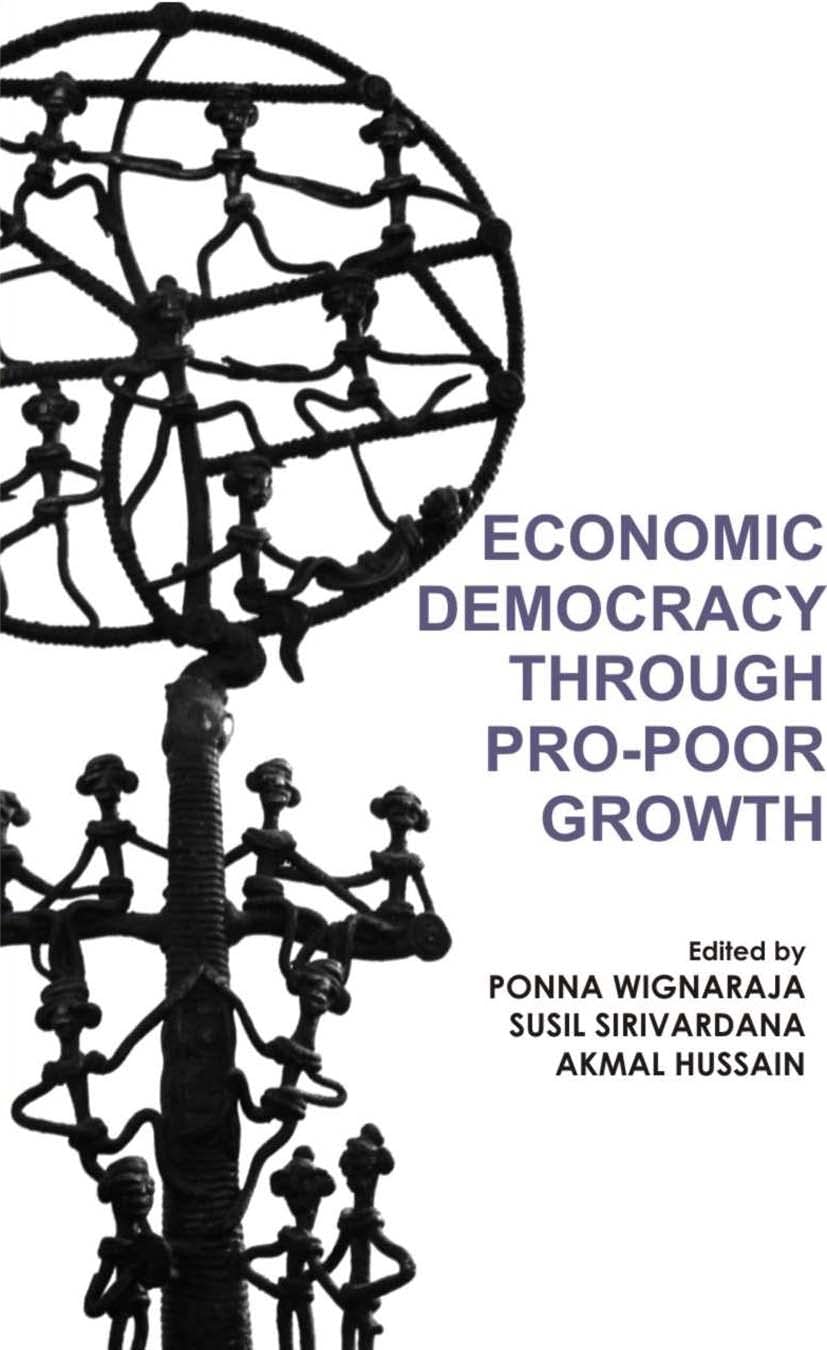



This volume addresses a central dilemma of our times from a perspective based on lessons from the ground―persistence of structural poverty after sixty years of independence amidst rapid economic growth, widening social anomie, political crisis and failing policy. . The collection presents an alternative school of thought which has been evolved by scholars and activists over decades, in which the poor are presented not as the problem but as an essential resource. Among this volume’s distinguishing ideas are: a new role for the poor, raising mass consciousness, a core methodology for transformation, restructuring the state, pro-poor partnerships for all social constituencies, insistence on holism and values, learning from the poor and new social movements, and eschewing a priori thinking. This perspective powerfully argues the validity and feasibility of sustainable and transformative societal change. . The compilation is rich in lucidly presented case studies and illustrative examples. The strategies advocated would catalyse the process of achieving political and economic democracy at the grassroots and facilitate sustainable development. They would also help in the democratization of the phase of transition and growth. This work is an excellent reference source for development economists and students, researchers and faculty studying governance, poverty and human rights, and issues of security and human rights. Through a series of illustrative case studies drawn from the field across five different countries in South Asia , this book offers a refreshing alternative perspective of economic development that seeks to convince the reader of the feasibility of a world that one would commonly disregard as utopian…. This book will be an important addition to the ongoing discussion on correcting the asymmetric and polarized growth patterns stemming from the adoption of "mainstream" economic ideologies. -- ASEAN Economic Bulletin ― Volume 28, No 3, December 2011 The present book gives an in-depth account of the importance of economic democracy as an integral part of the holistic approach in the South Asian region. It is of the view that with such large numbers of efficient poor in South Asia as valuable human resource, they can effectively contribute to the growth process as subjects of development instead of passive objects of development. It should serve as an important source as it provides a wealth of information about linking political democracy with economic democracy in the South Asian region and for that a list of selected references has also been given by every author in their respective chapters. -- South Asia Economic Journal Ponna Wignaraja Chairman, South Asian Perspectives Network Association (SAPNA), Colombo. He served as Vice Chairman of the SAARC Independent South Asian Commission on Poverty Alleviation (1992). During a career with the UN system of over four decades, Dr Wignaraja has held numerous advisory roles in the World Bank, IMF, the UN University, UNESCO, UNICEF, IFAD and UNRISD. He has pioneered development banking and poverty focussed institutions at national and local levels, both internationally and in South Asia. A prolific author, Dr Wignaraja has published more than eight books so far, including Women, Poverty and Resources; Participatory Development: Learning from South Asia (co-author); New Social Movements in the South (ed.); and Pro-poor Growth and Governance in South Asia (ed.). He is currently also involved in issues relating to conflict management transformation and negotiations for peace in several South Asian countries. In 1993, he was awarded the highest civilian honour for national service in Sri Lanka― Deshamanya . Susil Sirivardana is the Chairman, Participatory Institute of Development Alternatives and Associate Coordinator, South Asian Perspectives Network Association, Colombo. He was a member of the Sri Lankan Administrative Service for over two decades where his contribution to two outstanding participatory development programmes―the Janasaviya National Poverty Alleviation Programme and the Million Houses Programme―is widely recognized. He also served as an advisor to the 1992 SAARC Poverty Commission. Susil Sirivardana has written extensively on housing and poverty alleviation and his co-edited publications include Readings on Pro-poor Planning through Social Mobilization in South Asia, Vol.I and Pro-poor Growth and Governance in South Asia. Currently he is also working on issues of conflict resolution and negotiation in Sri Lanka. Akmal Hussain has authored/co-authored several books on Pakistan’s economic development, including strategic issues in Pakistan’s Economic Policy, and more recently the UNDP, Pakistan National Human Development Report , 2003. He has also contributed to Pakistan’s macro-economic policy as an independent economist in the President’s Economic Advisory Board (1999–2002). Over the last decade he has helped establish inst