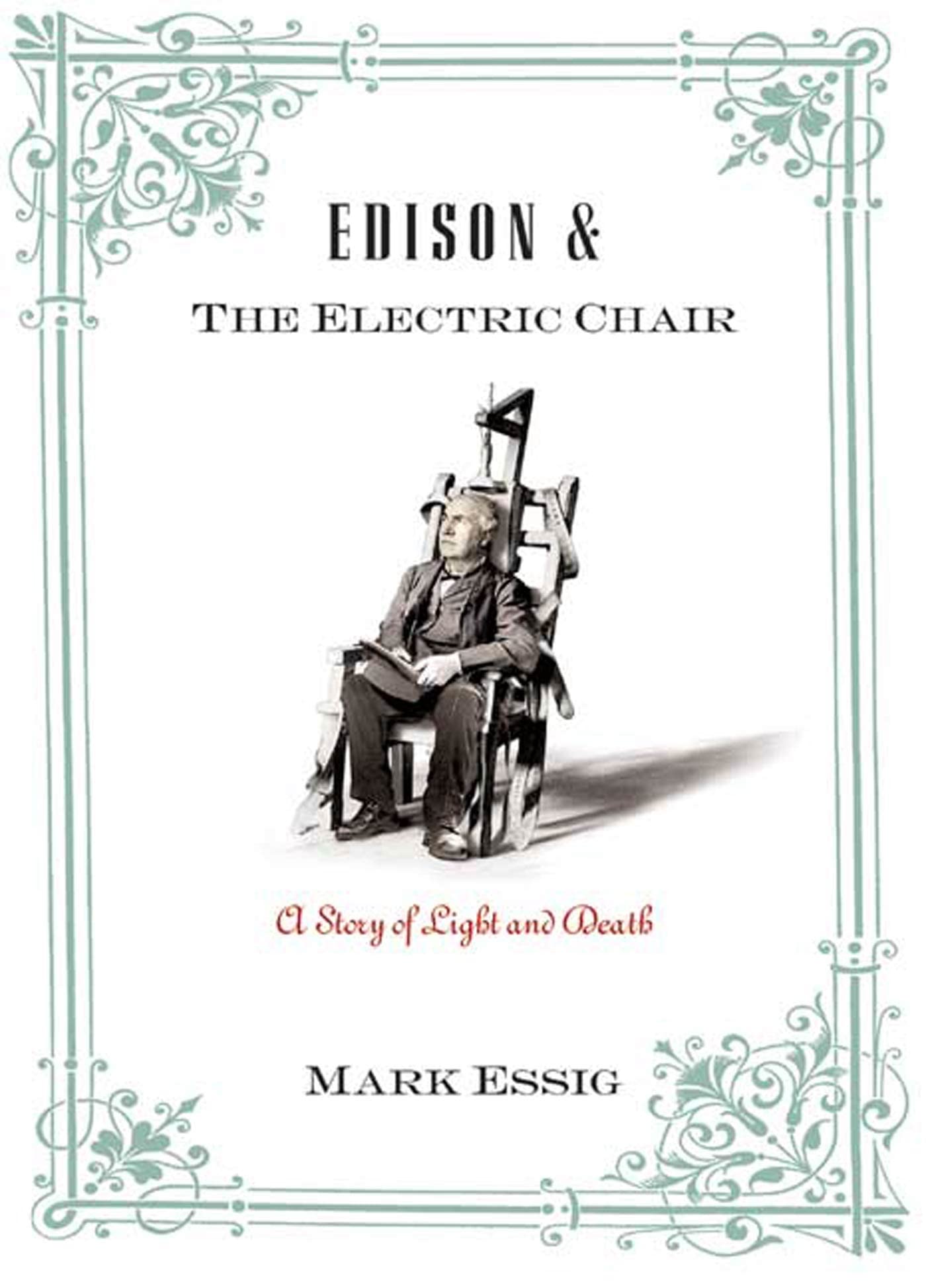



A Discover magazine Top Science Book Thomas Edison stunned America in 1879 by unveiling a world-changing invention--the light bulb--and then launching the electrification of America's cities. A decade later, despite having been an avowed opponent of the death penalty, Edison threw his laboratory resources and reputation behind the creation of a very different sort of device--the electric chair. Deftly exploring this startling chapter in American history, Edison & the Electric Chair delivers both a vivid portrait of a nation on the cusp of modernity and a provocative new examination of Edison himself. Edison championed the electric chair for reasons that remain controversial to this day. Was Edison genuinely concerned about the suffering of the condemned? Was he waging a campaign to smear his rival George Westinghouse's alternating current and boost his own system? Or was he warning the public of real dangers posed by the high-voltage alternating wires that looped above hundreds of America's streets? Plumbing the fascinating history of electricity, Mark Essig explores America's love of technology and its fascination with violent death, capturing an era when the public was mesmerized and terrified by an invisible force that produced blazing light, powered streetcars, carried telephone conversations--and killed. “A thoroughly modern view of Edison, removed from his pedestal.” ― The Washington Post Book World “. . steeped in historical scholarship and written with sober elegance.” ― Newsday “Reads like a good novel.” ― The Economist “[An] engaging and meticulously researched book. Edison & the Electric Chair delivers a thrilling jolt of discovery.” ― Entertainment Weekly Mark Essig earned a doctorate in American history from Cornell University. A native of St. Louis, he now lives in Los Angeles. This is his first book. Edison & the Electric Chair A Story of Light and Death By Mark Regan Essig Walker & Company Copyright © 2003 Mark Regan Essig All right reserved. ISBN: 9780802714060 Chapter One Early Sparks The ancient Greeks were the first to record the observation that amber, after being rubbed, attracted bits of straw or cloth. Around 1600 the Englishman William Gilbert noted that materials such as diamond and glass shared amber's attractive qualities. He coined a new word, electric , based on elektron , Greek for amber. An electric was a substance that, when rubbed, drew light objects to itself; electricity was the property shared by these substances. After Gilbert the study of electricity languished for a century or so until it was taken up by members of London's Royal Society, a new association devoted to the study of the natural world. Using hollow glass tubes thirty inches long and one inch in diameter, Royal Society members produced the strongest electrical effects ever witnessed. In 1729 Stephen Gray, an experimenter with the society, corked the ends of his tube to keep dust from being sucked inside. After rubbing the glass, he noticed to his surprise that feathers were attracted to the cork as well as to the glass. The "attractive Virtue," as he put it, had been "communicated" from the glass to the cork. Curious to see how far this communication would extend, Gray attached ordinary thread to the cork, tied a shilling to the string, and found that the coin attracted feathers. He extended the string and tied on more objects-a piece of tin, an iron poker, a copper teakettle, various vegetables-and found that all became electrified. Gray attached thirty-two feet of thread to the corked end of the glass tube, tied a billiard ball to the other end of the string, and dangled it out a window. When he rubbed the glass, he found that the billiard ball still proved attractive. Abandoning a plan to drop a string from the cupola of St. Paul's Cathedral, Gray decided to proceed horizontally. He snaked a long piece of iron wire along the ceiling of his workroom, suspending it from the beams with pieces of string. When he touched the wire with the rubbed glass wand, however, the attractive virtue did not communicate to the far end. Gray thought the string suspenders might be too thick, so he tried silk, which worked beautifully. Equally thin brass, however, failed, leading Gray to conclude that success depended upon the supports "being Silk, and not upon their being small." The differences between silk and brass wire raised the question of which objects could be supports and which receivers . (Before long another experimenter started calling these two classes conductors and insulators .) To test the electrical properties of the human body, Gray persuaded an orphan boy to allow himself to be suspended horizontally from the ceiling, supported at his chest and thighs by stout loops of silk. Gray rubbed his glass tube, touched it to the lad's feet, and found that he attracted feathers to his fingers. Philosophers at the time believed that electricity-as well as light, heat