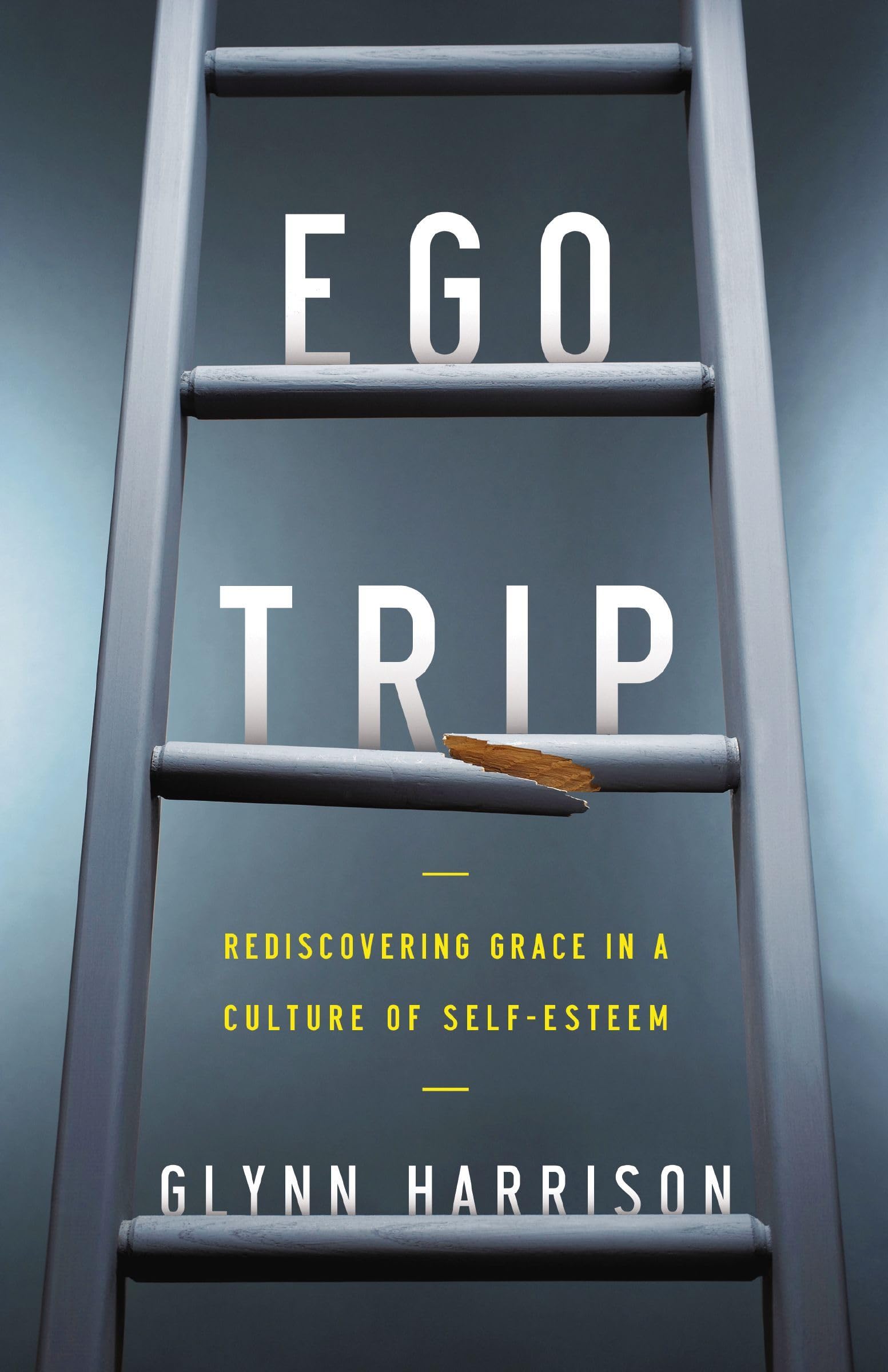



Is loving yourself really the solution to all your problems? In the world of popular psychology, there are few things more protected or indulged than that fragile little trait known as self-esteem. Today, it’s not the sin of pride we worry about, but the sin of not liking ourselves enough. In Ego Trip , psychiatrist Glynn Harrison takes aim at what has become one of Western society’s most entrenched ideologies. He charts the rise of this ubiquitous value, arguing that the “science” underlying it is flawed, that there is little evidence efforts to promote self-esteem work, and that, in its popular form of “boosterism,” self-esteem promotion comes with hazardous and unwanted side effects. Is there a more biblically and psychologically secure approach to big questions of significance and worth? Dr. Harrison asks. You will be intrigued, challenged, and quite possibly freed by his conclusion: compared with the failed ideology of self-esteem, the gospel offers the foundation for personal significance and meaning. Glynn Harrison, MD, is Emeritus Professor of Psychiatry at the University of Bristol, UK, where he was a practicing consultant psychiatrist and Chair of the Department of Psychiatry. He speaks widely on issues of faith and psychology, neuroscience and psychiatry. He is married to Louise. Ego Trip rediscovering grace in a culture of self-esteem By Glynn Harrison ZONDERVAN Copyright © 2013 Glynn Harrison All rights reserved. ISBN: 978-0-310-51654-5 Contents Preface, 11, Introduction, 13, 1. Birth of an Ideology, 23, 2. Tipping Point, 35, 3. Catch Them Young and Sell It Hard, 48, 4. To God You're Big Stuff!, 58, 5. Does Boosterism Work?, 68, 6. The Age of the Narcissist, 78, 7. Kids Praise, 91, 8. All Roads Lead to Philosophy, 104, 9. We Did It My Way, 123, 10. Amazed by Grace, 141, 11. How to Stop Judging Yourself, 157, 12. The Bigger-Than-Your-Ego Trip!, 174, Postscript, 188, Endnotes, 193, CHAPTER 1 BIRTH OF AN IDEOLOGY On Saturday, November 22, 2003, just twenty-six secondsbefore the end of the game, England bagged the Rugby WorldCup with a last-gasp drop goal by Jonny Wilkinson. The crowderupted, sworn enemies hugged in jubilation, and grown menwept. A hero was born. Since first walking on to a rugby pitch asa youngster, here was everything the young Jonny Wilkinson hadbeen working toward. It should have been the greatest moment ofhis life. And yet within hours he was "tumbling out of control." What happened? In his book, Tackling Life , Wilkinson tellshow for years he was haunted by anxiety. Stalked by insecurityand self-doubt, life was like a game that he couldn't win. Insteadhe found himself chained to a treadmill of achievement in whichyou are only as good as your last kick. The better things were, themore he had to lose. Many of us have experienced similar feelings. Like JonnyWilkinson, we try to feel better by being better. And then, stuckon a treadmill of achievement and addicted to other people'sapproval, we just keep on running. So could this be a problem with"self-esteem"? And could we learn to feel better about ourselvesmore generally by thinking differently about our goals, our achievements,and our efforts? THE ACHIEVEMENT GAME The first person to coin the term "self-esteem" was WilliamJames, an American widely credited as the "father of modernpsychology." And, like Jonny Wilkinson, James linked the waywe feel about ourselves to the way we think about our goals andachievements in life. Born in 1842 to a well-to-do New York family, young Williamwas something of a polymath. His interests straddled thefields of philosophy, medicine, and the emerging discipline ofpsychology. The family were all high achievers: William's father,Henry, was an exponent of the Swedish Christian mystic EmanuelSwedenborg; Henry Jr, William's brother, was a budding novelist.The family travelled widely and enjoyed a refined and cosmopolitanlifestyle. But William battled with mental health problems and, despitegraduating in medicine from Harvard, he never practiced as a doctor.Instead he decided to take up psychology. A prolific writer andachiever, his works are a potent reminder that psychology was thenonly slowly emerging as a separate discipline from philosophy. Infact, James also founded the philosophical school of pragmatism and he is widely credited with inventing the term. James was interested in the feelings generated when we evaluateor assess our achievements. In his view, the human mind prizesachievement above all else, and the more successful we are, thebetter we feel about ourselves generally. He taught that, if you taketime to observe your thoughts and reflect on your attitudes, yousoon realize that, like Wilkinson, you are an evaluator . We constantlyscore or "rate" our achievements as a means of scoring andrating ourselves as whole people ("I'm a hopeless communicator,so I feel like a hopeless person"; "I'm a great hockey player, one ofthe best,