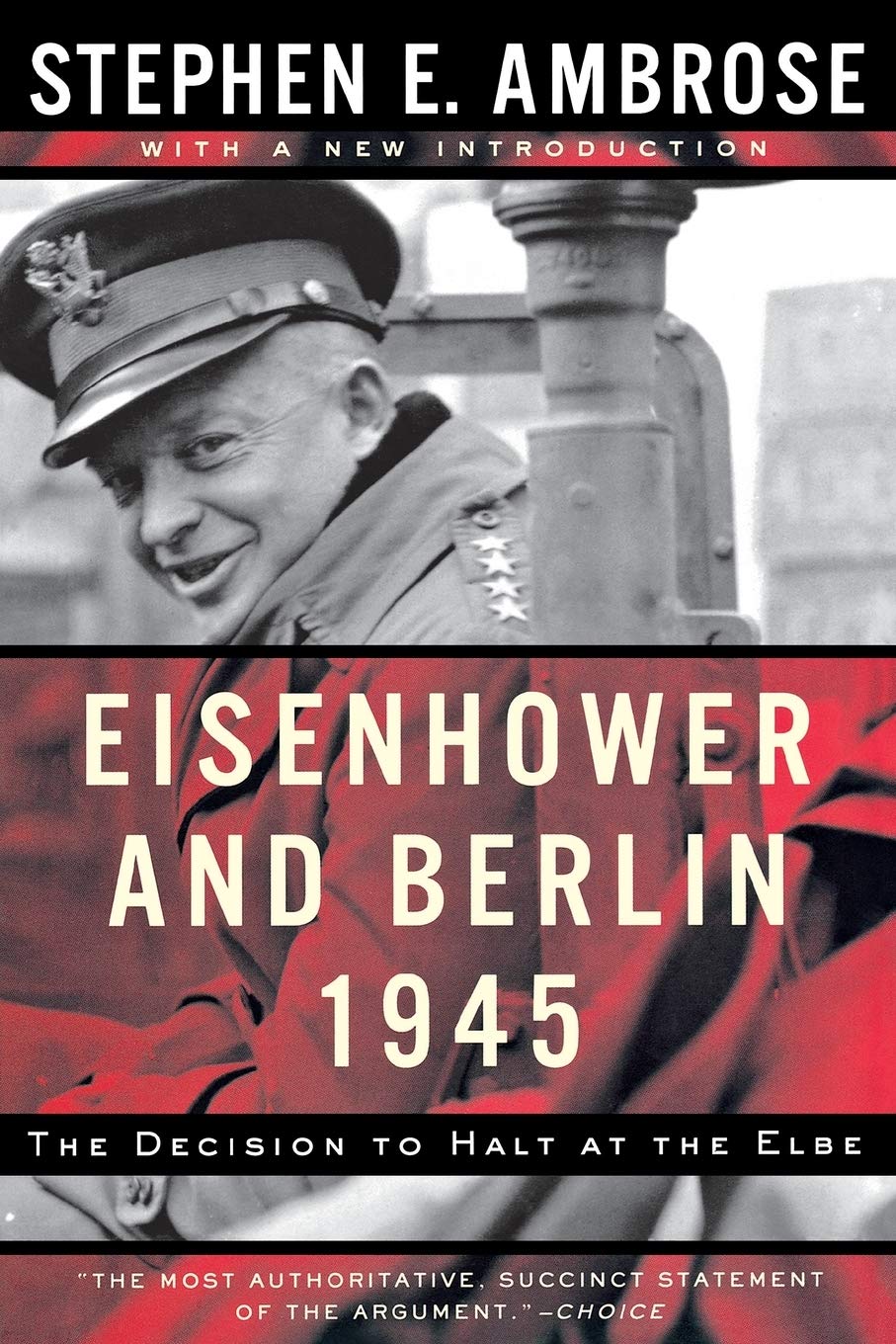
Eisenhower and Berlin, 1945: The Decision to Halt at the Elbe (Norton Essays in American History)
$13.00
by Stephen E. Ambrose



In the final months of World War II, with the Allied forces streaming into Germany on two fronts, a major decision had to be made: where to draw a stop line to prevent an accidental clash between the Russian and the Anglo-American armies. Behind this decision lay another. Whose forces would be the first to reach Berlin? General Dwight David Eisenhower, supreme commander of the British and American armies, chose to halt at the Elbe River and leave Berlin to the Red Army. Could he have beaten the Russians to Berlin? If so, why didn't he? If he had, would the Berlin question have arisen? Would Germany have been divided as it was? Would the Cold War have assumed a direction more favorable to the West? In a narrative of steady fascination, Stephen E. Ambrose describes both the political and the military aspects of the situation, sketches the key players, explains the alternatives, and considers the results. The result is a sharply focused light on an important question of the postwar world. This paperback edition features a new introduction by the author. Maps An able and convincing brief, defending Eisenhower's decisions. -- American Historical The most authoritative, succinct statement of the argument that Eisenhower was correct in his decision. -- Choice The distinguished historian Stephen E. Ambrose is the author of several best-selling books on World War II and was an editor of the Eisenhower Papers.