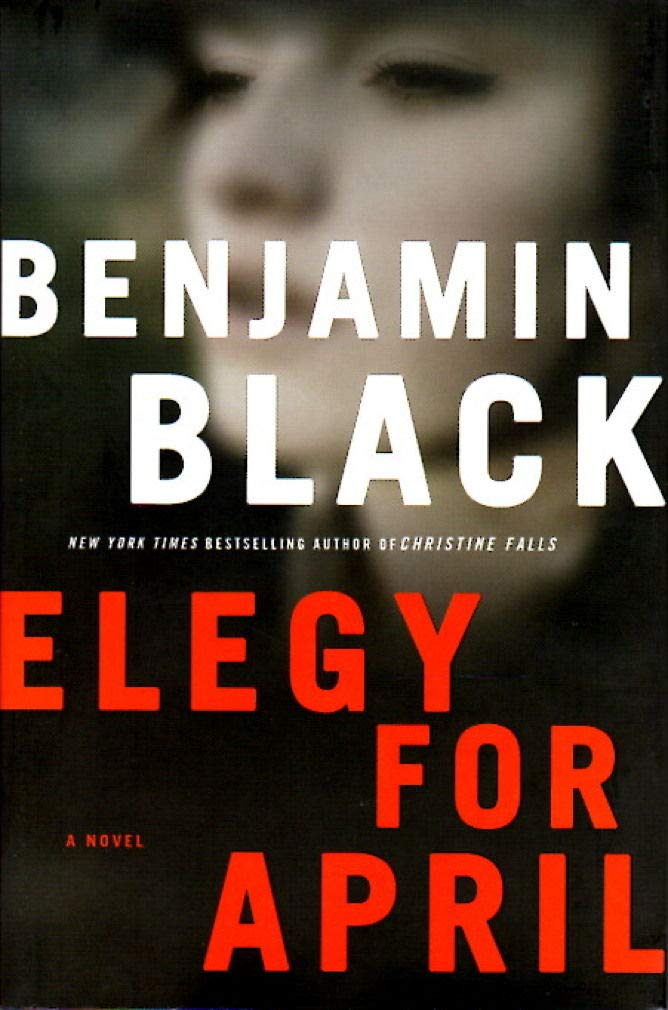



Quirke—the hard-drinking, insatiably curious Dublin pathologist—is back, and he's determined to find his daughter's best friend, a well-connected young doctor April Latimer has vanished. A junior doctor at a local hospital, she is something of a scandal in the conservative and highly patriarchal society of 1950s Dublin. Though her family is one of the most respected in the city, she is known for being independent-minded; her taste in men, for instance, is decidedly unconventional. Now April has disappeared, and her friend Phoebe Griffin suspects the worst. Frantic, Phoebe seeks out Quirke, her brilliant but erratic father, and asks him for help. Sober again after intensive treatment for alcoholism, Quirke enlists his old sparring partner, Detective Inspector Hackett, in the search for the missing young woman. In their separate ways the two men follow April's trail through some of the darker byways of the city to uncover crucial information on her whereabouts. And as Quirke becomes deeply involved in April's murky story, he encounters complicated and ugly truths about family savagery, Catholic ruthlessness, and race hatred. Both an absorbing crime novel and a brilliant portrait of the difficult and relentless love between a father and his daughter, this is Benjamin Black at his sparkling best. If Elegy for April isn't the author's best book to date, it certainly boasts the elements for which he is known: a brooding, dark main character; a literary elegance; and, most of all, an evocation of a gloomy Dublin in which "class and religious divisions and [the city's] urgent, albeit repressed, sexual atmospheres helps his characters spring from the page" ( Los Angeles Times ). The only major point of contention was the plot, which a couple of critics felt was too contrived and slow. ("Mystery plotting is hardly [Banville's] primary concern," noted the New York Times .) But if readers won't lie awake turning the pages, they will cherish Banville's style. "When English prose looks like it's dying, the critic Cyril Connolly once said, an Irishman comes along with something to revive it and demolish the clichés" ( Los Angeles Times ). *Starred Review* Quirke, the haunted Dublin pathologist and haphazard sleuth, returns in the third in Black’s superb series of sharply etched, nearly Jamesian mysteries. His drinking has sent him to rehab, and upon his release, he makes an extravagant bid for a new start by buying a limited-edition luxury car, even though he can’t drive. The pantherlike Alvis intimidates Quirke to no end, injecting comedy into a complicated tale surrounding the disappearance of a young doctor, April, one of Quirke’s long-suffering daughter Phoebe’s few friends. Phoebe is the most honest among a little band of strivers comprising wild April; sexy actress Isabel; Jimmy Minor, a relentless, pint-size reporter; and Patrick Ojukwu, a handsome student from Nigeria. At Phoebe’s anxious urging, Quirke badgers April’s prominent, haughty, and infuriated family, with backup from the laconic Inspector Hackett. It’s a cold world of fog and rain, and every setting, barbed conversation, and psychological maze Black (John Banville) crafts is gripping in its moody beauty, lancing wit, and subtle turns of mind as Quirke weaves his way to the shocking truth, and Phoebe, once again, is brutally denied happiness. In Black’s atmospheric and penetrating works of Irish noir, pain, prejudice, greed, and violence brew behind lace curtains. --Donna Seaman “Striking, filled with thematic gloom, yet the writing sparkles… like Chandler, [Black’s] a poet of locale, preoccupied by weather and by light or its absence.”— The Los Angeles Times “Elegant.... [Black/Banville’s] sinuous prose, subtle eroticism and 1950s period detail do more than enough to put [his] series on the map.”— The New York Times “Methodical, detailed and always gripping.”— USA Today “[A] gorgeously sad and atmospheric book about family, lust, friendship and ‘50s-style repression.”— The Seattle Times “Like its predecessors Christine Falls and The Silver Swan, Mr. Black/Banville’s new tale of misdeeds is powerfully written, laced with lyrical visual imagery about a distant Ireland still getting used to the 20th century and peopled with sharply drawn characters.”— Pittsburgh Post-Gazette “Cool, atmospheric… Mr. Black/Banville has raised the bar for the soul’s-night genre.”— Dallas Morning News “The greatest satisfactions of reading Elegy for April come from the atmosphere of 1950s Dublin, in which coal-fire-assisted smog impairs visibility.”— The Denver Post “In Elegy for April, he’s nailed down the recipe, the style and pace that allows him to craft a story of suspense while filling it with sharp-eyed, bigger picture observations.”— Time Out Chicago “A master of atmosphere; the fear and dread associated with hidden desires and deeds fairly leap off the page.”— Library Journal , starred review “Black’s engrossing third crime thriller set in 1950s Dublin find