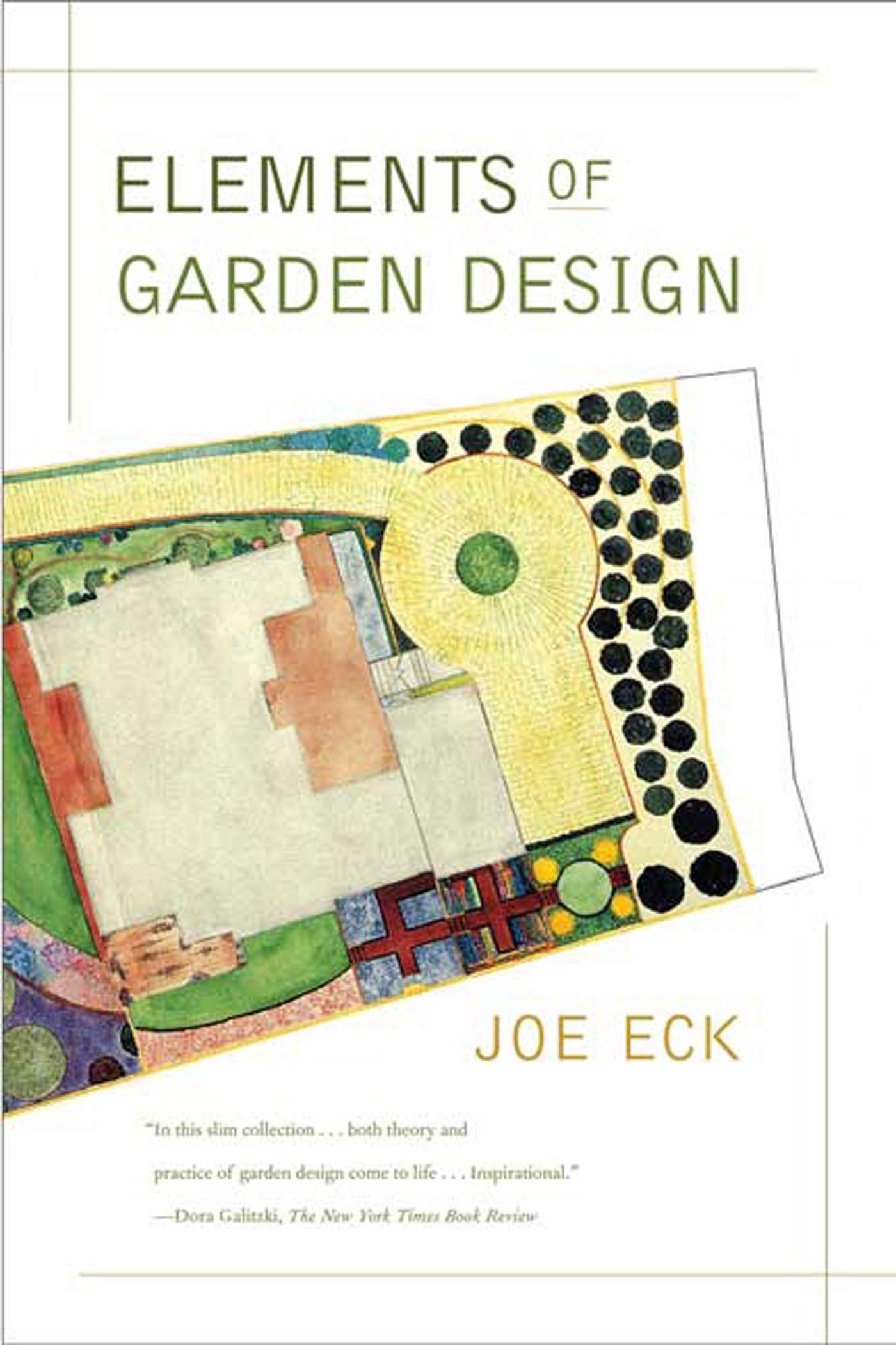



Elements of Garden Design does what few gardening books do--it addresses the process of conceiving a whole garden, as opposed to a single element like color or a particular class of plant. Joe Eck explores the idea of a garden, and offers a practical approach to translating concepts such as "intention" and "harmony" into the solid forms of hedges and terraces, paths and rooms. Novice and experienced professional alike will find both food for thought and down-on-the-ground advice on such matters as creating child- and pet-friendly designs. “This book charts a deliberate and negotiable course through the mysteries of creating a garden. Articulate and thought provoking, the strength of Eck's writing comes from its basis in practice, for in actually creating a designed landscape that works, Eck has no equal in America.” ― Daniel J. Hinkley, author of The Explorer's Garden and founder of Heronswood Nursery “Garden design is notoriously difficult to write about well, but in this gem of a book, Joe Eck succeeds in communicating the essentials of this elusive subject with clarity, grace, and authority. There is no other work on design that I would so unhesitatingly recommend to novice and experienced gardeners alike.” ― Tom Fischer, editor of Horticulture magazine “The are a handful of garden communicators who take on American garden design. Among them, one voice dependably gets to the heart of the matter. Rather than presenting 101 landscape plans, Joe Eck truly identifies and examines elements--not just the "what should be," but "what could be." He helps readers visualize the possiblilites and identify ideas that match their garden's spirit.” ― Ken Druse, author of The Passion of Gardening “What a pleasure to have Joe Eck's Elements of Garden Design at hand, for it is full of precise, beautifully written wisdom. I particularly love his thoughts on achieving repose with the "flat and quiet plane," or "the use of a large gesture" in the garden; and, in his essay on time, reminding us of the realities of an aging garden--more shade, yes, but also a restraint imposed, a natural process of editing, "and if one is wise, one will recognize that less is, paradoxically, more.” ― Page Dickey, author of Breaking Ground: Portraits of Ten Garden Designers Joe Eck's Elements of Garden Design is unprecedented in its treatment of the idea of a garden, showing how the envisioning of one as a conceptual whole can be translated into the solid forms of hedges and terraces, paths and rooms. Joe Eck, along with Wayne Winterrowd, is the co-author of The Year at North Hill: Four Seasons in a Vermont Garden and Living Seasonally: The Kitchen and the Table at North Hill . They are co-founders of the garden design firm North Hill, and live in Vermont.