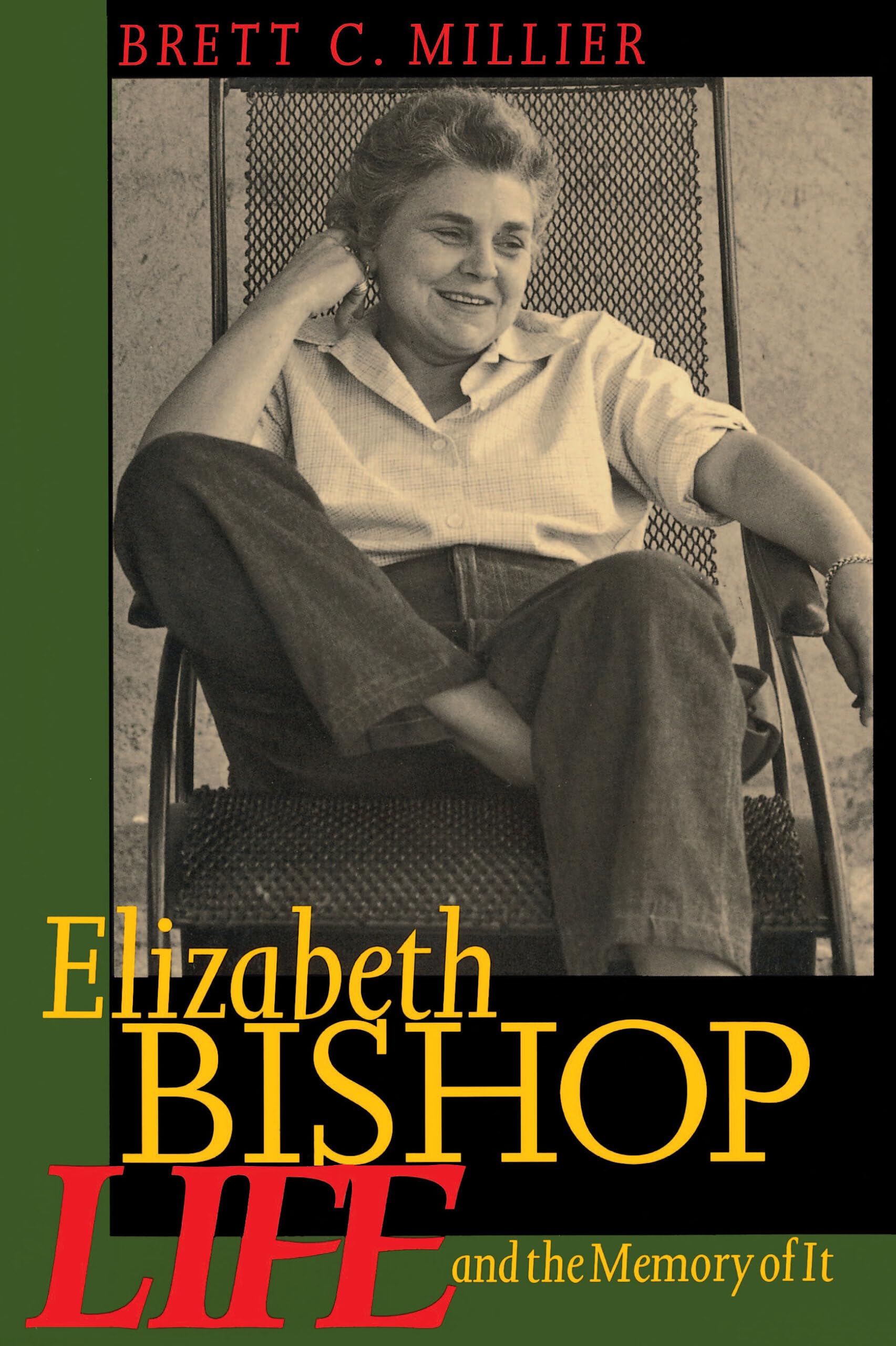



Elizabeth Bishop dedicated her poetry to telling “what really happened.” Yet what really happened in the life on one of the twentieth century's finest and most beloved American poets has eluded readers for years. In this first full biography, Brett Millier pieces together the compelling and painful story of Bishop's life and traces the writing of her brilliantly crafted poems. "An excellent biography." ― New York Times Book Review "Unlike Lowell and other poets of her time, Bishop disdained the confessional, but Millier's authoritative reading of her poems suggests how they allude glancingly, through ironic veils of fable and allegory, to her homosexuality, her alcoholism, and her paralyzing depression. This biography will act as a powerful corrective to the impression of serene perfection engendered by the greatest of Bishop's poems; they were in no way as easy to write as their author made them seem." ― New Yorker Brett Millier pieces together the compelling and painful story of Bishop's life and traces the writing of her brilliantly crafted poems. Brett C. Millier is Associate Professor of American Literature and Civilization at Middlebury College in Vermont. Elizabeth Bishop Life and the Memory of It By Brett C. Millier University of California Press Copyright © 1995 Brett C. Millier All right reserved. ISBN: 9780520203457 One The Scream 1911-1930 Not until 1952, when she set up a stable and happy life in the household of Lota de Macedo Soares, could Elizabeth Bishop take objective account and make direct artistic use of her difficult childhood. During this time, she became deeply interested in her family's circumstances in her early years, and she wrote anxiously to her aunt and cousin asking for artifacts, family treasures, firsthand historical accounts of life in Nova Scotia in the late-nineteenth and early-twentieth centuries. Elizabeth dreamed aloud in letters of buying a house in Nova Scotia, an authentic old house "exactly like my grandmother's."1 The accounts of her childhood that poured out of her in prose, poetry, and letters in this the only extended period of security in her adult life contrast with her earlier attempts at an autobiographical novel. They explore in frank first-person flashbacks how it felt to be a child in those circumstances, fatherless and essentially motherless, among people two generations removed, conversation and events circling ominously around unspoken tragedy concerning her. Hard facts about Elizabeth Bishop's childhood, as about anyone's, are few. And yet, few writers have been as consistent and complete in writing about childhood. Bishop claimed a very literal sort of accuracy as her highest poetic value, and she is rarely caught in an error or a contradiction. Her own accounts, in poetry and prose both published and unpublished, are the main source of information about her earliest years. Elizabeth Bishop was born the only child of William T. Bishop and Gertrude May Boomer Bishop on February 8, 1911, in Worcester, Massachusetts. William Bishop was born in 1872, the eldest of eight children, only four of whom survived to adulthood. His father, John W. Bishop, was a native of White Sands, Prince Edward Island, and his mother, Sarah Anne Foster Bishop, was born in Massachusetts. William at the time of his marriage was thirty-six years old. "One of the most capable estimators in the structural world," he was vice-president of his father's highly successful contracting firm, the J. W. Bishop Company, builders of such noted Boston landmarks as the Public Library, the Museum of Fine Arts, and the old Charlestown jail. Gertrude Boomer was born the second of five children of William Brown Boomer (the family name was variously spelled Boomer or Bulmer, with the l silent) and Elizabeth Hutchinson Boomer, of the British Hutchinson sailing family. Elizabeth liked to point out that her great-grandfather Hutchinson had been lost at sea off Cape Sable, and she once visited this "graveyard of the Atlantic," either to fulfill her destiny by drowning, she said, or to write about the place. The piece was never finished, but Elizabeth saw her temperamental origins in these adventurous ancestors: "That line of my family seems to have been fond of wandering like myselftwo, perhaps three, of the sea-captain's sons, my great uncles, were Baptist missionaries in India."2 She was three-quarters Canadian and one-quarter New Englander and claimed to have had ancestors on both sides of the Revolutionary War. The Boomers were New York State Tories given land grants in Nova Scotia by George III. William Bishop and Gertrude Boomer met in 1907 and were married at New York's Grace Church in June of the following year. They honeymooned in Jamaica and sailed to Panama before return- ing to Massachusetts to set up house at 875 Main Street in Worcester. Elizabeth spent the earliest part of her life in wealthy circumstances in this house. Her father was a frank an