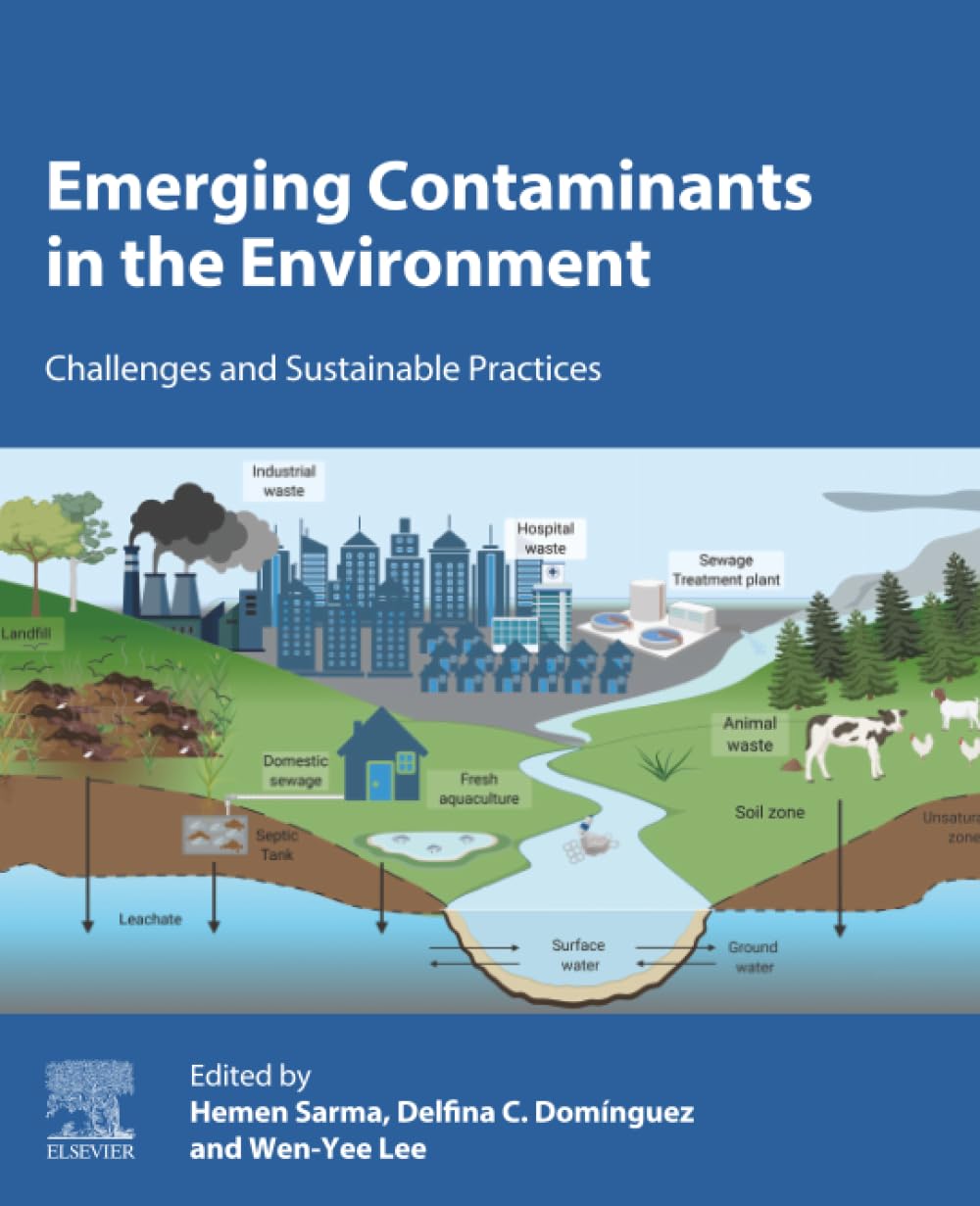
Emerging Contaminants in the Environment: Challenges and Sustainable Practices
$170.00
by Hemen Sarma



Emerging Contaminants in the Environment: Challenges and Sustainable Practices covers all aspects of emerging contaminants in the environment, from basic understanding to different types of emerging contaminants and how these threaten organisms, their environmental fate studies, detection methods, and sustainable practices of dealing with contaminants. Emerging contaminant remediation is a pressing need due to the ever-increasing pollution in the environment, and it has gained a lot of scientific and public attention due to its high effectiveness and sustainability. The discussions in the book on the bioremediation of these contaminants are covered from the perspective of proven technologies and practices through case studies and real-world data. One of the main benefits of this book is that it summarizes future challenges and sustainable solutions. It can, therefore, become an effective guide to the elimination (through sustainable practices) of emerging contaminants. At the back of these explorations on sustainable bioremediation of emerging contaminants lies the set of 17 goals articulated by the United Nations in its 2030 Agenda for Sustainable Development, adopted by all its member states. This book provides academics, researchers, students, and practitioners interested in the detection and elimination of emerging contaminants from the environment, with the latest advances by leading experts in emerging contaminants the field of environmental sciences. Covers most aspects of the most predominant emerging contaminants in the environment, including in soil, air, and water - Describes the occurrence of these contaminants, the problems they cause, and the sustainable practices to deal with the contaminants - Includes data from case studies to provide real-world examples of sustainable practices and emerging contaminant remediation Discusses the rapid, cost-effective and sustainable remediation methods needed to eliminate emerging pollutants from the air, water and soil Emerging Contaminants in the Environment: Challenges and Sustainable Practices covers all aspects of emerging contaminants in the environment, from basic understanding to different types of emerging contaminants, how these threaten organisms, environmental fate studies, detection methods, and sustainable practices of dealing with contaminants. Emerging contaminant remediation is a pressing need due to ever-increasing pollution in the environment and it has gained a lot of scientific and public attention due to its high effectiveness and sustainability. The bioremediation discussions of these contaminants is covered from the perspective of proven technologies and practices through case studies and real-world data. One of the main benefits of the book is the guide to how to eliminate (through sustainable remediation) emerging contaminants, including applied areas in current perspectives. The book goes on to summarize future challenges and sustainable solutions. Emerging Contaminants in the Environment: Challenges and Sustainable Practices provides academics, researchers, students, and practitioners interested in detection and elimination of emerging contaminants from the environment, with the latest advances by leading experts in emerging contaminants the field of environmental sciences. Dr. Hemen Sarma is an Associate Professor in the Department of Botany at Bodoland University, India, whose multidisciplinary research spans plant sciences, environmental sustainability, nanobiotechnology, and agriculture. His work advances understanding of plant-environment interactions and sustainable agricultural practices, focusing on emerging pollutants, plant-microbe interactions, and biochar technology. Recognized internationally, Dr. Sarma was elected a Fellow of the Linnean Society of London and received the UNESCO-TWAS award for science popularization in the Global South. He is also acknowledged among the top 2% of most cited authors worldwide. His academic career spans over two decades, including a PhD in Botany with specialization in plant and environmental pollution from Gauhati University, India, and postdoctoral fellowships at institutions such as the University of Texas at El Paso, USA. Delfina C Dominguez is a Professor at The University of Texas at El Paso, USA. She completed her Ph.D. in Molecular Biology from New Mexico State University and postdoctoral studies from The University of Virginia. Her research interests include Molecular diagnostics, antimicrobial resistance and calcium signaling in Bacteria The focus of Dr. Dominguez’s work is in bacterial physiology and pathogenesis. Currently, she has active collaborations with other investigators to develop and validate point of care devices for rapid identification of pathogens as well as clinical biomarkers. Dr. Dominguez has over 46 publications to including conference papers and book chapters, and over 900 citations. Wen-Yee Lee is Associate Professor of Chemistry and Biochemistry a