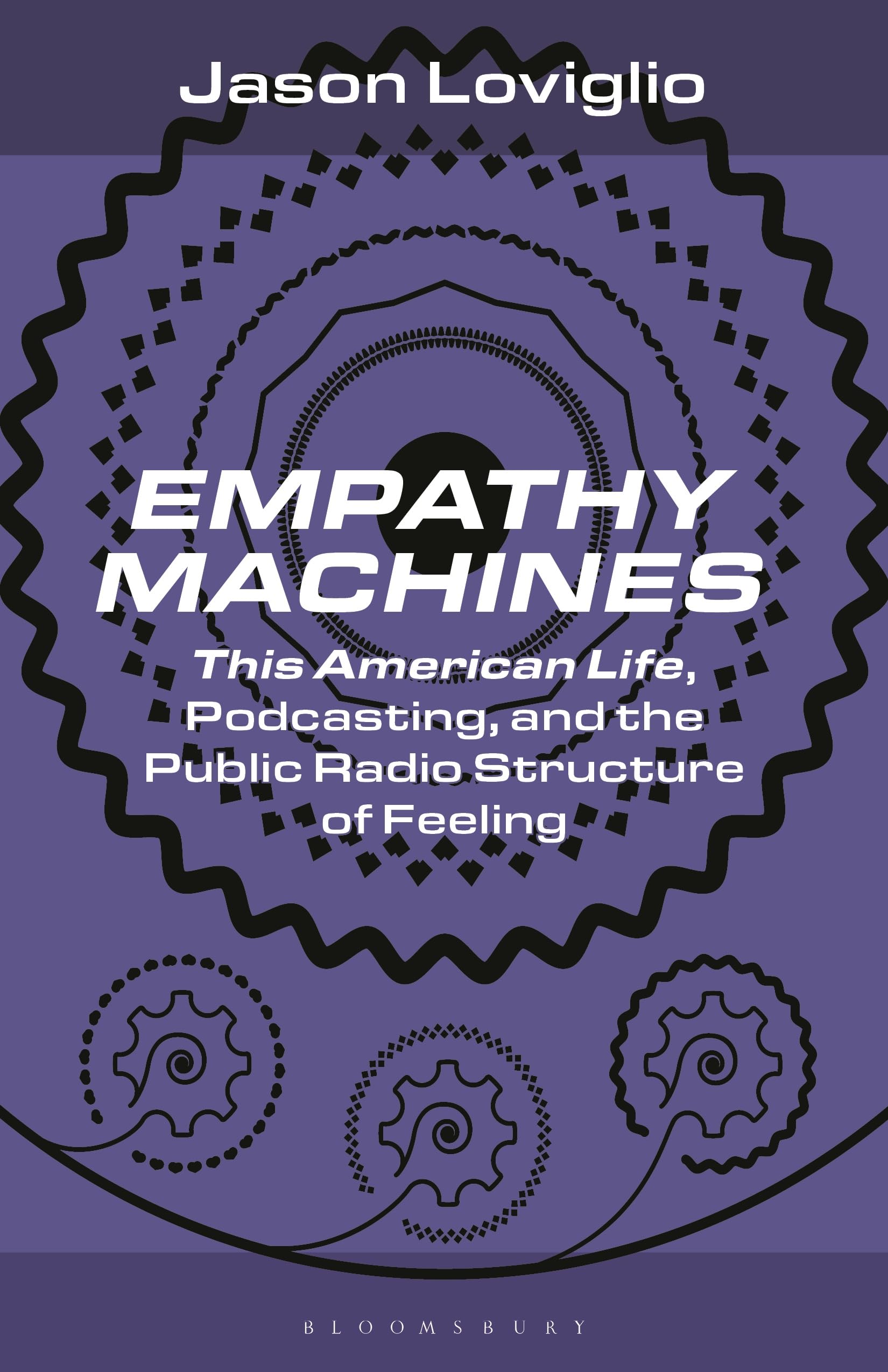
Empathy Machines: This American Life, Podcasting, and the Public Radio Structure of Feeling (Bloomsbury Podcast Studies)
$29.95
by Jason Loviglio



The first book-length treatment of This American Life, Empathy Machines contextualizes the influential show within the history of radio, looking back to radio's golden era and the para-social connections that it encouraged, as well as the formation of NPR in the 1960s and the “Great Society Liberalism” that guided its programming and approach to the audience. Empathy Machines identifies This American Life as a central cultural institution in the evolution of empathy as a “liberal feeling” central to podcast storytelling and the neoliberal era in which it developed. This American Life revitalized the public radio traditions of investigative journalism and sonically inventive audio production. An early adopter of podcasting as a time-shifted delivery mechanism for its broadcast content, the program also ushered in appointment listening, a key innovation and disruption in the emerging chaotic attention economy of the 21st century. Empathy Machines centers This American Life as a model for prioritizing empathy as an affective and ideological strategy for feeling liberal as liberal democracy's precarious balance of opposites began to fracture into hypercapitalism, atavistic ethnonationalism, and new identity politics. “This book is an astonishing piece of scholarship – ambitious, erudite, insightful, and brilliantly readable. Jason Loviglio has surely produced the definitive study of This American Life ; but more than that, his overarching analysis of how affect plays out across a century of public radio and transmedia shows should make Empathy Machines a standard reference work for anyone interested in the power of media in politics and everyday life.” ― Kate Lacey, Professor of Media History and Theory, University of Sussex, UK “ Empathy Machines is a smart, perceptive, and revealing account of how NPR, and especially This American Life , developed pioneering audio strategies that created an empathetic mode of address now widely imitated in the exploding universe of podcasts. With a vocal style that was more conversational, public radio broadcasts evoked feelings of intimacy and openness that produced compelling “structures of feeling” to which audiences powerfully responded. The enormous popularity of podcasts, Loviglio suggests, rests in part on these audio innovations. Highly revealing and a book very much of the moment.” ― Susan J. Douglas, Catherine Neafie Kellogg Professor, University of Michigan, USA, and author of Listening In: Radio and the American Imagination (1999) “In the first book-length analysis of This American Life , Loviglio explores how this innovative and influential public radio program has carved out a space of affect and empathy in an increasingly fractured, individualistic world.” ― John L. Sullivan, Professor of Media and Communication, Muhlenberg College, USA Lance Dann is Senior Lecturer in Audio and Digital Media Production in the School of Art, Design and Media at the University of Brighton in Hastings, UK. He is a multiple Radio Academy Award-winning producer, academic and sound designer. He is a former associate member of The Wooster Group, Commissioner of Programming at Resonance 104.4FM (London), a regular contributor to BBC radio, and creator of the transmedia drama The Flickerman . Martin Spinelli is Senior Lecturer in Digital Media in the School of Media, Film and Music at the University of Sussex, UK. An American abroad, he is a bestselling nonfiction author, the writer of numerous articles and essays on media history, art and semantics, and an award-winning radio producer. His 2006 series Radio Radio is taught in media classes around the world and is archived in major museums and collections in Europe and America.