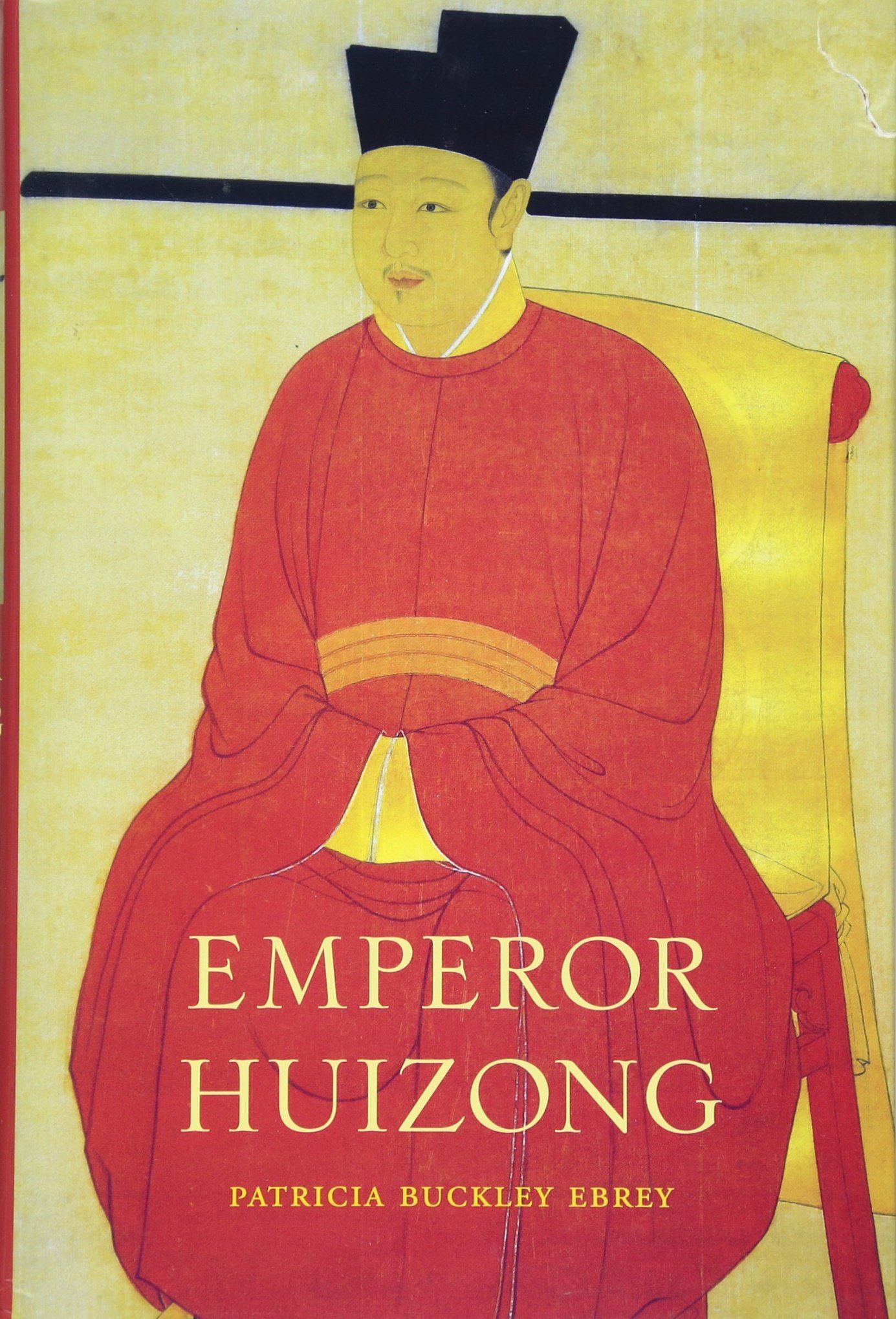



China was the most advanced country in the world when Huizong ascended the throne in 1100 CE. In his eventful twenty-six year reign, the artistically-gifted emperor guided the Song Dynasty toward cultural greatness. Yet Huizong would be known to posterity as a political failure who lost the throne to Jurchen invaders and died their prisoner. The first comprehensive English-language biography of this important monarch, Emperor Huizong is a nuanced portrait that corrects the prevailing view of Huizong as decadent and negligent. Patricia Ebrey recasts him as a ruler genuinely ambitious―if too much so―in pursuing glory for his flourishing realm. After a rocky start trying to overcome political animosities at court, Huizong turned his attention to the good he could do. He greatly expanded the court’s charitable ventures, founding schools, hospitals, orphanages, and paupers’ cemeteries. An accomplished artist, he surrounded himself with outstanding poets, painters, and musicians and built palaces, temples, and gardens of unsurpassed splendor. What is often overlooked, Ebrey points out, is the importance of religious Daoism in Huizong’s understanding of his role. He treated Daoist spiritual masters with great deference, wrote scriptural commentaries, and urged his subjects to adopt his beliefs and practices. This devotion to the Daoist vision of sacred kingship eventually alienated the Confucian mainstream and compromised his ability to govern. Readers will welcome this lively biography, which adds new dimensions to our understanding of a passionate and paradoxical ruler who, so many centuries later, continues to inspire both admiration and disapproval. Ebrey’s scholarly biography of Song dynasty ruler Huizong (1082–1135) collects a vast body of prior research, and in doing so constitutes the most comprehensive English-language work on the pivotal figure, whose rule saw a blossoming of art and culture but also the near-total collapse of Song dominance over southern China. But Ebrey also challenges some long-held assessments of Huizong’s rule, including the idea that Huizong was a decadent ruler whose commitment to the arts distracted him from political and military concerns. Although the pursuit of beauty was undeniably one of Huizong’s top priorities, Ebrey points out, Huizong’s support of the fine arts (especially painting, calligraphy, and music) and architecture were paralleled by his commitment to the Taoist religion. Huizong’s failures, suggests Ebrey, were not due to laxity but rather Huizong’s ambition to promote Taoist doctrine, an effort that rubbed his more Confucian contemporaries the wrong way and weakened Huizong’s ability to navigate partisan revolts and external threats. Besides providing a vivid portrait of a complicated man who, at the height of his reign, was arguably the most powerful person in the world, Ebrey provides thick and fascinating context at every turn, including attention to the important role of women in the Song court. --Brendan Driscoll “Ebrey, a master historian of this period with an acute sense of the poignant and tragic, shows us, in this first English-language biography of Huizong, one of the most brilliantly cultured monarchs ever to have lived, and recounts his miserable end… Patricia Ebrey’s scholarly powers are amazing. I can think of few historians―Chinese or Western―of traditional China who could exceed or even match her knowledge of the arts so widely patronized and practiced by Huizong, from poetry and brushwork to music and gardening. Her ability to evaluate Song and later sources is a model for all scholars. Such books are an intense pleasure to read.” ― Jonathan Mirsky , Literary Review “[An] impressive new biography of Emperor Huizong by Patricia Buckley Ebrey, a respected scholar of Song China. If you feel you know about Henry VIII but know nothing of the history of early China, this book is essential.” ― Robin Lane Fox , Financial Times “Constitutes the most comprehensive English-language work on the pivotal figure, whose rule saw a blossoming of art and culture but also the near-total collapse of Song dominance over southern China. But Ebrey also challenges some long-held assessments of Huizong’s rule, including the idea that Huizong was a decadent ruler whose commitment to the arts distracted him from political and military concerns… Besides providing a vivid portrait of a complicated man who, at the height of his reign, was arguably the most powerful person in the world, Ebrey provides thick and fascinating context at every turn, including attention to the important role of women in the Song court.” ― Brendan Driscoll , Booklist “Fascinating… In history, Huizong is often maligned as a most self-indulgent sovereign, siring at least 65 children while on the throne with multiple partners and spending a prodigious amount of wealth on his building projects. But he was also a rare talent who excelled in such highly esteemed art forms as poetry, callig