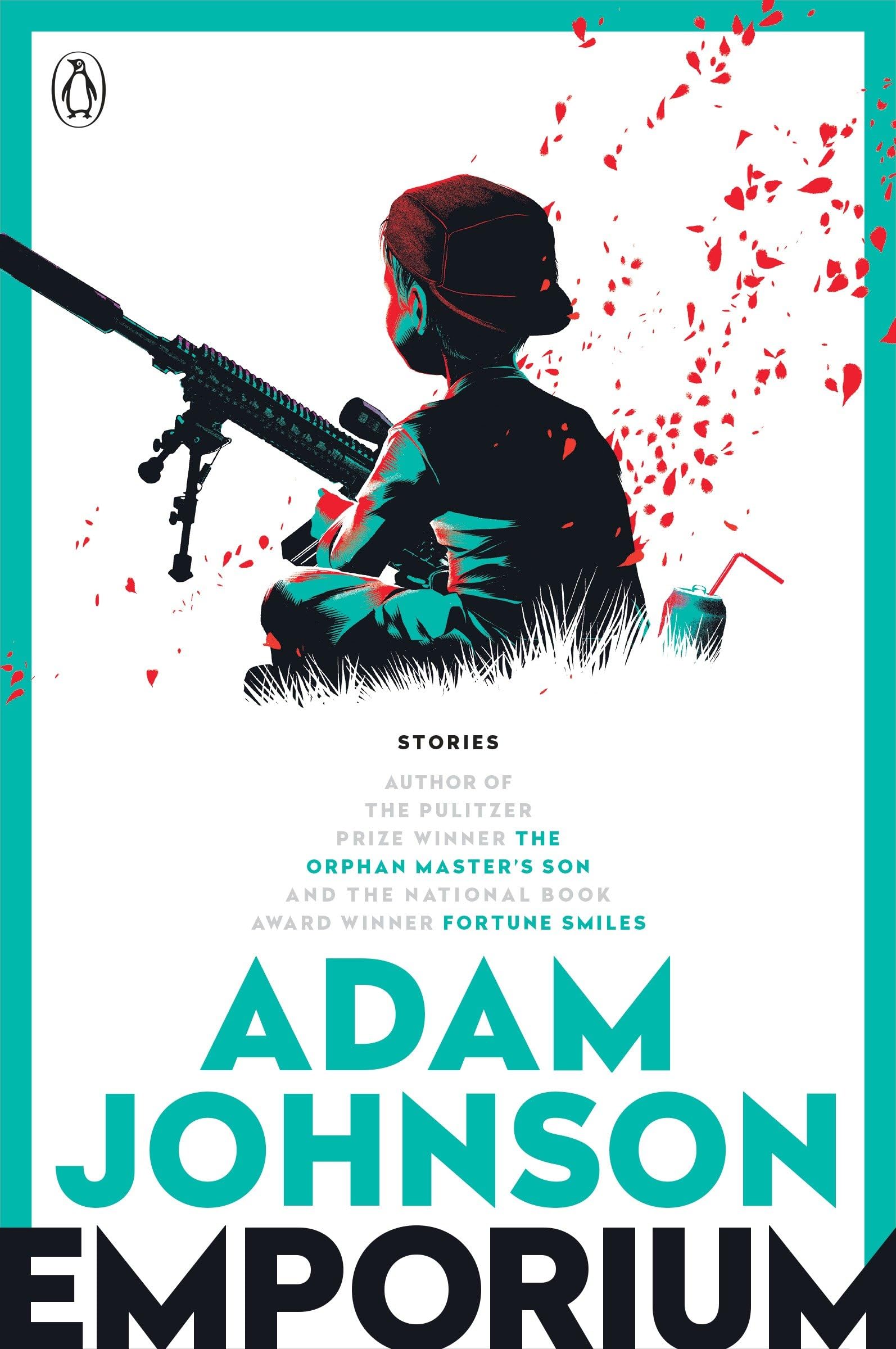



The "remarkable" ( The New Yorker ) debut story collection by the author of The Orphan Master's Son (winner of the 2013 Pulitzer Prize) and the story collection Fortune Smile s (winner of the 2015 National Book Award) An ATF raid, a moonshot gone wrong, a busload of female cancer victims determined to live life to the fullest—these are the compelling terrains Adam Johnson explores in his electrifying debut collection. A lovesick teenage Cajun girl, a gay Canadian astrophysicist, a teenage sniper on the LAPD payroll, a post-apocalyptic bulletproof-vest salesman—each seeks connection and meaning in landscapes made uncertain by the voids that parents and lovers should fill. With imaginative grace and verbal acuity, Johnson is satirical without being cold, clever without being cloying, and heartbreaking without being sentimental. He shreds the veneer of our media-saturated, self-help society, revealing the lonely isolation that binds us all together. A teen-age sniper befriends a bomb-sniffing robot; a masturbating French-Canadian is sent to the moon in a battery-powered space nodule; a boy drives a tour bus for the Cancer Survivors' Club; and a couple struggle to keep their bulletproof-vest store afloat. The landscape of this remarkable début collection of stories is built on hard-edged nouns like Kevlar, Futron, plutonium, and dyno-burner, but its real subject is the loneliness of youth, the failure of parents, and the yearning for connection. Johnson's heroes are isolated and alienated, but are capable of feeling just the right emotion at just the right time. "Coupled and bound with someone I cannot see, hear, or feel," one says, "I have … a vision: I see a resort permanently frozen in glass, like a 'Wish you were here' diorama in a snow globe, with plastic figurines of those who people my life, while around them whips a constant category-three storm." Copyright © 2005 The New Yorker "A collection worth owning...a writer worth watching...stories worth reading." — The New York Times Book Review "Remarkable." — The New Yorker "Masterful." — The San Francisco Chronicle Adam Johnson , a former Wallace Stegner Fellow, teaches creative writing at Stanford University. His fiction has appeared in Esquire , The Paris Review , Harper's , Missouri Review , and New England Review , as well as Best New American Voices . He is the author of the acclaimed novels Parasites Like Us and The Orphan Master's Son , winner of the 2013 Pulitzer Prize in Fiction. TEEN SNIPER When I reach the rooftop, I pull the dustcovers off my rifle scope and head for a folding chair leaned up against an air-conditioning unit-right where I left it the last time I was up here. Sitting down, I have a clear view across a courtyard of lawns and fountains to Hewlett Packard. I line up a couple breakfast burritos on the parapet wall, in case this is a long one, and I crack a can of Nix. Most of us drink Nix because of how other sodas make you twitchy. I dial in my optics by focusing on flowers in the distance, impatiens and pansies, mostly, and I'm tuning the rangefinder when I get the go-ahead from Lt. Kim. "Blackbird," Lt. Kim says over the radio, "at your leisure," which is code for the fact that the hostage negotiations are failing and it's time to get to work. There's a tone in her voice, though, that kind of sounds like my mom when she gets on my case to join the private sector, where the "real money" is. I'll admit I sometimes daydream on the job, but I'm trying to better the community, so it's like, get off my back already. I sweep my scope along the flowers a little longer-there's a giant H formed from orange poppies and a P of velvety petunias. One of the perks of being a police sniper in Palo Alto, aside from the satisfaction you get from serving the public, is the serious commitment these software companies show toward floral displays, toward making the world a more beautiful place. I shoot over flowers every day. I fix the bipod of my Kruger Mark VI and chamber a round. The Kruger's an old South African rifle, made in the gravy days of long-bore ballistics, but the scope is state of the art, a fully digital Raytheon with cellular live-feed, so that it's a camera, phone, and radio, all in one. That means Lt. Kim can see and hear everything on a bank of screens in her command van down the street, but it's my shoulder she's usually looking over. I'm one of the best shots in the world-I mean, I have the gift. I've been lead sniper for over a year, but Lt. Kim can't get past the fact that I'm only fifteen. The target is a Pakistani guy over in HP's think tank. He's wearing a tie-dyed T-shirt that says "Cherry Garcia," and he's pacing back and forth in a cubicle decorated only with an Aladdin movie poster. The guy's pretty worked up, yelling into the phone, probably to Gupta, our communications officer. In the poster, Aladdin's hauling ass on his magic carpet with his little monkey friend, and there's an evil genie hot on his t