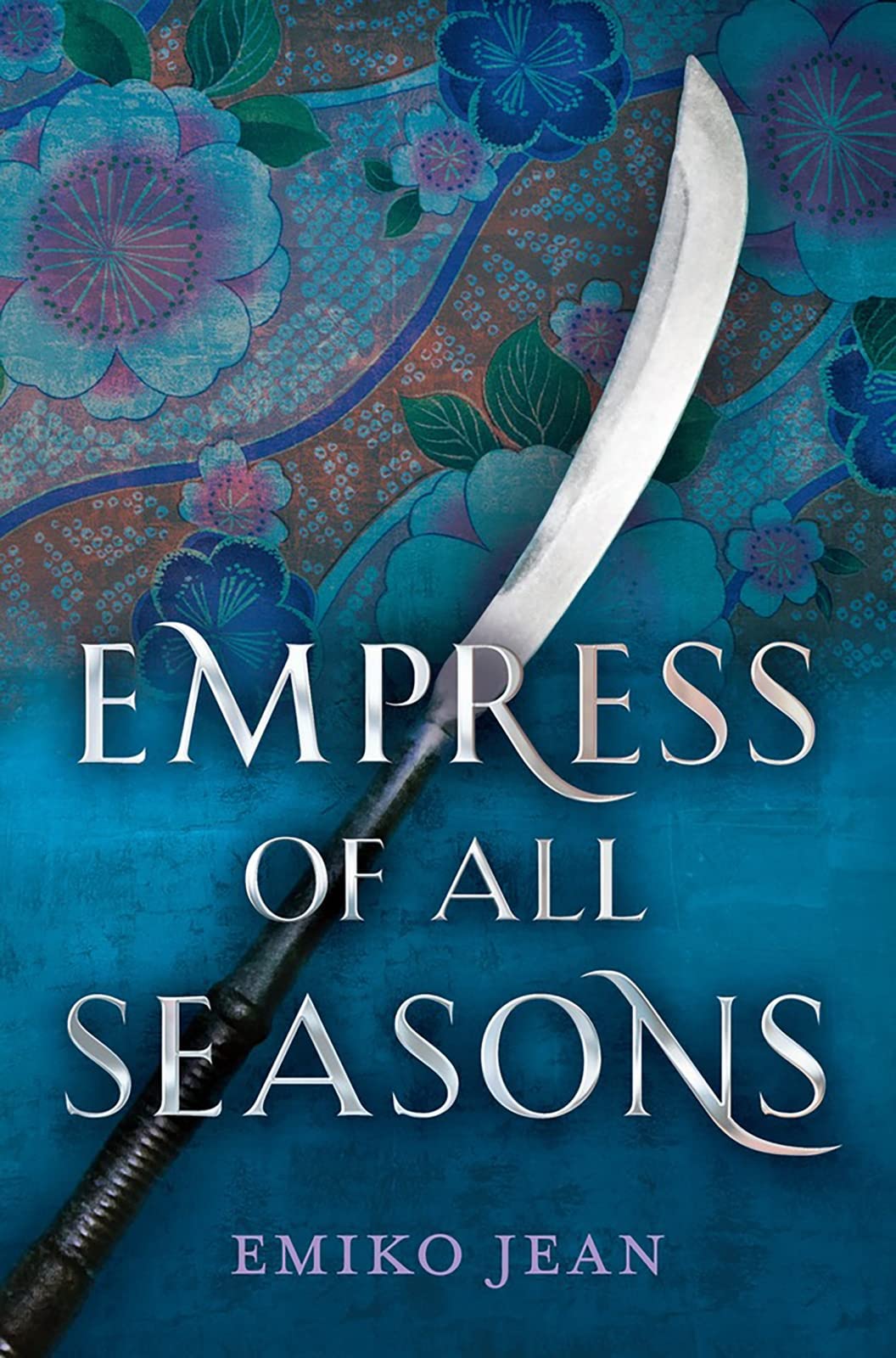
Empress of All Seasons: An Indie Next List YA Fantasy of Yokai, Enchanted Seasons, and a Competition for Love and Fate
$12.79
by Emiko Jean



Winter 2018-2019 Kids’ Indie Next List In a palace of illusions, nothing is what it seems. Each generation, a competition is held to find the next empress of Honoku. The rules are simple. Survive the palace’s enchanted seasonal rooms. Conquer Winter, Spring, Summer, and Fall. Marry the prince. All are eligible to compete—all except yokai, supernatural monsters and spirits whom the human emperor is determined to enslave and destroy. Mari has spent a lifetime training to become empress. Winning should be easy. And it would be, if she weren't hiding a dangerous secret. Mari is a yokai with the ability to transform into a terrifying monster. If discovered, her life will be forfeit. As she struggles to keep her true identity hidden, Mari’s fate collides with that of Taro, the prince who has no desire to inherit the imperial throne, and Akira, a half-human, half-yokai outcast. Torn between duty and love, loyalty and betrayal, vengeance and forgiveness, the choices of Mari, Taro, and Akira will decide the fate of Honoku in this beautifully written, edge-of-your-seat YA fantasy. “With rich mythology and elegant atmosphere, Empress of All Seasons will latch onto your imagination and sweep you along for a magical and dangerous ride.”—Joelle Charbonneau, New York Times best-selling author of The Testing Trilogy and Eden Conquered “Jean’s world building is incredible and reflects her Japanese heritage, from the richly described landscapes of the animal wives’ home to the city of Honoku to the seasonal rooms. Action, romance, family, and self-discovery are all parts of Mari’s journey...In a genre that is quick to make trilogies and quartets, this is laudable as a standalone that fully tells its story within a single volume.”— Booklist “The author uses Japanese folklore elements to effectively craft an engaging story that also questions the power structures of heaven and earth, male and female, human and yokai. A narrative that will engage fans of the genre with a much-needed non-Western setting.”— Kirkus “This well-written fantasy will keep teens engaged. =Recommended for fans of Victoria Aveyard’s ‘Red Queen’ series and Cindy Pon’s Serpentine. A strong purchase for YA shelves.”— School Library Journal “The three protagonists’ efforts to define themselves against family expectations build a compelling narrative framework, and there are many strong, interesting female side characters.” — The Bulletin of the Center for Children’s Books “An enchanting, gripping novel.” — Shelf Awareness Emiko Jean is the author of the psychological suspense novel, We'll Never Be Apart . Her second novel, Empress of All Seasons, is inspired by her Japanese heritage. Emiko lives in the Pacific Northwest with her husband and children. Aside from reading and writing, she loves hiking and travel. www.emikojean.com Twitter: @emikojeanbooks. IN THE BEGINNING, dark water flooded the earth. Kita, the Goddess of Land and Rice, built a staircase out of lightning and stepped down from the sky. She dipped her nimble fingers into the black oceans and sculpted from the rocky depths the lands of Honoku. From her body, she made the terrain. Her eyelashes became forests, dense with trees. Her tears of joy became the oceans, rough with salt. Her breath became the desert, hot with sand. And with her fingernails, she created an impassable mountain range, one of extraordinary danger and height. Delighted by her cleverness, she bragged to her fellow gods and goddesses. Sugita, her brother, God of Children, Fortune, and Love, perpetually prone to jealousy, refused to be overshadowed. From the land, he gathered clay and molded figures. The first were yokai. Sugita’s imagination ran wild, and he fashioned these spirits, monsters, and demons, these otherworldly creatures, with blue, white, and yellow skin. Some he fashioned with horns; some without. Some he locked forever in childhood. To others he gave two mouths or fifteen fingers, long necks, ten hundred eyes, or shriveled heads. The yokai were as limitless as the magic within them. The second were human. These he made in his own image, relatively uniform in appearance, with ten fingers and ten toes, each with a single mouth, and with hair upon their heads. Soon enough, Sugita recognized the weakness in his design. He had given yokai vast powers, whereas he had given the humans none. So he gifted the latter with a second language—curses that may be spoken or written to ward off the yokai, strip them of their powers. In this way, a balance might be established. And to all— yokai and human alike—he bestowed a mortal heart. Finally, he took the human that bore him the strongest resemblance and set him upon the most fertile land. He touched the human’s brow with his thumb and drew a smudge between his eyebrows. All would know that he was favored by the gods and goddesses. So it was. The human was called