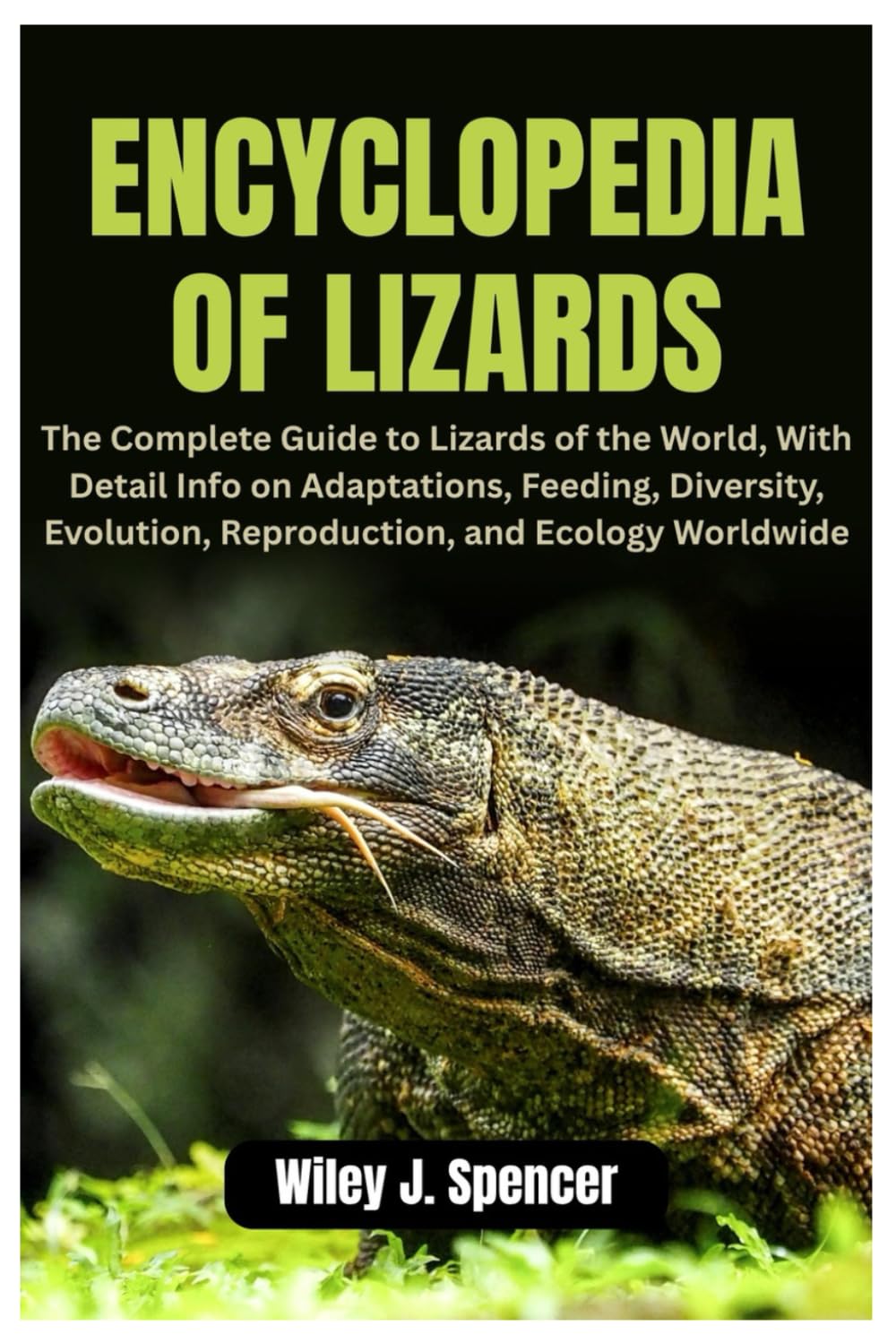
Encyclopedia of Lizards: The Complete Guide to Lizards of the World, With Detail Info on Adaptations, Feeding, Diversity, Evolution, Reproduction, and
$13.99
by Wiley J. Spencer



From the smallest gecko that can perch on a fingertip to the mighty Komodo dragon that rules its island domain, lizards are among the most diverse and captivating creatures on Earth. This guide is the most comprehensive guide ever produced on this extraordinary group of reptiles—an essential reference for naturalists, researchers, and reptile enthusiasts alike. Spanning every continent except Antarctica, this volume explores more than 7,000 known species across over forty families, revealing their stunning range of forms, colors, and behaviors. Each chapter delves into a major aspect of lizard biology and ecology—from anatomy and evolution to communication, reproduction, and habitat specialization. Readers will journey through deserts, forests, mountains, and islands, discovering how these adaptable reptiles thrive in nearly every environment on the planet. Beautifully illustrated, distribution maps, and detailed family profiles, the book highlights both well-known species and the rare, elusive forms seldom seen outside of scientific literature. It also emphasizes the importance of conservation, drawing attention to the many species now threatened by habitat loss, climate change, and human activity. Whether exploring the color-changing mastery of chameleons, the intelligence of monitor lizards, or the remarkable parthenogenesis of whiptails, this book unveils the evolutionary brilliance and ecological significance of the world’s lizards in stunning detail. Inside You’ll Find: A comprehensive overview of all living lizard families and major genera - Insightful chapters on evolution, anatomy, behavior, and ecology - Detailed coverage of global habitats—from deserts and rainforests to alpine and island ecosystems - Over 1,000 color photographs and maps documenting species diversity and distribution - Summaries of recent discoveries, endangered species, and conservation priorities - Extensive appendices, glossary, and references for students and professionals