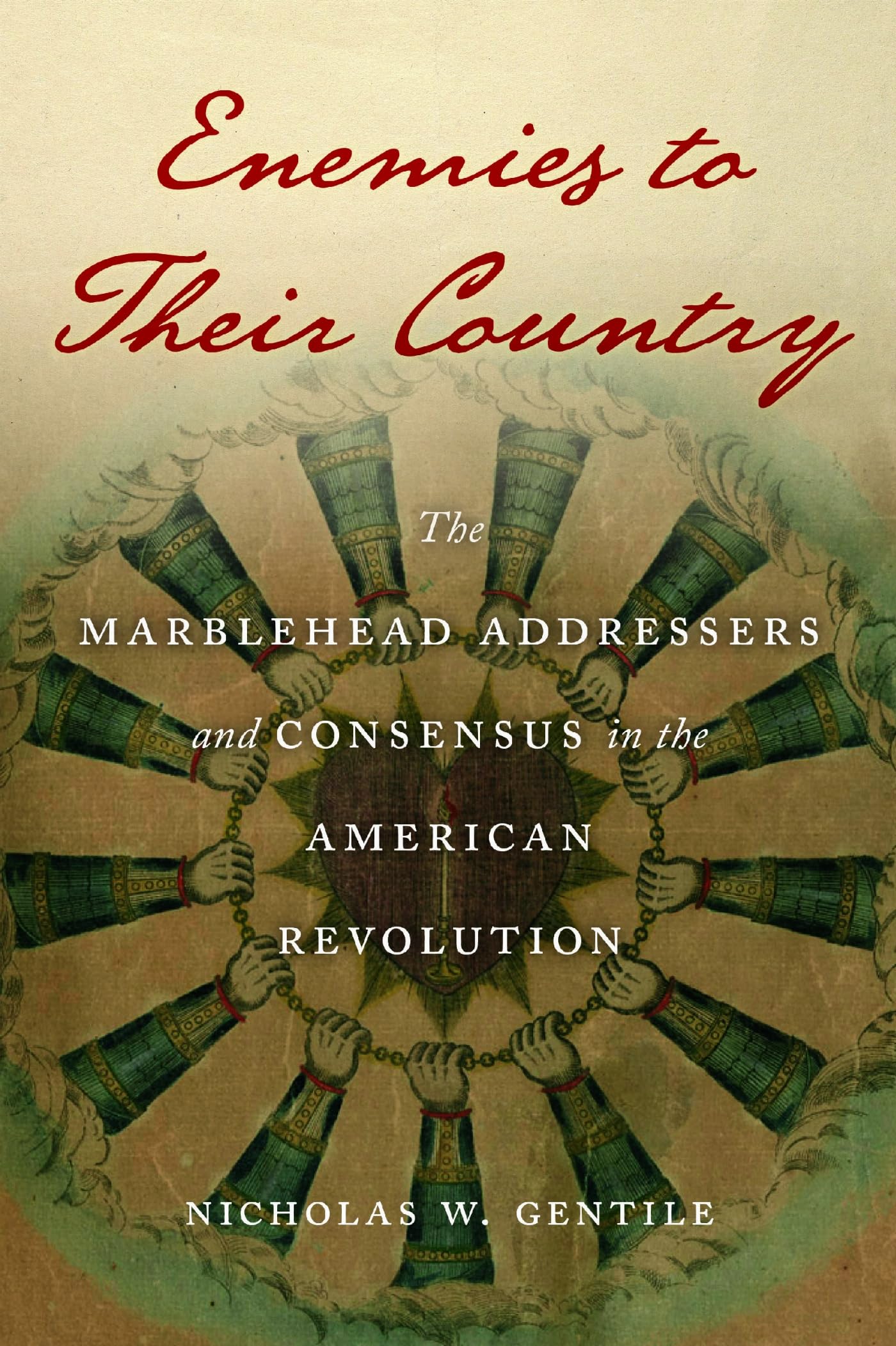
Enemies to Their Country: The Marblehead Addressers and Consensus in the American Revolution
$32.95
by Nicholas W. Gentile



Runner-up, 2025 Journal of the American Revolution Book of the Year Award Complicating the American Revolution through a microhistory of one Massachusetts town In 1774, a group of elite men in the town of Marblehead, Massachusetts, just outside Salem, wrote an address to the royal governor thanking him for his service to the colony, even as town residents began demanding independence from Great Britain. Town meeting records reveal how the town’s patriot majority pressured the signers to withdraw their support for the governor and demanded public recantations and issued damning reports, even forcing some of the signers into exile. Enemies to Their Country tells the story of the year following the Address, chronicling the town’s struggle to achieve consensus even as the war for American independence started. This microhistory of one vitally important town, the second largest in Massachusetts at the time, with a thriving local economy based on fishing and a robust community of religious and civically engaged citizens, complicates simplistic ideas of the American Revolution. Through compelling stories of neighboring individuals and families, many of which have not been told, it also provides an example of a politically polarized constituency struggling to find consensus at a time of great conflict. “ Enemies to Their Country is an excellent example of how viewing local events can help one understand those on the national level. Gentile remain[s] entirely focused on his narrative of Marblehead, just one community trying to exist in a very dangerous time, when something as simple as a letter became a threat. How many other cities and towns in Massachusetts, or other colonies, wrestled with similar situations?”― Timothy Symington , Journal of the American Revolution “ Enemies to Their Country does not present a simplified view of patriotic unity. Instead, it highlights the divisions and factionalism that characterized the American Revolution at the local level. The book shares compelling stories of individuals and families, many previously untold, showcasing how the community dealt with political dissent and evolving loyalties.”― Wicked Local “A vivid portrait of a divided community wrestling with questions of loyalty, identity, and political pressure. . . . This book is especially resonant today, as communities continue to grapple with political polarization and the meaning of dissent.”― Marblehead Weekly News “This is an enticing microhistory of the American Revolution that invites readers to consider how the members of one New England town came together to fight for political independence.”― Christopher P. Magra , author of Poseidon’s Curse: British Naval Impressment and Atlantic Origins of the American Revolution “There is much we can learn from Marblehead in these years, both about the course of the American Revolution, and about the dynamics of local politics. Gentile knows this story better than anyone. It is refreshing to see a book that draws our attention away from Boston, and to this community which has such a vivid story to tell.”― Robert J. Allison , author of The American Revolution: A Very Short Introduction NICHOLAS W. GENTILE is an independent historian.