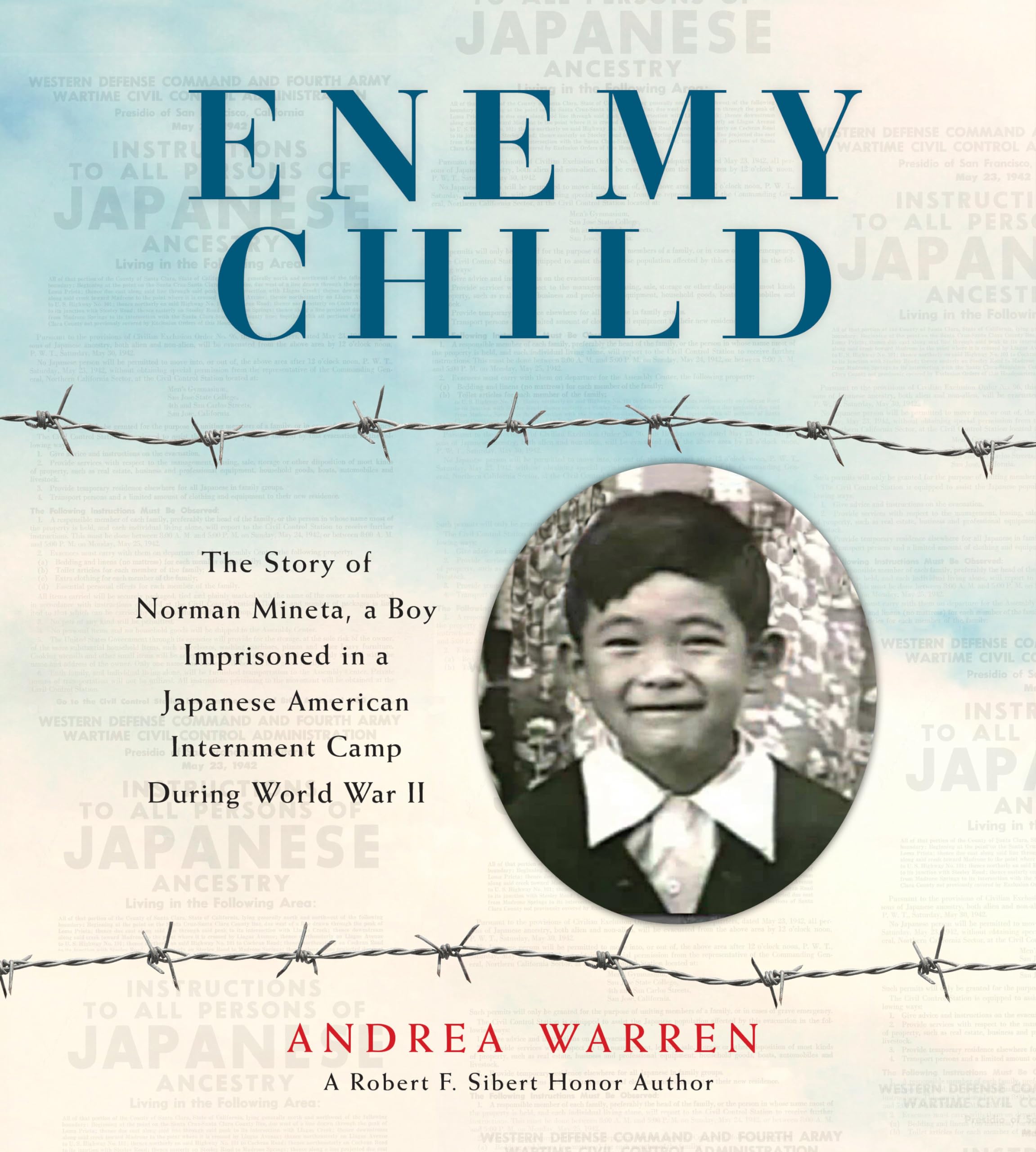
Enemy Child: The Story of Norman Mineta, a Boy Imprisoned in a Japanese American Internment Camp During World War II
$17.21
by Andrea Warren



It's 1941 and ten-year-old Norman Mineta is a carefree fourth grader in San Jose, California, who loves baseball, hot dogs, and Cub Scouts. But when Japanese forces attack Pearl Harbor, Norm's world is turned upside down. Corecipient of The Flora Stieglitz Straus Award A Horn Book Best Book of the Year One by one, things that he and his Japanese American family took for granted are taken away. In a matter of months they, along with everyone else of Japanese ancestry living on the West Coast, are forced by the government to move to internment camps, leaving everything they have known behind. At the Heart Mountain internment camp in Wyoming, Norm and his family live in one room in a tar paper barracks with no running water. There are lines for the communal bathroom, lines for the mess hall, and they live behind barbed wire and under the scrutiny of armed guards in watchtowers. Meticulously researched and informed by extensive interviews with Mineta himself, Enemy Child sheds light on a little-known subject of American history. Andrea Warren covers the history of early Asian immigration to the United States and provides historical context on the U.S. government's decision to imprison Japanese Americans alongside a deeply personal account of the sobering effects of that policy. Warren takes readers from sunny California to an isolated wartime prison camp and finally to the halls of Congress to tell the true story of a boy who rose from "enemy child" to a distinguished American statesman. Mineta was the first Asian mayor of a major city (San Jose) and was elected ten times to serve in the U.S. House of Representatives, where he worked tirelessly to pass legislation, including the Civil Liberties Act of 1988. He also served as Secretary of Commerce and Secretary of Transportation. He has had requests by other authors to write his biography, but this is the first time he has said yes because he wanted young readers to know the story of America's internment camps. Enemy Child includes more than ninety photos, many provided by Norm himself, chronicling his family history and his life. Extensive backmatter includes an Afterword, bibliography, research notes, and multimedia recommendations for further information on this important topic. A California Reading Association Eureka! Nonfiction Gold Award Winner Winner of the Society of Midland Authors Award’s Children’s Reading Round Table Award for Children’s Nonfiction A Capitol Choices Noteworthy Title A Junior Library Guild Selection A School Library Journal Best Book of the Year A Bank Street Best Book of the Year - Outstanding Merit Gr 5–8—When Norman Mineta was nine years old, he was living with his family in San Jose, CA. Like many boys his age, Norm was interested in baseball, comics, and joking with his friends. But when Japan attacked Pearl Harbor in 1941, bringing America into World War II, Norm's life changed forever because he and his family were Japanese Americans. At first there were curfews and FBI searches of Japanese American homes. Then Norm learns that a neighbor was handcuffed and taken away. By connecting Mineta's story to the larger events of World War II and its impact on Japanese Americans, the author helps readers learn about a frightening historical injustice. They and thousands of other Japanese American families were forced from their homes, sent to desolate internment camps, and imprisoned against their will. Using more than 100 photographs and many quotes from Mineta, the author chronicles his family's experiences living in a camp in Wyoming, where he and his family lived in a single room shack, denied their privacy and freedom while being watched by an armed guard. Despite these conditions, we also learn that the family's loyalty to America was unwavering. The author continues the story beyond internment to tell about Mineta's career as a politician, serving 10 terms in the House of Representatives and as a cabinet member for two presidents. It is an inspiring story of character and endurance despite hardships. An important, well-told story. VERDICT An excellent choice for social studies classes, literature circles, and libraries. Extensive back matter enriches understanding of this historical narrative.—Myra Zarnowski, City University of New York ★ "By connecting Mineta’s story to the larger events of World War II and its impact on Japanese Americans, the author helps readers learn about a frightening historical injustice. . . . an inspiring story of character and endurance despite hardships. An important, well-told story. An excellent choice for social studies classes, literature circles, and libraries. Extensive back matter enriches understanding of this historical narrative. — School Library Journal , Starred Review ★ "With so many individual stories, only one absolute emerges from this historical period: a large segment of our population, whether U.S. citizens or first-generation Japanese people depriv