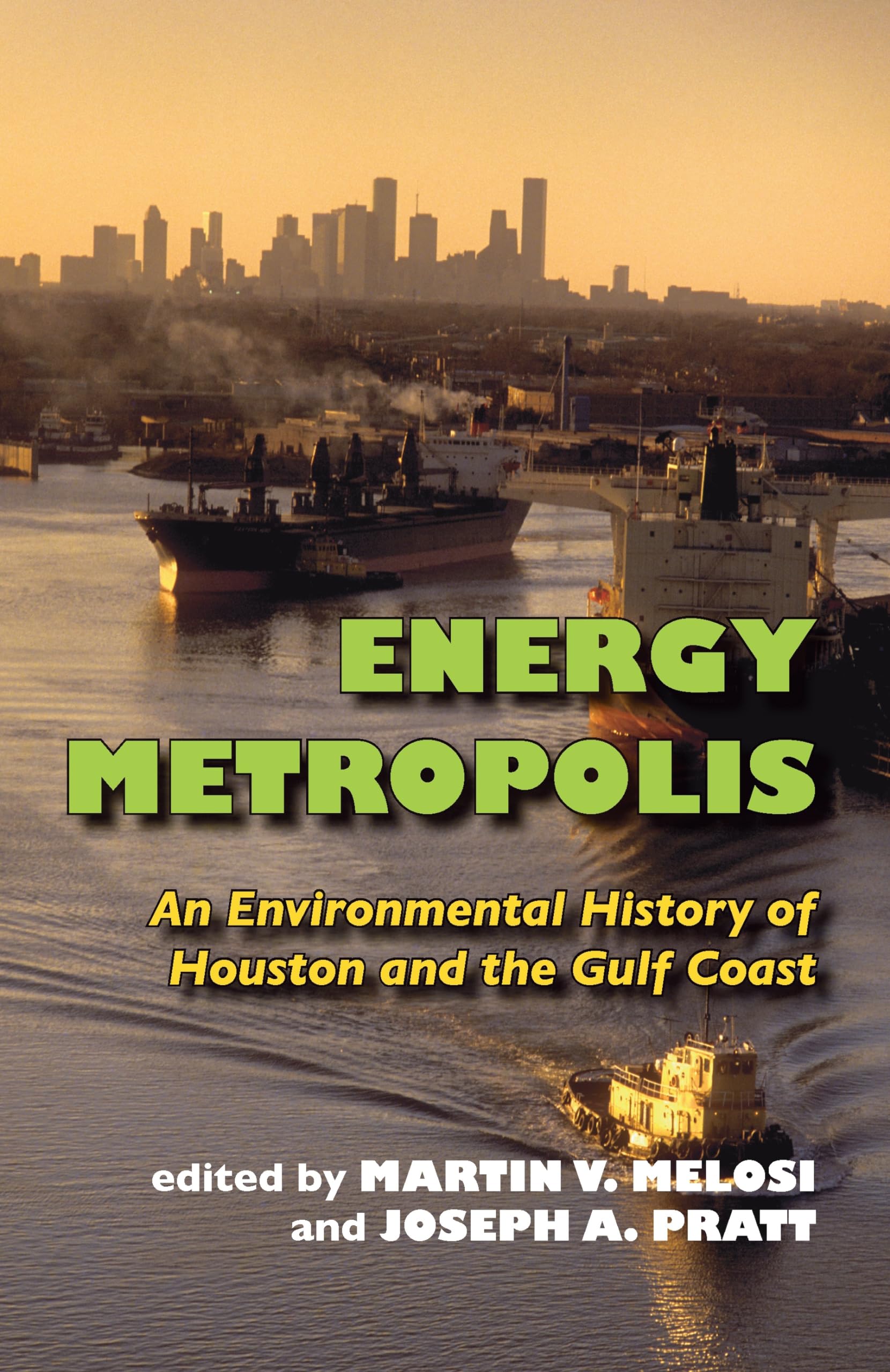
Energy Metropolis: An Environmental History of Houston and the Gulf Coast (History of the Urban Environment, 66)
$60.00
by Martin Melosi



Houston's meteoric rise from a bayou trading post to the world's leading oil supplier owes much to its geography, geology, and climate: the large natural port of Galveston Bay, the lush subtropical vegetation, the abundance of natural resources. But the attributes that have made it attractive for industry, energy, and urban development have also made it particularly susceptible to a variety of environmental problems. Energy Metropolis presents a comprehensive history of the development of Houston, examining the factors that have facilitated unprecedented growth-and the environmental cost of that development. The landmark Spindletop strike of 1901 made inexpensive high-grade Texas oil the fuel of choice for ships, industry, and the infant automobile industry. Literally overnight, oil wells sprang up around Houston. In 1914, the opening of the Houston Ship Channel connected the city to the Gulf of Mexico and international trade markets. Oil refineries sprouted up and down the channel, and the petroleum products industry exploded. By the 1920s, Houston also became a leading producer of natural gas, and the economic opportunities and ancillary industries created by the new energy trade led to a population boom. By the end of the twentieth century, Houston had become the fourth largest city in America. Houston's expansion came at a price, however. Air, water, and land pollution reached hazardous levels as legislators turned a blind eye. Frequent flooding of altered waterways, deforestation, hurricanes, the energy demands of an air-conditioned lifestyle, increased automobile traffic, exponential population growth, and an ever-expanding metropolitan area all escalated the need for massive infrastructure improvements. The experts in Energy Metropolis examine the steps Houston has taken to overcome laissez-faire politics, indiscriminate expansion, and infrastructural overload. What emerges is a profound analysis of the environmental consequences of large-scale energy production and unchecked growth. An invaluable environmental history of Houston, this book demonstrates the causes and consequences of energy-driven growth. As the city tripled in size after 1960, its freeways, deforesting sprawl, air-conditioning, and problems of air and water pollution led to activism and conflicts, illuminated in twelve essays. A must for anyone interested in the dynamic relationship between politics, the city, and its changing landscape. ― David E. Nye, University of Southern Denmark, recipient of the 2005 Leonardo da Vinci Medal " Energy Metropolis takes both urban and environmental history to exciting new places. This outstanding collection also will enlighten anyone concerned about our environmental future. In a world struggling to deal with global warming, the story of Houston's transformation for better and worse by intensive energy production and consumption could not be more relevant."- ― Adam Rome, author of The Bulldozer in the Countryside: Suburban Sprawl and the Rise of American Environmentalism Helps us realize that our blinkered rush for energy development has costs that are not at some distance, but are closer to home, next door, right in our backyard. It is sobering to grasp how significantly our daily lives―from our commutes to the patterns of our cities to the hazards we endure during both work and play―are comprised by our endless need for more and more energy. ― Economic Geography A fine compendium of scholarship well focused on a city that not only is interesting in itself as a fast-growing monolith but also provides us with cautionary tales easily applied to other urban areas. ― Technology and Culture Marks an important facet of the modernizing South, and it would make a superb text for courses on southern history. ― Journal of Southern History A comprehensive history of the development of Houston, examining the factors that have facilitated unprecedented growth―and the environmental cost of that development. Examines the steps Houston has taken to overcome laissez-faire politics, indiscriminate expansion, and infrastructural overload. An analysis of the environmental consequences of large-scale energy production and unchecked growth. Martin V. Melosi is Hugh Roy and Lillie Cranz Cullen University Professor of History and director of the Center for Public History at the University of Houston. He is the author or editor of numerous books, including Energy Metropolis: An Environmental History of Houston and the Gulf Coast; Garbage in the Cities: Refuse, Reform, and the Environment; The Sanitary City: Environmental Services in Urban America from Colonial Times to the Present; and Effluent America: Cities, Industry, Energy, and the Environment. Used Book in Good Condition