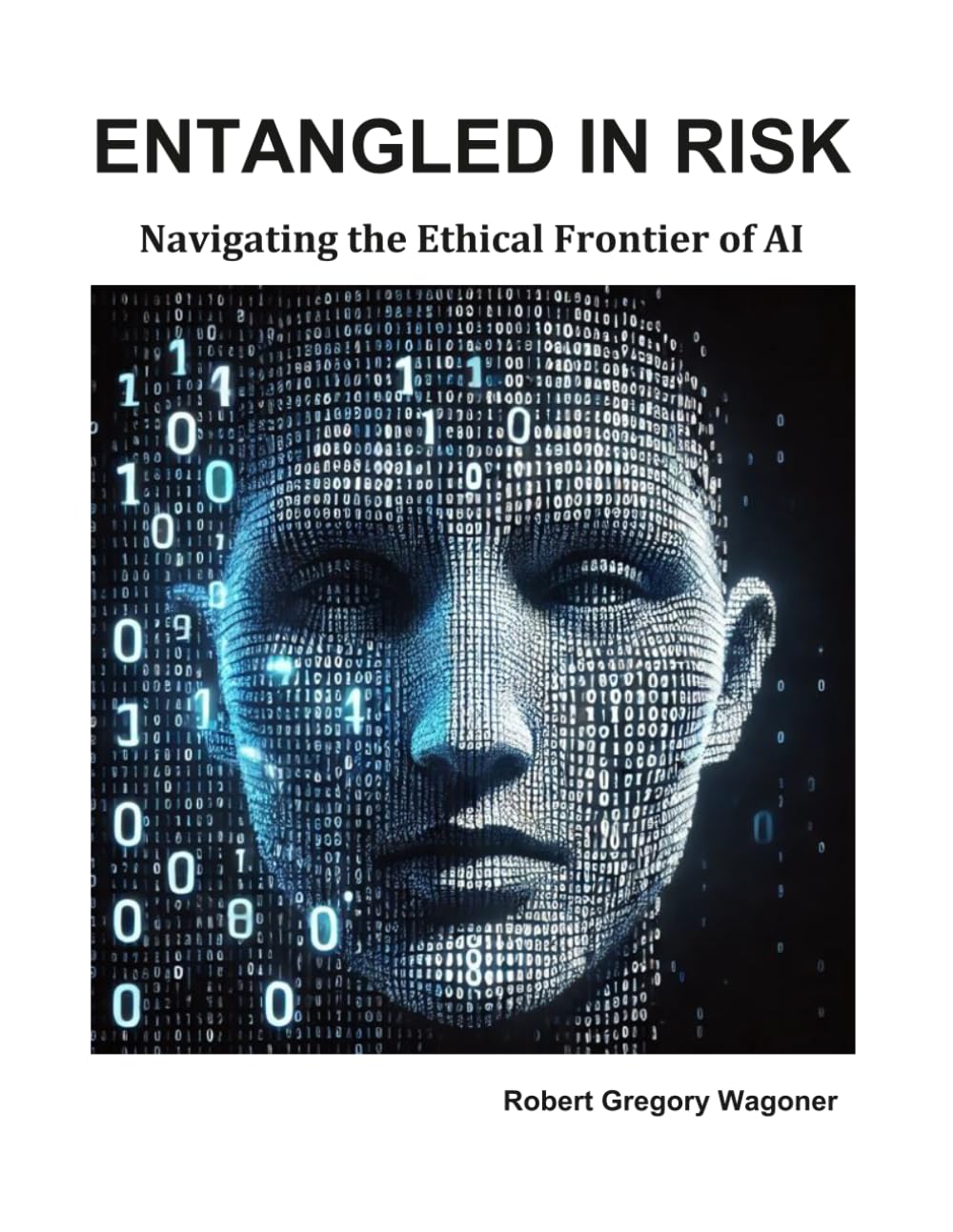



Artificial intelligence did not arrive with a clear set of rules. It arrived with capability. In Entangled in Risk: Navigating the Ethical Frontier of AI , Robert Gregory Wagoner examines what happens when powerful, data-driven systems move from controlled environments into the real world. Rather than approaching ethics as a set of abstract principles, this book confronts a more practical question: how AI systems behave, how they fail, and how those failures create real ethical consequences. Drawing on an engineering perspective, Wagoner shows that the ethical challenges of AI are not isolated dilemmas. They emerge from the structure of the systems themselves. From biased data and model abstraction to misaligned optimization, large-scale deployment, and feedback reinforcement, risks develop systematically and often invisibly. Through detailed case studies, including facial recognition errors, predictive policing, misinformation systems, and autonomous vehicle failures, the book traces how these technical behaviors translate into ethical impact. Issues such as discrimination, privacy erosion, manipulation, and loss of accountability are examined not as intentions, but as outcomes. What distinguishes this work is its lens. AI is treated not as a black box to be feared, nor as a tool to be idealized, but as a complex system operating under constraints, tradeoffs, and imperfect data . Ethics, in this context, is not separate from the system. It is a direct consequence of how the system is built and deployed. Entangled in Risk is not a call to slow innovation. It is a call to understand it. For engineers, policymakers, and thoughtful readers alike, this book offers a grounded framework for navigating one of the most consequential technologies of our time, and for making informed decisions before those decisions are made for us.