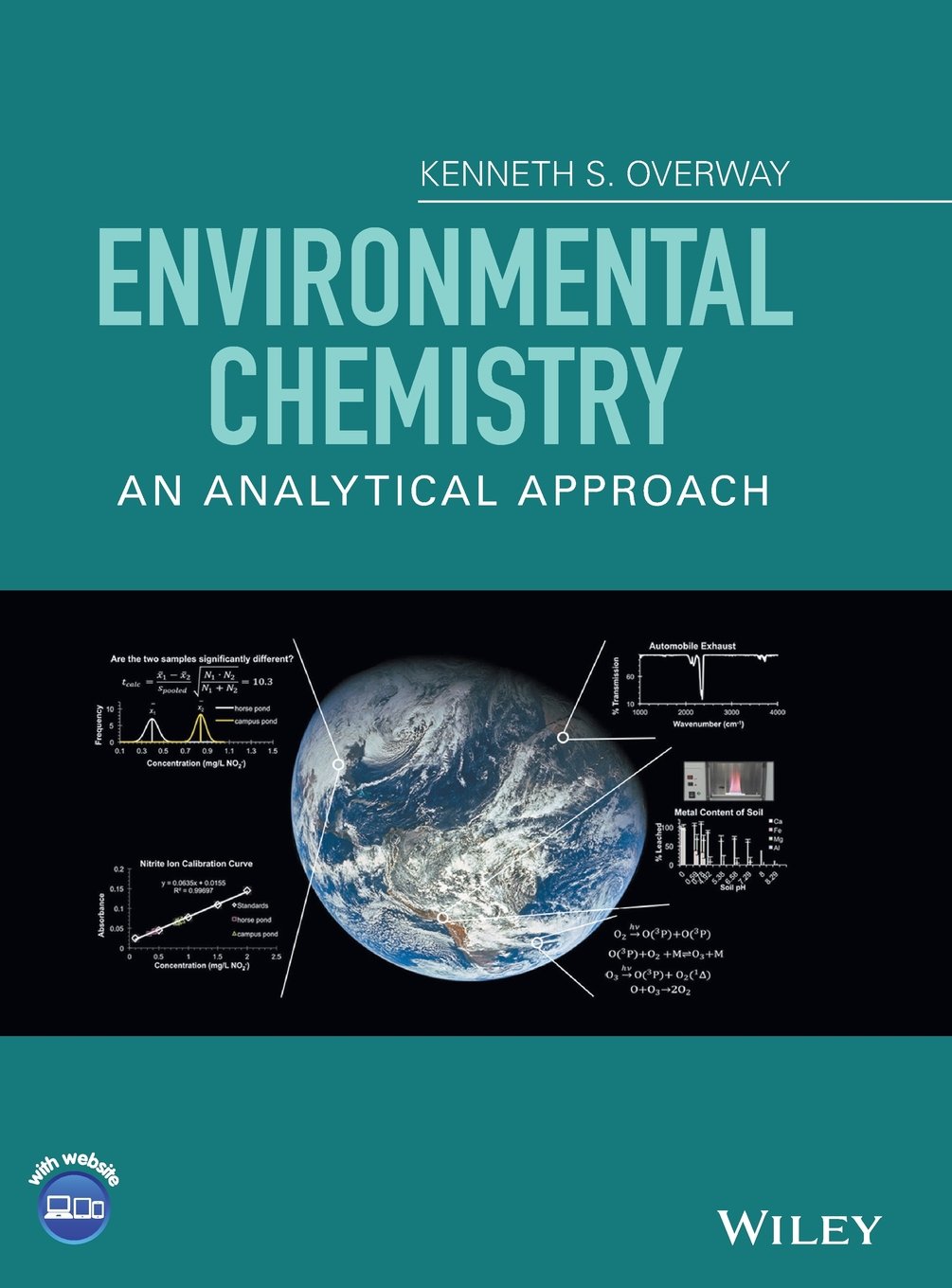



Covers the essentials of environmental chemistry and focuses on measurements that can be made in a typical undergraduate laboratory Provides a review of general chemistry nestled in the story of the Big Bang and the formation of the Earth - Includes a primer on measurement statistics and quantitative methods to equip students to make measurements in lab - Encapsulates environmental chemistry in three chapters on the atmosphere, lithosphere and hydrosphere - Describes many instruments and methods used to make common environmental measurements I have been teaching an environmental chemistry course for more than a decade. In the early years I struggled to find an appropriate book that provided a primer on measurement statistics and methods of quantitation. In addition, the major textbooks on the market contained much more material than I could hope to cover in a single semester. I also wanted to provide my students with a context for the dynamic environment of the Earth, and I found the evolution of the universe and our solar system provided a very interesting framework for understanding the changes occurring in the Anthropocene. I wanted my course to provide my students with analytical lab skills and an interesting context within which they could make use of the chemistry knowledge they developed in their introductory chemistry courses, so I wrote a textbook to do just that. It is concise, analytical, instrumental, and provides a foundational coverage of the major environmental issues that every environmental scientist should know. This textbook is intended for a 1-semester, undergraduate environmental chemistry course with a lab component. Environmental Chemistry: An Analytical Approach provides the essentials for a quantitative environmental chemistry course. After a review of some important topics in general chemistry, students learn about measurement statistics and methods of quantitation so that they are ready for work in the laboratory. The remaining three chapters describe environmentally important chemical processes in the atmosphere, lithosphere, and hydrosphere. This concise introduction to environmental chemistry is a perfect textbook for a 1-semester college course at the undergraduate level. Audience This book will be of interest to chemistry and environmental science departments who wish to teach quantitative analytical chemistry skills in the context of the environment to science majors. Kenneth S. Overway is an associate professor and chair of the Chemistry Department at Bridgewater College (Bridgewater, VA). He has been teaching chemistry courses at the college level since 1999. His expertise in analytical chemistry and instrumental analysis have been applied to environmental chemistry in the development of an environmental science major at Bridgewater College. His research interests involve instrument design, spectroscopy, and soil chemistry.