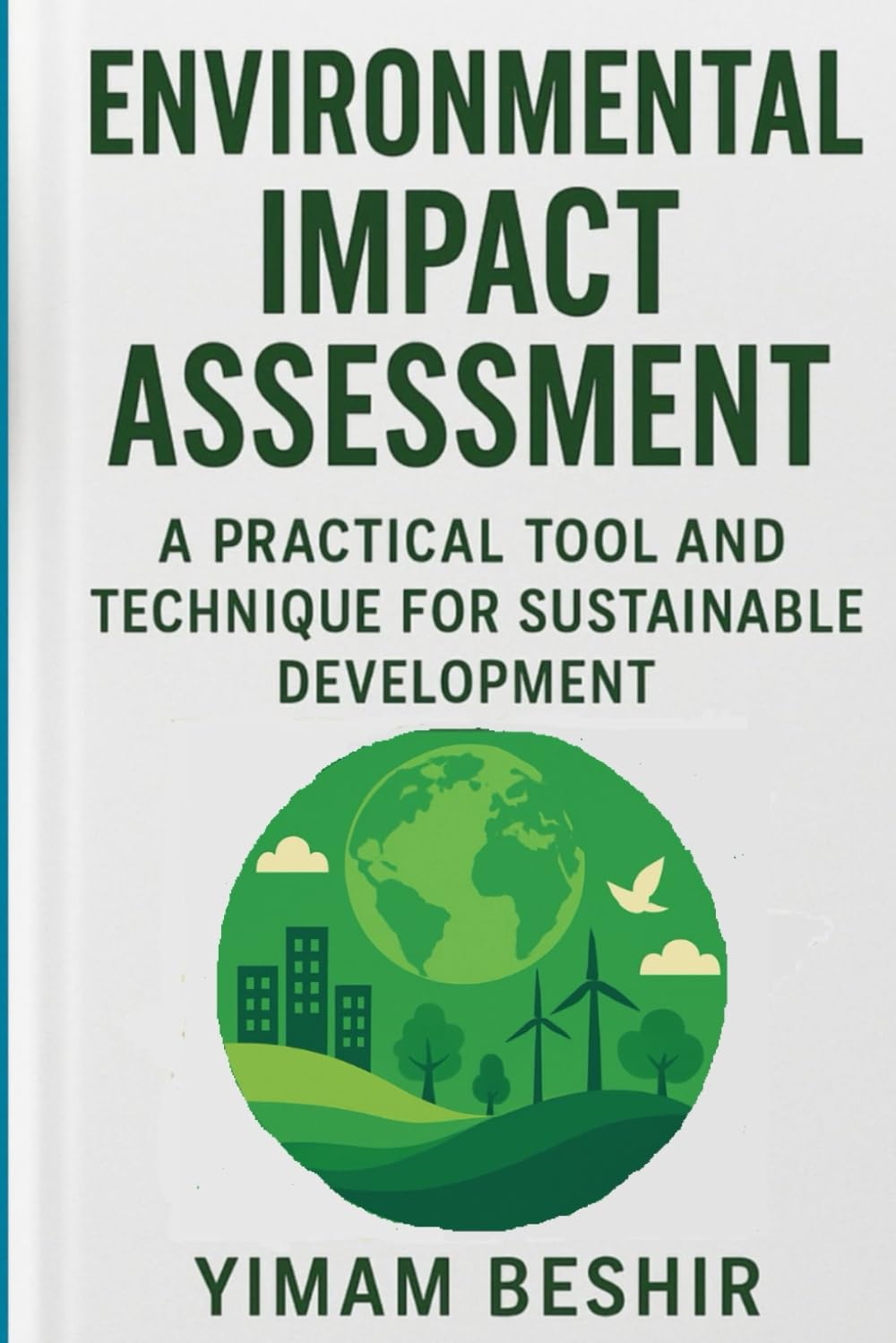
Environmental Impact Assessment: A Practical Tool and Technique for Sustainable Development (Environmental Impact Assessment Series: Integrated Tools
$29.99
by Yimam Beshir



Master the full Environmental Impact Assessment (EIA) process with confidence. Whether you’re an environmental professional, policymaker, public health officer, or student, this practical 419-page guide gives you the tools to design clear, defensible, and sustainable assessments. What You’ll Learn: Core EIA Principles & Compliance – Grasp the fundamentals and align with international standards. - Practical Tools & Methodologies – Use proven techniques for data collection, impact analysis, and stakeholder mapping. - Stakeholder Engagement Strategies – Build trust through public consultation, conflict resolution, and transparent communication. - Sustainability Alignment – Ensure projects deliver long-term environmental, social, and economic value in line with SDGs. - Accessible Kindle Edition – Written by public health specialist Yimam Beshir, this guide is jargon-free, actionable, and ready for instant use. Why it matters: Strong EIAs protect ecosystems, enhance community well-being, and ensure regulatory success. This book bridges theory and practice—helping you create reports that are technically sound, socially responsible, and aligned with sustainable development goals. Equip yourself with the knowledge to deliver impactful, defensible, and future-ready EIAs. Environmental Impact Assessment: A Practical Tool and Technique for Sustainable Development is an essential guide for professionals, students, and policymakers committed to balancing development with environmental responsibility. This book demystifies the Environmental Impact Assessment (EIA) process by breaking it down into clear, actionable tools and techniques. From screening and scoping to impact prediction, mitigation, and monitoring, readers gain step-by-step guidance on how to design and evaluate projects with sustainability at the core. What sets this resource apart is its practical orientation . Rather than remaining purely theoretical, it provides frameworks, case-based insights, and user-friendly techniques that can be applied in real-world decision-making. Whether you're a student in environmental studies, a practitioner conducting EIAs, or a policymaker shaping sustainable strategies, this book offers the tools to make informed, responsible choices. Accessible, comprehensive, and solution-focused, it's not just a reference guide — it's a roadmap for using EIA as a catalyst for sustainable development. Environmental Impact Assessment: A Practical Tool and Technique for Sustainable Development serves as a vital handbook for anyone seeking to align progress with environmental stewardship. Designed for students, practitioners, and policymakers alike, it transforms what can often seem like a technical, overwhelming process into a structured, easy-to-follow guide. The book walks readers through each stage of the Environmental Impact Assessment (EIA)—from initial screening and scoping to predicting impacts, applying mitigation measures, and ensuring long-term monitoring. Instead of focusing only on theory, it emphasizes hands-on application , offering methods, models, and real-world insights that can be directly applied in project planning and evaluation. What makes this work stand out is its focus on practical usability . By blending clear explanations with actionable strategies, it empowers readers to approach development projects with confidence and accountability. More than just a manual, this book positions EIA as a powerful tool for achieving sustainable development , equipping readers to make decisions that balance growth with environmental responsibility. Environmental Impact Assessment: A Practical Tool and Technique for Sustainable Development is an essential guide for professionals, students, and policymakers committed to balancing development with environmental responsibility. This book demystifies the Environmental Impact Assessment (EIA) process by breaking it down into clear, actionable tools and techniques. From screening and scoping to impact prediction, mitigation, and monitoring, readers gain step-by-step guidance on how to design and evaluate projects with sustainability at the core. What sets this resource apart is its practical orientation . Rather than remaining purely theoretical, it provides frameworks, case-based insights, and user-friendly techniques that can be applied in real-world decision-making. Whether you're a student in environmental studies, a practitioner conducting EIAs, or a policymaker shaping sustainable strategies, this book offers the tools to make informed, responsible choices. Accessible, comprehensive, and solution-focused, it's not just a reference guide — it's a roadmap for using EIA as a catalyst for sustainable development. "A must-have resource for anyone serious about integrating sustainability into project design and policy. It combines clarity with depth and will be equally valuable for students and professionals." — Reader Endorsement - "This book bridges the gap betwe