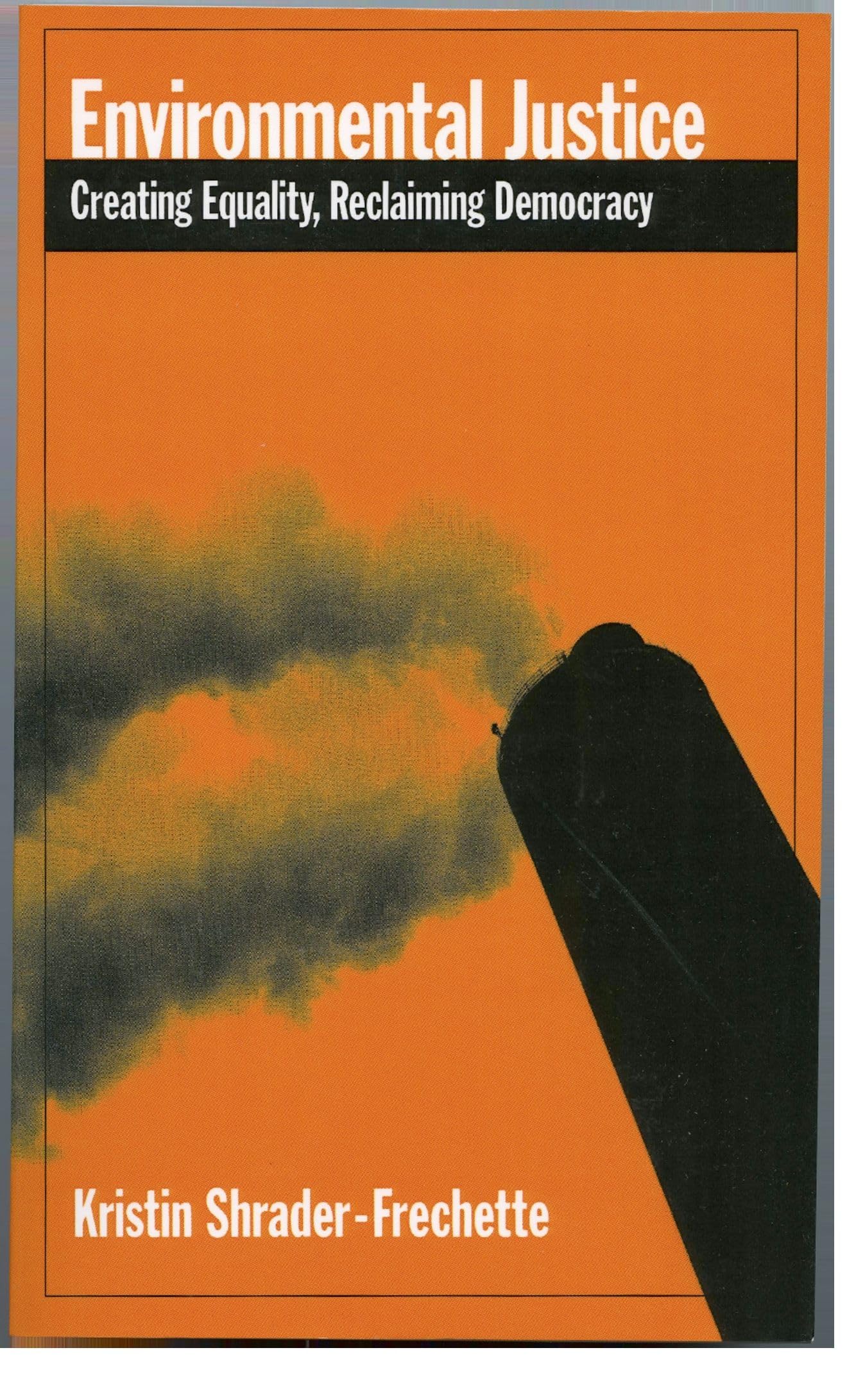
Environmental Justice: Creating Equality, Reclaiming Democracy (Environmental Ethics and Science Policy Series)
$6.62
by Kristin Shrader-Frechette



Shrader-Frechette offers a rigorous philosophical discussion of environmental justice. Explaining fundamental ethical concepts such as equality, property rights, procedural justice, free informed consent, intergenerational equity, and just compensation--and then bringing them to bear on real-world social issues--she shows how many of these core concepts have been compromised for a large segment of the global population, including Appalachians, African-Americans, workers in hazardous jobs, and indigenous people in developing nations. She argues that burdens like pollution and resource depletion need to be apportioned more equally, and that there are compelling ethical grounds for remedying our environmental problems. She also argues that those affected by environmental problems must be included in the process of remedying those problems; that all citizens have a duty to engage in activism on behalf of environmental justice; and that in a democracy it is the people, not the government, that are ultimately responsible for fair use of the environment. "This book is an example of precisely the type of practical ethics one hopes to see more of...The cases here aren't just illustrations of more general philosophical points--they're interesting in their own right. Very few philosophers, even those of us who do practical ethics, take the time to work through the details of cases in the way that Shrader-Frechette does in this book. It is a must-read for anyone interested in environmental justice and accessible enough that it would make a valuable addition to any undergraduate environmental ethics syllabus...a valuable contribution to the literature."-- Notre Dame Philosophical Reviews "This is not an easy book to read--it is more like watching a violent film: it tells us about greediness, cruelty, misery, cynicism, and the like. But just like watching a good film, after reading the book one cannot remain indifferent."-- Ethics & the Environment Indigenous people, minorities, and the poor are more likely to live near toxic waste, breathe dirty air, and work in hazardous jobs. Shrader-Frechette argues for these individuals' right to environmental justice. Kristin Shrader-Frechette is O'Neill Family Professor in the Department of Biological Sciences and the Department of Philosophy at the University of Notre Dame.