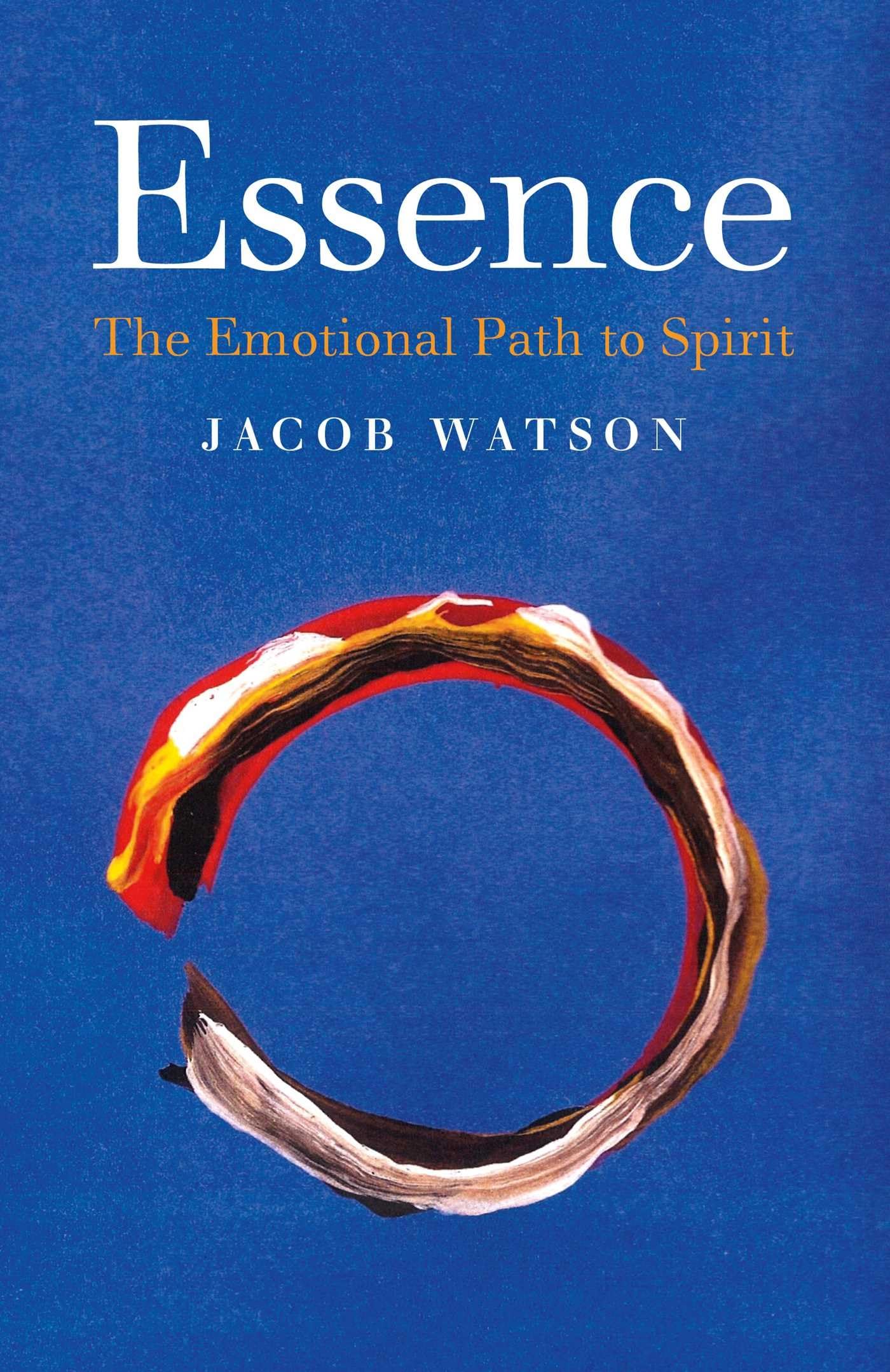



Essence: The Emotional Path to Spirit is packed with wise, fierce and gentle emotional and spiritual teachings that describe how our natural emotions clear a path to the spiritual life. Using a holistic model of health - body, heart, mind and soul - and illustrated by stories of tragedy, death, and illumination that guided the author through his personal healing, Essence is like having an intense spiritual workshop in your own hands. Includes meditations and spiritual practices in each chapter. Jacob Watson grew up in a New England family, attended traditional schools, then took a hard turn left. He founded an alternative school, became a grief counselor and worked with HIV/AIDS, Hospice, the Elisabeth Kubler-Ross Center and the Center for Grieving Children. Broken hearts and wounded spirits - and a fire that damaged his counseling office - propelled him into ministry. He is the founding Abbot of the Chaplaincy Institute of Maine, and devotes his life to teaching, writing and prayer. Essence The Emotional Path to Spirit By Jacob Watson John Hunt Publishing Ltd. Copyright © 2014 Jacob Watson All rights reserved. ISBN: 978-1-78279-978-8 Contents Preface, Foreword, Introduction, Part I: Doing Our Work, 1. The Four Quadrants: A Healthy Balance, 2. Emotional Path to Spirit, 3. Grief: Letting Go, 4. Anger: Dark Night of the Soul, 5. Fear: Contraction, 6. Love: Expansion, Part II: Practicing Our Essence, 7. Awareness of Essence, 8. Living Our Essence, 9. Essence: Spiritual Practice, 10. Essence: Through Meditation, 11. Essence: Prayer, 12. Essence: Art, 13. Essence: Beloved Community, 14. Essence: Naked and Empty, Acknowledgements, Epilogue, Afterword, Morning Blessing Letter Project, Resources, CHAPTER 1 The Four Quadrants: A Healthy Balance Meditation: I sit with my body. I sit with my feelings. I sit with my mind. I sit with my spirit. Such fine companions! I first saw the diagram describing the Four Quadrants when Elisabeth Kübler-Ross drew it up on the wide green chalkboard in the main conference room at the Notre Dame Spiritual Center in Alfred, Maine. I was attending her "Life, Death and Transition" workshop, eager to improve my skills as a grief counselor. Set on a rural road, the Center used to be a Shaker community and now was a retirement residence for Catholic priests who had served as schoolteachers around the world. The brothers maintain the buildings and grounds and grow much of the food they serve to retreat guests. A gentle spiritual aura surrounds the rustic buildings, fields and apple orchards. Though I was nervous about the workshop, I felt at home walking in to the comfortable spaces. Little did I know I'd be returning there for 30 years! To see the diagram of the Four Quadrants on the chalkboard gave me a needed visual picture of ideas that helped me understand my life. It also was useful to use in my counseling practice as my clients worked through their grief and other natural emotions. In that first day of her Life, Death and Transition workshop, Elisabeth, with her Swiss accent, presented the Four Quadrants as a model of health: the Physical (Body), the Emotional (Heart), the Intellectual (Mind) and the Spiritual (Soul). She explained that this is similar to the Four Elements of Earth, Air, Fire and Water, and the Four Directions used by various Native traditions. Elisabeth made it clear that this model is not to be used as a rigid formula, but rather as a gentle diagnostic tool to clarify the relative balance of our different parts, and thus identify how we might regain the health of equilibrium. She said we consider these parts in order to better understand and support the whole person. Holistic health demands and seeks balance. To create balance creates health. Health According to this idea, in response to what life gives us our Four Quadrants get out of balance – voluntarily or involuntarily. We can voluntarily choose to concentrate on one quadrant, for example the physical. To care for our bodies, we might exercise more, get more sleep, and eat a more healthy diet. We might decide to concentrate energy on the emotional quadrant to care for our heart, to heal an emotional wound from years ago, or from yesterday. We might feel and express our outrage and anger at being somehow mistreated. To care for our mind, we can choose to activate the intellectual quadrant. We might research a topic that intrigues us, or learn to solve a problem, or enroll in an educational class or school program. To care for our soul, we might choose to expand our spiritual quadrant. We could seek spiritual experiences, read scripture or mystical teachings, go on pilgrimage, or engage in practices such as meditation, prayer, or worship in a temple, church or mosque. Then again, life happens, events take place whether we like it or not: we lose our job, our partner ends our relationship, or we get sick. Or perhaps we experience an unexpected moment