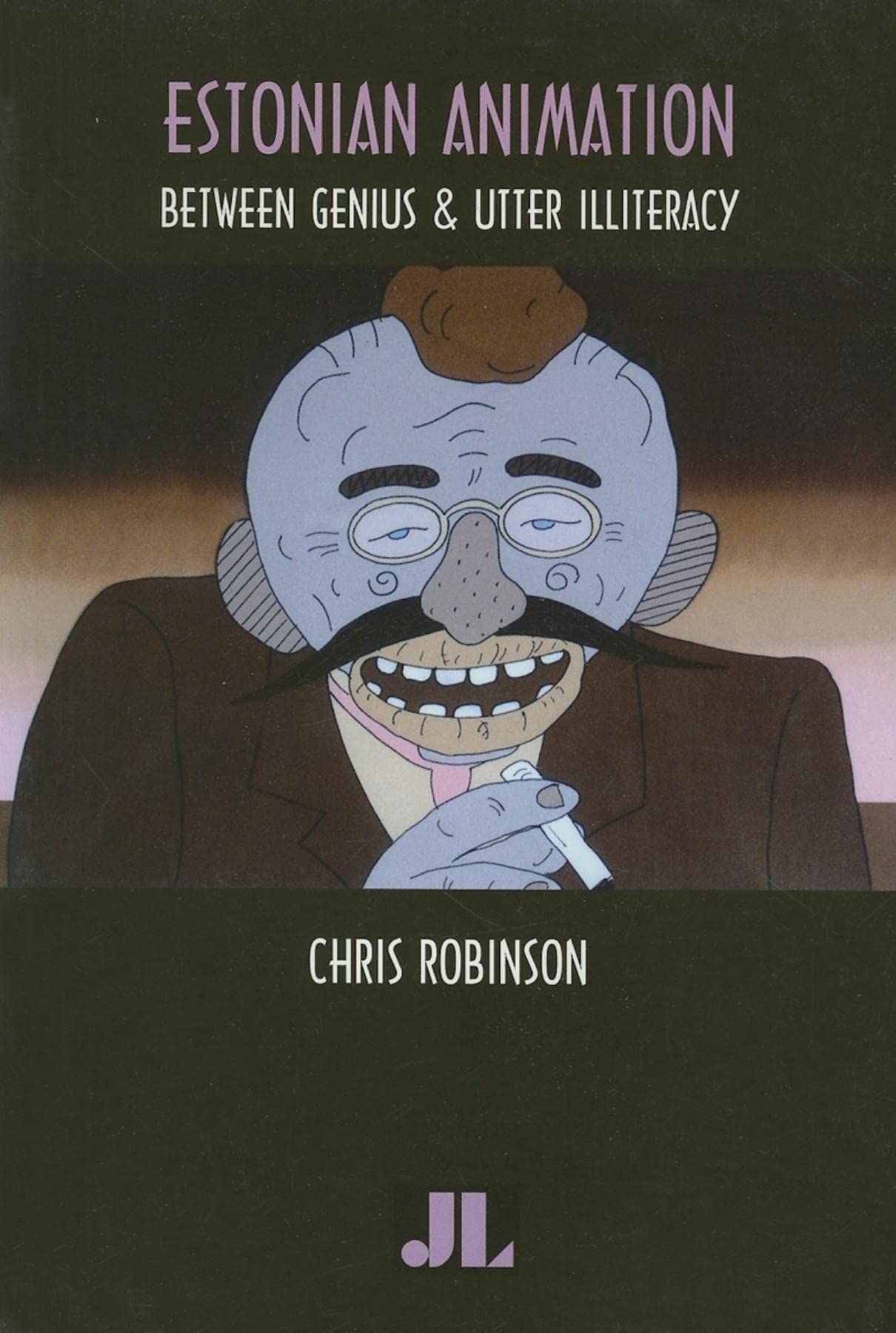



Ever wonder why Estonian animation features so many carrots or why cows often perform pyramids? Well, neither question is answered in Chris Robinson's new book, Estonian Animation. Robinson's frank, humorous, and thoroughly researched book traces the history of Estonia's acclaimed animation scene from early experiments in the 1930s to the creation of puppet (Nukufilm) and cel (Joonisfilm) animation studios during the Soviet era, as well as Estonia's surprising international success during the post-Soviet era. In addition, Robinson writes about the discovery of films by four 1960s animation pioneers who, until the release of this book, had been unknown to most Estonian and international animation historians. A fascinating new look at animated film in Estonia. Chris Robinson is an Ottawa-based author who has been a director of the Ottawa International Animation Festival since 1994. A noted animation commentator, curator, and historian, Robinson has become a leading expert on Canadian and international independent animation. His books include Between Genius and Utter Illiteracy: A Story of Estonian Animation; Unsung Heroes of Animation; and the critically acclaimed Stole This from a Hockey Card: A Philosophy of Hockey, Doug Harvey, Identity and Booze. Estonian Animation Between Genius and Utter Illiteracy By Chris Robinson John Libbey Publishing Ltd. Copyright © 2006 John Libbey Publishing Ltd. All rights reserved. ISBN: 978-0-86196-667-7 Contents Preface, vii, 1 Previous Attractions, 1, 2 The Lost Films, 5, 3 The Dictator and The Democrat, 11, 4 The Missing Links, 53, 5 The Preachers, 63, 6 Estonia Catches Up With Modern Art, 91, 7 Fat Chicks and Imbeciles, 97, 8 Nukufilm: Changing of the Guard, 115, 9 Music ... Please, 139, 10 Uncorked, 149, 11 The Next Wave, 177, 12 Will The Strip Snap?, 199, Select Filmography, 209, CHAPTER 1 Previous Attractions To see what is, we must see what was. I've no intention of going into Estonian history in great detail as there are already two fine books in English on the subject: Rein Taagerpera's Estonia: Return To Independence and Toivo Raun's Estonia and The Estonians. However, it is important to highlight a few characteristics of Estonian history in order to better contextualize this story. In the beginning was land, and then came the word to deem it land. This particular land was located snugly between the Gulf of Finland, Lake Peipsi, Latvia and the Baltic Sea. This land, known by a variety of names including Kunda, Livonia, and Estonia (Eesti), became a corridor between the West and the East. Because of this enviable geographical location, Estonia has been a desirable target for many empires since the 13th century. Since about 1227, Estonia has been under the rule of Denmark, Poland, and most influentially, Sweden (1561–1710), Germany (1227–1561, 1941–45) and Russia (1710–1860,1945–1991). There have only been three periods when Estonia was an independent country: 1200 A.D., 1918–1940 and 1991–present. Given its small population and relatively small land size (noteworthy though, Estonia is bigger than The Netherlands), by all rights, Estonia should not exist today. The reason it does exist says a lot about the character of the people, but also the language they speak. I've read various attempts that try to define the essence of an Estonian, and honestly they're ludicrous. I've read of Estonians' calmness, ironic sense of humour, pride, and sincerity, and while I've certainly encountered these traits, I've also seen their polar opposites. I've seen the good and the bad, just as I see it everyday in my own city. Furthermore, to speak of some homogeneity of race is misleading. Today, one can see traces of Swedish, German, and Russian, while emerging more recently is the influence of 'American' culture throughout Estonia. Estonians were once forced to speak Russian; now they are 'forced' to speak English. Certainly the reasons are entirely different – one was a gun to the head, the other is the enticing dollar bill. What has saved and made Estonians distinct, is their language. North American English has swept across the planet forcing virtually every culture that wishes to participate in a global economy to embrace the language of Americans. I need not go into a long diatribe about the dangers of this global assimilation – if not perpetuated by the Americans, then it'd be by someone else. Nevertheless, along the way, we (English-speaking North Americans) have become spoiled modernists, racing through time crippled by historical amnesia. We now not only assume that everyone can and should speak English, but that they quite likely think like us as well (whoever 'us' is!). As 'we' invade every part of the world with our language and 'culture' we are not only forcing other languages to the background, but also the subconscious aspects of those languages that truly define the essence of difference. I speak of gestures, tone and p