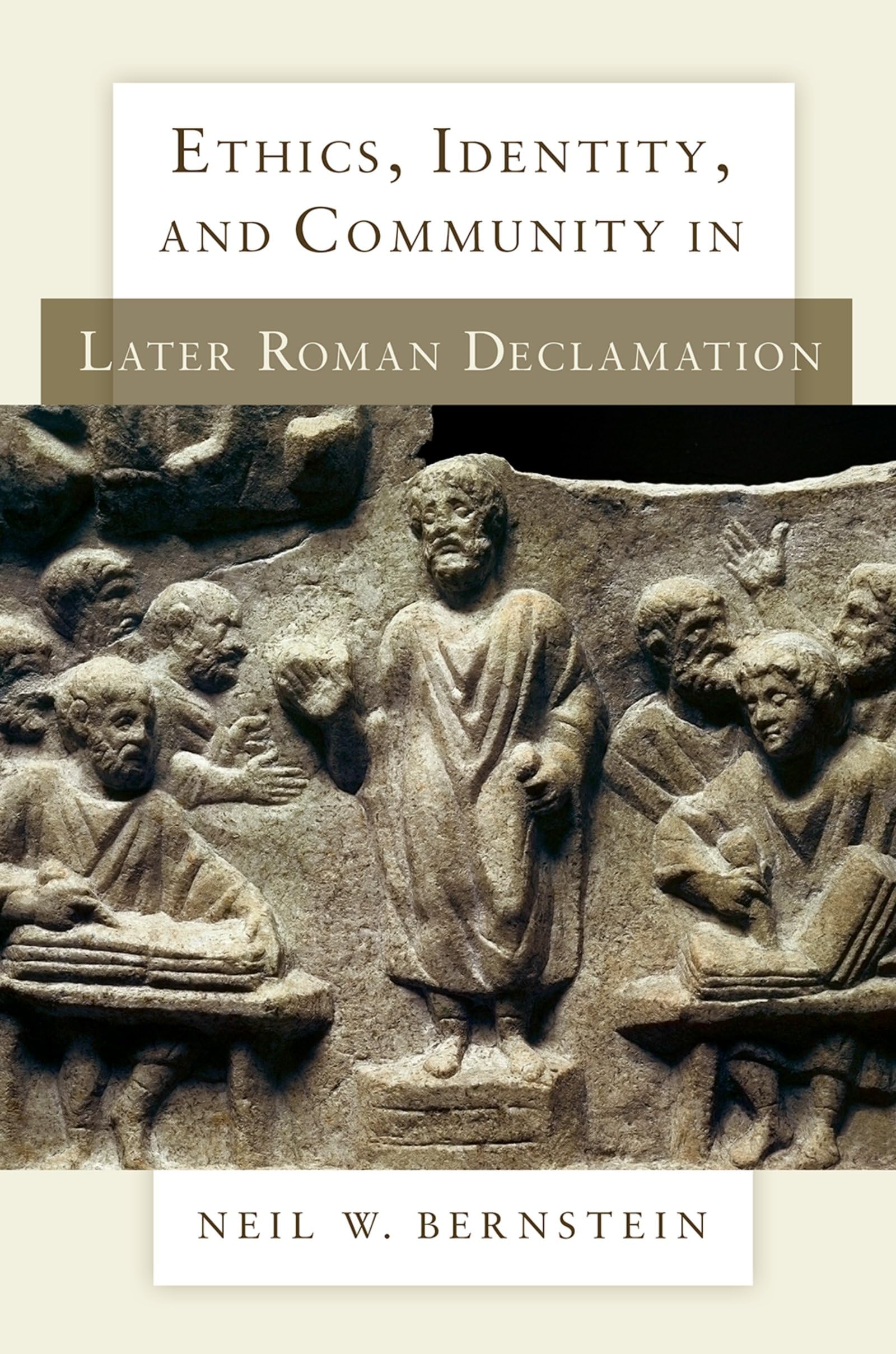



Rhetorical training was the central component of an elite Roman man's education, and declamations--imaginary courtroom speeches in the character of a fictional or historical individual--were the most advanced exercises in the standard rhetorical curriculum. The Major Declamations is a collection of nineteen full-length Latin speeches attributed in antiquity to Quintilian but most likely composed by a group of authors in the second and third centuries CE. Though there has been a recent revival of interest in Greco-Roman declamation, the Major Declamations has generally been neglected. Ethics, Identity, and Community in Later Roman Declamation is the first book devoted exclusively to the Major Declamations and its reception in later European literature. It argues that the fictional scenarios of the Major Declamations enable the conceptual exploration of a variety of ethical and social issues. Chapters explore these cultural matters, covering, in turn, the construction of authority, the verification of claims, the conventions of reciprocity, and the ethics of spectatorship. The book closes with a study of the reception of the collection by the Renaissance humanist Juan Luis Vives and the eighteenth-century scholar Lorenzo Patarol, followed by a brief postscript that deftly surveys the use of declamatory exercises in the contemporary university. This much-needed and engaging study will rescue the Major Declamations from generations of neglect, while critically informing current work in rhetorical studies. "...[S]imply a good book: it contains a wealth of information and acute analyses, and it will appeal to both specialists and laymen who want to learn more about the genre of declamation, its literary intertexts and its socio-cultural contexts." -- Mnemosyne "This sort of multidisciplinary research, that connects literature and anthropology, should be developed and enriched. ... Bernstein's book gives the scholars interested in declamation a large number of hints for new developments and insights both from rhetorical and classical heritage point of view." -- The Classical Journal "In this engaging analysis, Bernstein shows how declamations--speeches about imaginary legal conflicts involving not only family members, friends, and neighbors, but also such unsavory characters as cannibals, prostitutes, and sorcerers--provided elite young Romans of the high empire with a creative space in which to deliberate real-world issues of authority, power relations, and ethical obligations." --Craig A. Gibson, University of Iowa "Bernstein rescues the pseudo-Quintilianic Major Declamations from centuries of neglect, showing that they are far from the dull, mechanical (or ridiculously unreal) performances that they have long been thought to be. A huge contribution to the revival of scholarly interest in ancient education, rhetorical education in particular." --Jeffrey Walker, University of Texas at Austin "Bernstein rightly insists on the ethical value practitioners could find in composing and performing such legal fictions and on the value they have for scholars interested in the Roman mentality. In counterpoint to the wildly dramatic orations, Bernstein's own prose is clear, concrete, and not without a dry scholar wit. Highly recommended." --M.L. Goldman, Vanderbilt University, CHOICE The first book devoted exclusively to the Major Declamations and its reception in later European literature Neil W. Bernstein is Associate Professor in the Department of Classics and World Religions at Ohio University.