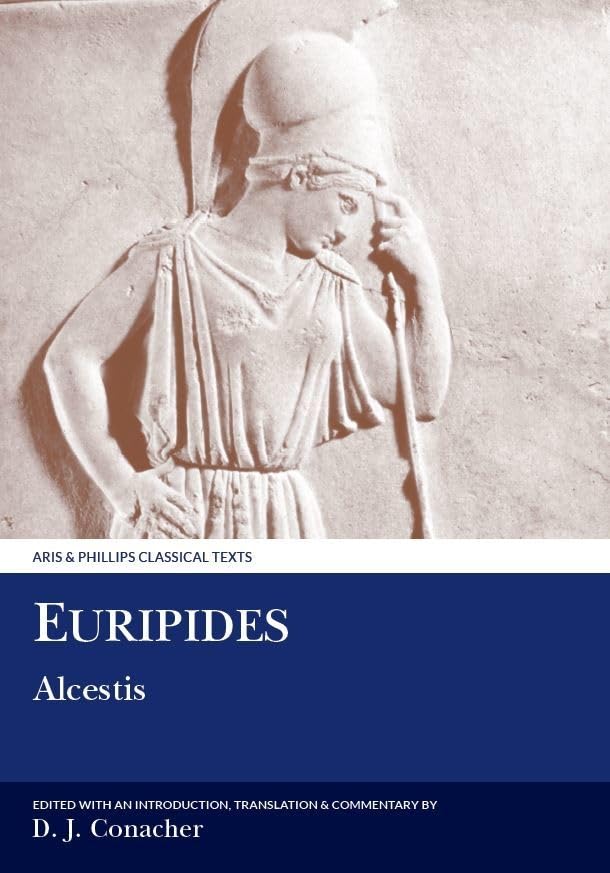



The theme of Euripides’ Alcestis blends the primitive folk-tale of the self-sacrificing bride, Alcestis, and of Heracles’ heroic struggles with the ogre Death, with a morality tale of “virtue rewarded”, in this case twice rewarded. The Alcestis is the only tragedy which we know to have been produced in the position usually allotted (at the Athenian tragic festivals) to the semi-comic “satyr-play”. Like a satyr-play, it has a happy ending but does the poet intend his audience to interpret the play in quite such simple terms? Opinions differ widely but the ironic, slightly mocking tone of the play suggests, at least to some critics, that more sombre meanings may lie beneath the surface of this beautifully constructed little masterpiece. Greek text with facing-page English translation, introduction and commentary. For this second edition, the General Bibliography has been updated, with major revision and expansion. ‘The introduction is informative, sensible and perceptive… commentary is up to date, learned, informative and often perceptive.’ JACT ?The introduction is informative, sensible and perceptive? commentary is up to date, learned, informative and often perceptive.? JACT https://global.oup.com/academic/product/9780856682353?cc=us †D. J. Conacher was Professor Emeritus in the Department of Classics at the University of Toronto, Fellow of the Royal Society of Canada, and Honorary President of the Classical Association of Canada. His publications include ‘Aeschylus: The Earlier Plays and Related Studies’ (University of Toronto Press, 1996), ‘Aeschylus' Oresteia: a Literary Commentary’ (University of Toronto Press, 1989), ‘Aeschylus' Prometheus Bound: a Literary Commentary’ (University of Toronto Press, 1981) and ‘Euripidean Drama: Myth, Theme and Structure’ (University of Toronto Press, 1967). Euripides Alcestis By Euripides Aris & Phillips Copyright © 1988 Euripides All right reserved. ISBN: 9780856682353 Chapter One Hippolytus Translated by Richard Moore Cast APHRODITE, goddess of love, also called Cypris ARTEMIS, virgin goddess of hunting HIPPOLYTUS, son of Theseus HUNTSMEN MESSENGER NURSE of Phaedra PHAEDRA, wife of Theseus, stepmother of Hippolytus SERVANT THESEUS, king of Athens and Troezen CHORUS of Troezen women (Statue of Aphrodite, left; statue of Artemis, right; palace door, center. Choral space between audience and stage. Aphrodite enters from her image.) APHRODITE Everyone knows me. I'm Cypris, the goddess. Sex and desire, my specialties, draw men helpless from Pontus to Heracles' Pillars. Those that delight in me, I can reward them; those that detest me will harvest my hatred. Even immortals get caught in my soft snares. Goddesses love it when worshipers gather. Listen: I'll prove that this very hour. There is a fellow, King Theseus' young son, huntsman Hippolytus, lover of horses, born of an Amazon lady in Athens. Grandfather Pittheus raised the boy here in Troezen because of his unmarried mother. Hates me, this fellow. The thought of me sickens. Hates love's bed, scorns pleasures of marriage, worships instead prim Artemis, huntress, Phoebus' sister and Zeus' proud daughter; says she's the sacredest thing in the heavens. Never can leave her, adores her, his maiden. There with his dogs hunts beasts in the forest, he and his she-spirit blessing each other. Why should that bother me? Why should I mind that? Well, my Hippolytus, you shall pay dear, dear. All is prepared, and the path lies open. Not that I'll work very hard at it, mind you. Oh, it was years ago now when it started. Theseus, bringing a sexy new consort, Phaedra dear, home to his kingdom in Athens, thought: now what of Hippolytus, young boy got on that Amazon lady I mentioned? That's when he sent him to grandfather Pittheus here to be raised as the ruler of Troezen. But, as it happened, he went back to Athens once, to take part in the mysteries held there. Phaedra caught sight of him, heart in her throbbing shamefully: she was the wife of his father, she, proud ladyship, gripped in a raging criminal lust for him. That was my doing. Then, before coming to Troezen herself, she built me a shrine on a storm-lashed headland, visible here in the city, and called it, "Love from afar," for Hippolytus: wishes. ("Goddess, be seated!" our aftertimes call it.) Meanwhile Theseus, dealing with uncles, shed much blood, so he took a vacation, hoping for calm, and he moved his young family here, where Hippolytus lives. Here Phaedra wastes away, stung by her furious longings, dies of them, agonized; dares, though, no word breathe of it, guiltily hoarding her sickness. Terrified servants in wonderment whisper. Ah, but the truth of it's sure to get out soon, Theseus hear of it ... that I will see to. Oh then loudly he'll cry to Poseidon, call down curses the Sea God promised, down on that hateful Hippolytus, sweep him deep under earth ... poor Phaedra