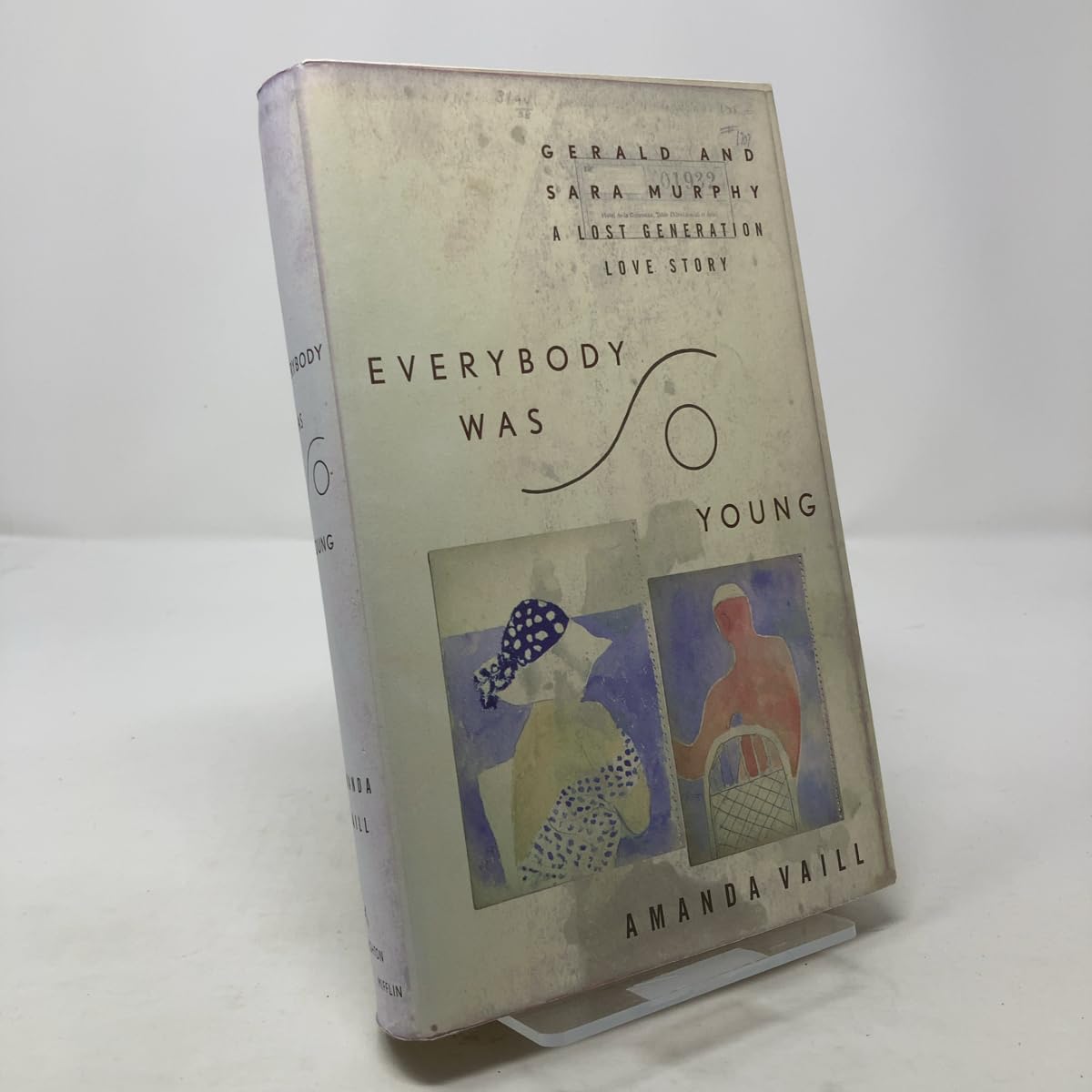
Everybody Was So Young: Gerald and Sara Murphy : A Lost Generation Love Story
$42.18
by Amanda Vaill



"Once upon a time there was a prince and a princess -- that's how the story of the Murphys should begin," said a friend of this golden pair. Handsome, gifted, wealthy Americans with homes in Paris and on the French Riviera, Gerald and Sara Murphy were at the very center of expatriate cultural and social life during the modernist ferment of the 1920s. Gerald Murphy -- witty, urbane, and elusive -- was a giver of magical parties and an acclaimed painter. Sara Murphy, an enigmatic beauty who wore her pearls to the beach, enthralled and inspired Pablo Picasso (he painted her both clothed and nude), Ernest Hemingway, and F. Scott Fitzgerald. The models for Nicole and Dick Diver in Fitzgerald's Tender Is the Night,the Murphys also counted among their friends John Dos Passos, Dorothy Parker, Fernand Leger, Archibald MacLeish, Cole Porter, and a host of others. Far more than mere patrons, they were kindred creative spirits whose sustaining friendship released creative energy. Yet none of the artists who used the Murphys for their models fully captured the real story of their lives: their Edith Wharton childhoods, their unexpected youthful romance, their ten-year secret courtship, their complex and enduring marriage -- and the tragedy that struck them, when the world they had created seemed most perfect, in what Gerald called, "our most vulnerable spot, our children." Certainly Fitzgerald, who once complained that there were no second acts in American lives, could not have envisioned the tenacity with which the Murphys struggled to hold themselves and their charmed circle together through the dark years of the thirties and forties, when death, financial ruin, madness, and war assailed it. Amanda Vaill's account of the Murphys and their friends follows them through the whole arc of their glittering and sometimes tragic lives -- the first such account to do so. Drawing on a hitherto untapped wealth of family diaries, photographs, letters and other papers, as well as on archival research and interviews on two continents, Vaill has documented the pivotal role of the Murphys in the interplay of cultures that gave rise to the Lost Generation. She explores for the first time the sexual undercurrents that ran beneath Gerald's and Sara's relationships with Picasso, Hemingway, and Fitzgerald and affected the work of all three men. Most important, she evokes both Murphys, and the geniuses who had the good fortune to be their friends, with a clarity and tenderness that makes them virtually step off the page. "There was a shine to life wherever they were," said the poet Archibald MacLeish -- and this book, which reads as much like a rich and engaging novel as a work of biography, shows why. Gerald and Sara Murphy were the golden couple of the Lost Generation. Born to wealth and privilege, they fled the stuffy confines of upper-class America to reinvent themselves in France as legendary party givers and enthusiastic participants in the modernist revolution of the 1920s. He became an important painter; she made everyday life a work of art. Their friends F. Scott Fitzgerald, Ernest Hemingway, and John Dos Passos all based fictional characters on the Murphys; Picasso painted them; and Calvin Tomkins rekindled their glamour for a younger generation in his affectionate 1971 portrait, Living Well Is the Best Revenge . Amanda Vaill's vivid new biography builds on Tomkins's work to provide a full-length account of the Murphys' remarkable life together. As well as good times, that life included suffering endured with great courage. The Murphys' teenage sons died within two years of each other in the mid-1930s--one suddenly, one after a long battle with tuberculosis--and the Depression forced Gerald to resume the uncongenial work of managing his family's business. Vaill's sensitive rendering reveals the moral substance that enabled this stylish couple to survive heartbreak. But it's her marvelous evocation of those magical expatriate years that lingers in the memory. The wit and imaginative panache with which the Murphys lived sparkles again, recapturing a splendid historical moment. As Sara later said, "It was like a great fair, and everybody was so young." --Wendy Smith Often considered minor Lost Generation celebrities, the Murphys were in fact much more than legendary party givers. Vaill's compelling biography unveils their role in the European avant-garde movement of the 1920s; Gerald was a serious modernist painter. But Vaill also shows how their genius for friendship and for transforming daily life into art attracted the most creative minds of the time: Picasso, Hemingway, and Fitzgerald. Copyright 1999 Reed Business Information, Inc. For connoisseurs of the Lost Generationa well-tempered biography of the wealthy American couple who knew absolutely everybody, from Hemingway to Fitzgerald to Dos Passos to Picasso, and so on and on. Though Sara and Gerald Murphy both dabbled in the arts, their true genius was for friendship. As Sa