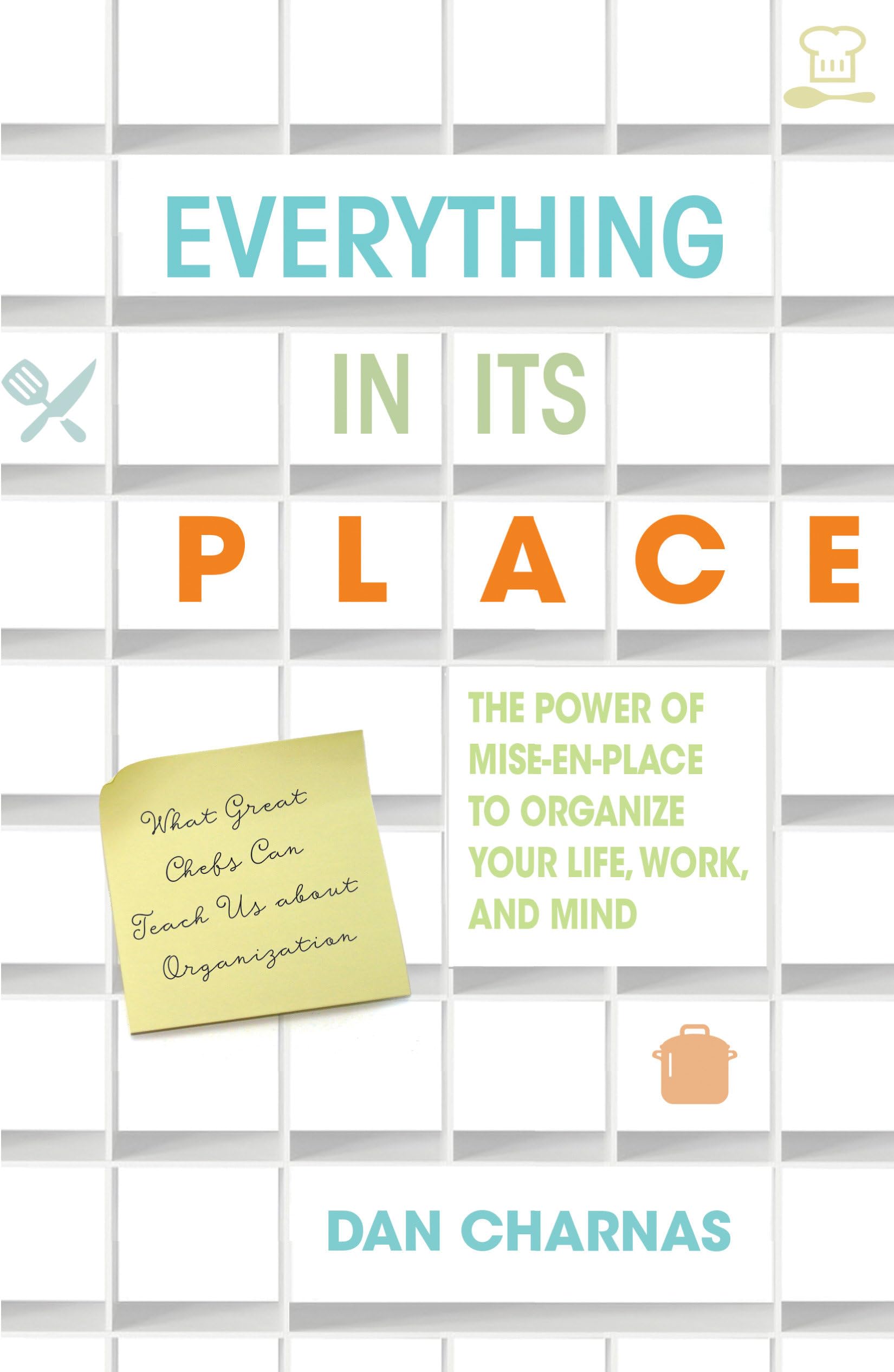
Everything in Its Place: The Power of Mise-En-Place to Organize Your Life, Work, and Mind
$14.99
by Dan Charnas



Previously published in hardcover as Work Clean , this organizational book is inspired by the culinary world: how to take the principles of mise-en-place out of your kitchen and into your life. Every day, chefs across the globe churn out enormous amounts of high-quality work with efficiency using a system called mise-en-place —a French culinary term that means “putting in place” and signifies an entire lifestyle of readiness and engagement. In Everything in Its Place , Dan Charnas reveals how to apply mise-en-place outside the kitchen, in any kind of work. Culled from dozens of interviews with culinary professionals and executives, including world-renowned chefs like Thomas Keller and Alfred Portale, this essential guide offers a simple system to focus your actions and accomplish your work. Charnas spells out the 10 major principles of mise-en-place for chefs and non-chefs alike: (1) planning is prime; (2) arranging spaces and perfecting movements; (3) cleaning as you go; (4) making first moves; (5) finishing actions; (6) slowing down to speed up; (7) call and callback; (8) open ears and eyes; (9) inspect and correct; (10) total utilization. This journey into the world of chefs and cooks shows you how each principle works in the kitchen, office, home, and virtually any other setting. Dan Charnas is an award-winning culture, lifestyle, and business writer. Recipient of the 2007 Pulitzer Fellowship for Arts Journalism, his first book, The Big Payback: The History of the Business of Hip-Hop, was called “a classic of music-business dirt digging as well as a kind of pulp epic” by Rolling Stone. He lives in New York City. FOCUS How mise-en-place works CHEF DWAYNE LIPUMA'S entire kitchen staff just quit. He's looking at reservations for 40 people for lunch, then another 140 for a banquet tomorrow. To make all those meals, LiPuma's bosses have provided him with 19 recruits, some of whom have never cooked in a fine-dining restaurant. Aside from LiPuma's assistant and a pastry chef, not one of the staff has ever seen the menu, much less prepared the items on it, all gourmet dishes with elaborate presentations. But by the end of the day, the diners will leave satisfied. In fact, the customers--some of whom have waited months for a reservation at LiPuma's restaurant, American Bounty--will scarcely notice that their entire meal was made by neophyte cooks. A miracle perhaps? Nope. It's a regular day for Chef LiPuma. In 3 weeks, when LiPuma has his crew trained and confident, they will leave and a new group of inexperienced cooks will replace them. He will repeat this process every 3 weeks, thus providing the penultimate course for students who will soon graduate from the Culinary Institute of America. What makes this impossible rhythm possible is not a miracle. It's a system called mise-en-place. LEARNING TO COOK, LEARNING TO WORK The Culinary Institute of America, called the CIA without irony by people who think more about the epicurean than they do espionage, sits like a citadel on the banks of the Hudson River almost 100 miles north of New York City. Its grand campus in Hyde Park, New York, centered around a former seminary--housing an average of 2,400 students, 140 full-time faculty, 49 kitchens, and four student-staffed restaurants--the CIA is among the world's most renowned culinary schools, with branches in Texas, northern California, and Singapore. From the first day of classes to the last, CIA students will hear the term mise-en-place, pronounced like "me's on plahhs." It's on the lips of Tim Ryan, the president of the college, as he greets new enrollees. A few of the students may have heard the term before they arrived, perhaps in a kitchen for which they worked during high school or thereafter. Some will refer to their textbook, The Professional Chef, which provides the English translation of the term, "put in place," and a definition: "the preparation and assembly of ingredients, pans, utensils, and plates or serving pieces needed for a particular dish or service period." At first, mise-en-place blends into the dozens of French words and phrases they must remember as they make their way through their introductory class, Culinary Fundamentals, like mirepoix, brunoise, tourner, arroser, fond de veau, roux, consommé. But as students learn the basic techniques they'll need to succeed in all the courses that follow--knife cuts, making stock, making sauce, cooking vegetables and meat--they learn that mise-en-place encompasses an entirely different set of vital skills, and that putting their ingredients and tools in place is just the first level of a deceptively simple concept that keeps unfolding. Instructors invoke mise-en-place when they tell students to keep their cutting boards and workstations clean and when they tell them to arrange their tools in a certain order and return them to that order after they use them; when they move too slow and also when they move too fast; when they move