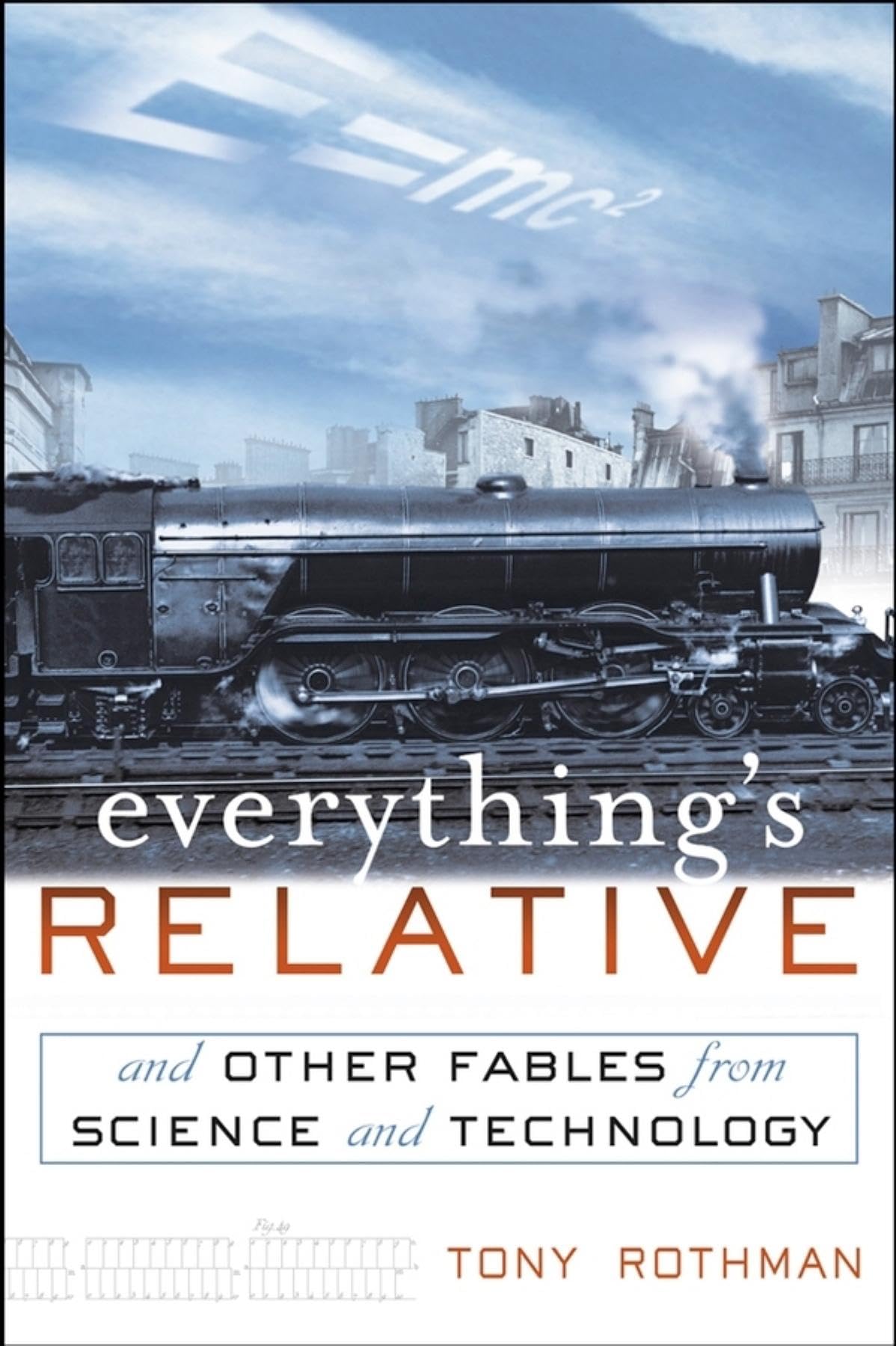



The surprising truth behind many of the most cherished "facts" in science history Morse invented the telegraph, Bell the telephone, Edison the light bulb, and Marconi the radio . . . right? Well . . . the truth is slightly more complicated. The history of science and technology is riddled with apocrypha, inaccuracies, and falsehoods, and physicist Tony Rothman has taken it upon himself to throw a monkey wrench into the works. Combining a storyteller's gifts with a scientist's focus and hardheaded devotion to the facts—such as they may be—Rothman breaks down many of the most famous "just-so" stories of physics, astronomy, chemistry, biology, and technology to give credit where credit is truly due. From Einstein's possible misunderstanding of his own theories to actress Hedy Lemarr's role in the invention of the radio-controlled torpedo, he dredges his way through the legends of science history in relating the fascinating stories behind some of the most important, and often unsung, breakthroughs in science. * “… its real strength is the way it rehabilitates some of the great unknowns in scientific history…” ( Focus , May 2004) “The writing is witty, scientifically sound, and unburdened with extensive footnotes and literature references.” ( The Alchemist , 26 March 2004) “…informative and well researched, this is a surprisingly new look at some very old stories.” ( Good Book Guide , April 2004) "It's hard to think of a more wonderful science writer than Tony Rothman." ( San Francisco Examiner ) "Tony Rothman is...a physicist who writes well and lucidly. His Hallmark is a rare attention to detail combined with abhorrence of any hint of condescension and an emphasis on the lighter side of physics." (Joseph Silk, Science magazine) "...enthralling..." ( New Scientist , 17 January 2004) "If you were not a sceptic about the mythology of discovery, you will be one after reading Tony Rothman's fascinating book. It's an assemblage of compelling antistories, all eminently readable, to counter the stories scientists tell themselves, and then tell us. And that we...are all too eager to hear." —Roald Hoffman, winner of the 1981 Nobel Prize in Chemistry "If you were not a sceptic about the mythology of discovery, you will be one after reading Tony Rothman's fascinating book. It's an assemblage of compelling antistories, all eminently readable, to counter the stories scientists tell themselves, and then tell us. And that we...are all too eager to hear." —Roald Hoffman, winner of the 1981 Nobel Prize in Chemistry Morse invented the telegraph, Bell the telephone, and Edison the light bulb . . . or so we have been led to believe. In a discipline so firmly rooted in empirical data, its surprising to discover how the history of science can be so riddled by apocrypha, inaccuracies, and blatant falsehoods. In Everythings Relative, writer and physicist Tony Rothman sets the record straight once and for all, giving credit where credit is due by debunking centuries of commonly held beliefs embedded throughout science and technologys illustrious, albeit distorted, history. Combining a storytellers gift with a scientists focus, Tony Rothman breaks down many of the most famous "just-so" stories of physics, astronomy, chemistry, biology, and technology. Each engaging anecdote clearly reveals how unique discoveries are the exception, rather than the rule. Discoveries almost always take place simultaneously or build upon a predecessors breakthrough . . . usually without acknowledging the work of their fellow colleagues whose slighted names have since fallen into obscurity. Who really discovered Neptune? Was it the quiet, self-effacing Brit John Couch Adams or the arrogant, self-promoting French scientist Urbain Le Verrier? Or was Neptunes discovery just a fantastic coincidence altogether? Everythings Relative tells the fascinating "truth-is-stranger-than-fiction" story behind this and many other scientific discoveries and breakthroughs, including how: Henry Young, the greatest American scientist after Benjamin Franklin, severed his friendship with Samuel Morse after not receiving proper credit for his key role in inventing the telegraph - Thomas Youngs celebrated "double slit" experiment is so laden with ambiguous language, it raises the question: Did Young really act alone in his experiment? - Albert Einstein, one of the greatest twentieth-century physicists and a titan of science, misinterpreted his own highly celebrated theory of relativity - Neither James Watt, nor Robert Fulton, nor John Fitch, nor Simon Newcomen invented the steam engineCaptain Thomas Savary first invented the prototype for the steam engine back in 1698 - More than 600 lawsuits were filed against Alexander Graham Bell after he took sole credit for inventing the telephone - And much more Stand on the shoulders of giants and discover the real stories behind many of the most cherished "facts" in science history Forget everything you learned in school. Aba