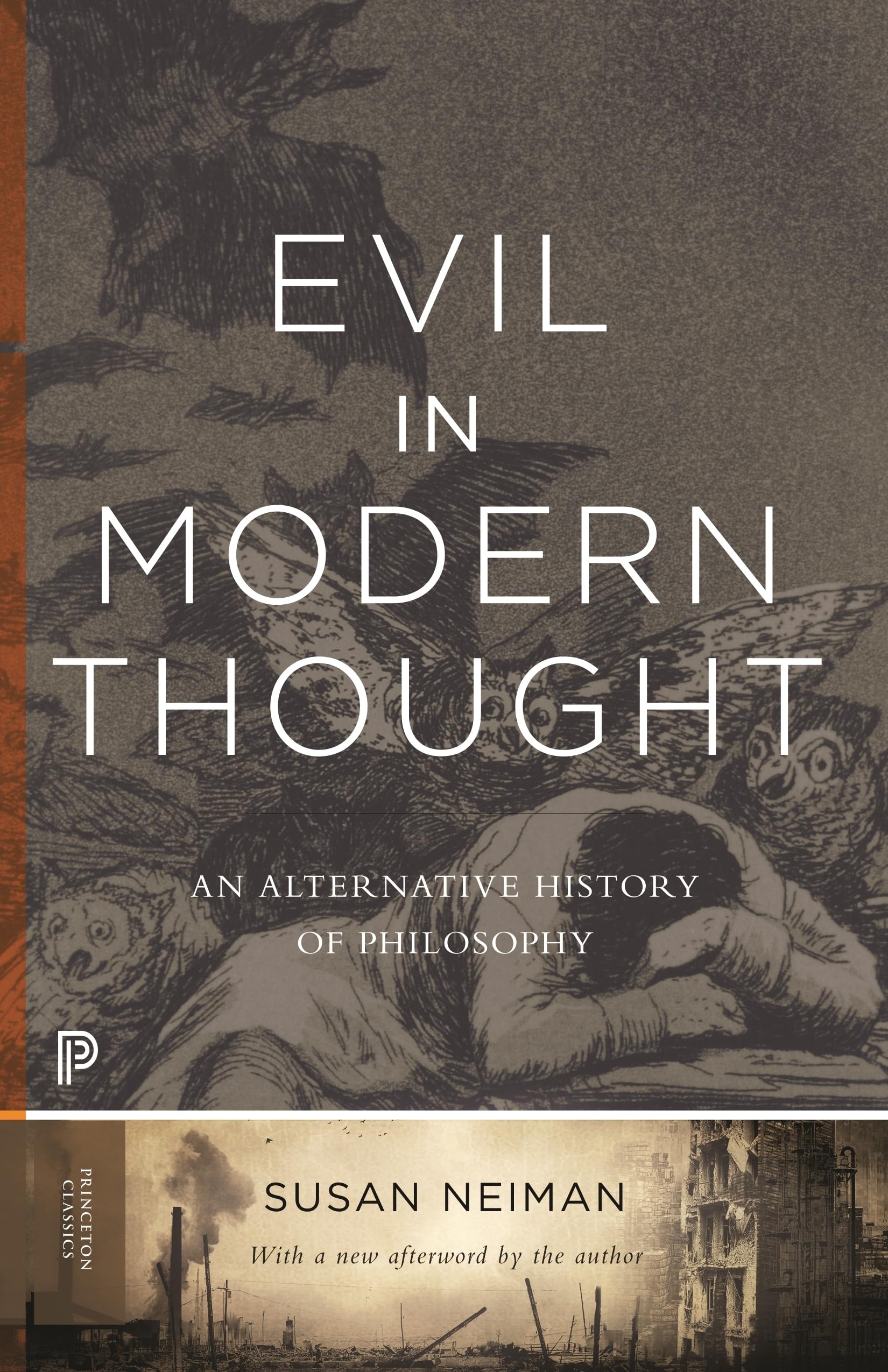
Evil in Modern Thought: An Alternative History of Philosophy (Princeton Classics)
$17.99
by Susan Neiman



A compelling look at the problem of evil in modern thought, from the Inquisition to global terrorism Evil threatens human reason, for it challenges our hope that the world makes sense. For eighteenth-century Europeans, the Lisbon earthquake was manifest evil. Today we view evil as a matter of human cruelty, and Auschwitz as its extreme incarnation. Examining our understanding of evil from the Inquisition to contemporary terrorism, Susan Neiman explores who we have become in the three centuries that separate us from the early Enlightenment. In the process, she rewrites the history of modern thought and points philosophy back to the questions that originally animated it. Whether expressed in theological or secular terms, evil poses a problem about the world's intelligibility. It confronts philosophy with fundamental questions: Can there be meaning in a world where innocents suffer? Can belief in divine power or human progress survive a cataloging of evil? Is evil profound or banal? Neiman argues that these questions impelled modern philosophy. Traditional philosophers from Leibniz to Hegel sought to defend the Creator of a world containing evil. Inevitably, their efforts―combined with those of more literary figures like Pope, Voltaire, and the Marquis de Sade―eroded belief in God's benevolence, power, and relevance, until Nietzsche claimed He had been murdered. They also yielded the distinction between natural and moral evil that we now take for granted. Neiman turns to consider philosophy's response to the Holocaust as a final moral evil, concluding that two basic stances run through modern thought. One, from Rousseau to Arendt, insists that morality demands we make evil intelligible. The other, from Voltaire to Adorno, insists that morality demands that we don't. Beautifully written and thoroughly engaging, this book tells the history of modern philosophy as an attempt to come to terms with evil. It reintroduces philosophy to anyone interested in questions of life and death, good and evil, suffering and sense. Featuring a substantial new afterword by Neiman that raises provocative questions about Hannah Arendt's take on Adolf Eichmann and the rationale behind the Hiroshima bombing, this Princeton Classics edition introduces a new generation of readers to this eloquent and thought-provoking meditation on good and evil, life and death, and suffering and sense. "Winner of the 2002 Award for Best Professional/Scholarly Book in Philosophy, Association of American Publishers" "Winner of the 2003 Award for Excellence in the Study of Religion, American Academy of Religion" "One of Choice's Outstanding Academic Titles for 2003" "Evil has become the subject of one book after another, but [this] is one book unlike any other--by a philosopher unlike any other." ---Bill Moyers, NOW "Scintillating-- a very rare thing in a philosopher." ---Jonathan Ree, Times Literary Supplement "Provocative and profound." ---Damon Linker, The Wall Street Journal "The American philosopher Susan Neiman has written the book for this world-political hour." ― Neue Züricher Zeitung "A brilliant new book. . . . No summary can convey the intellectual firepower of Neiman's book. Within her field of interest, she seems not only to have read everything but to have understood it at the deepest level." ---William C. Placher, Christian Century "Eloquent... [Neiman argues that] evil is not just an ethical violation, it disrupts and challenges our interpretation of the world." ---Edward Rothstein, The New York Times "Neiman follows the argument like a sleuth, and, indeed, her book is a kind of thriller: What is it that menaces us? Will we find what evil is? And how may we escape it? The path leads from a God found absent past a Nature that's indifferent till it fetches up at the house of a man himself. . . . Neiman leads the reader through a careful analysis of the relation of intention, act, and consequence to kinds of useful knowledge and degrees of awareness." ---William H. Gass, Harper's Magazine "This great work....looks into these abysses with astonishing fearlessness." ― Die Zeit "An erudite and compelling intellectual treatise that is profoundly interesting, often witty, and constructed without resorting to jargon or obfuscation. . . . In reorienting the history of philosophy, she has made it come alive. . . . This is a fine, even elegant book." ― Choice "This is an accessible work of philosophy in the best sense, sharply focused on matters of vital human concern and free of the domain tics that mar even allegedly popular works by Anglo-American philosophers." ---Mark Lilla, The New York Review of Books "Clear, elegant and inviting...suddenly, (philosophy) is again a matter of life and death." ― Die Welt "We badly need alternative histories of philosophy. The story told (by me, among others) cries out for supplementation. . . . Neiman's snazzy prose makes this book a pleasure to read, as well as an immense