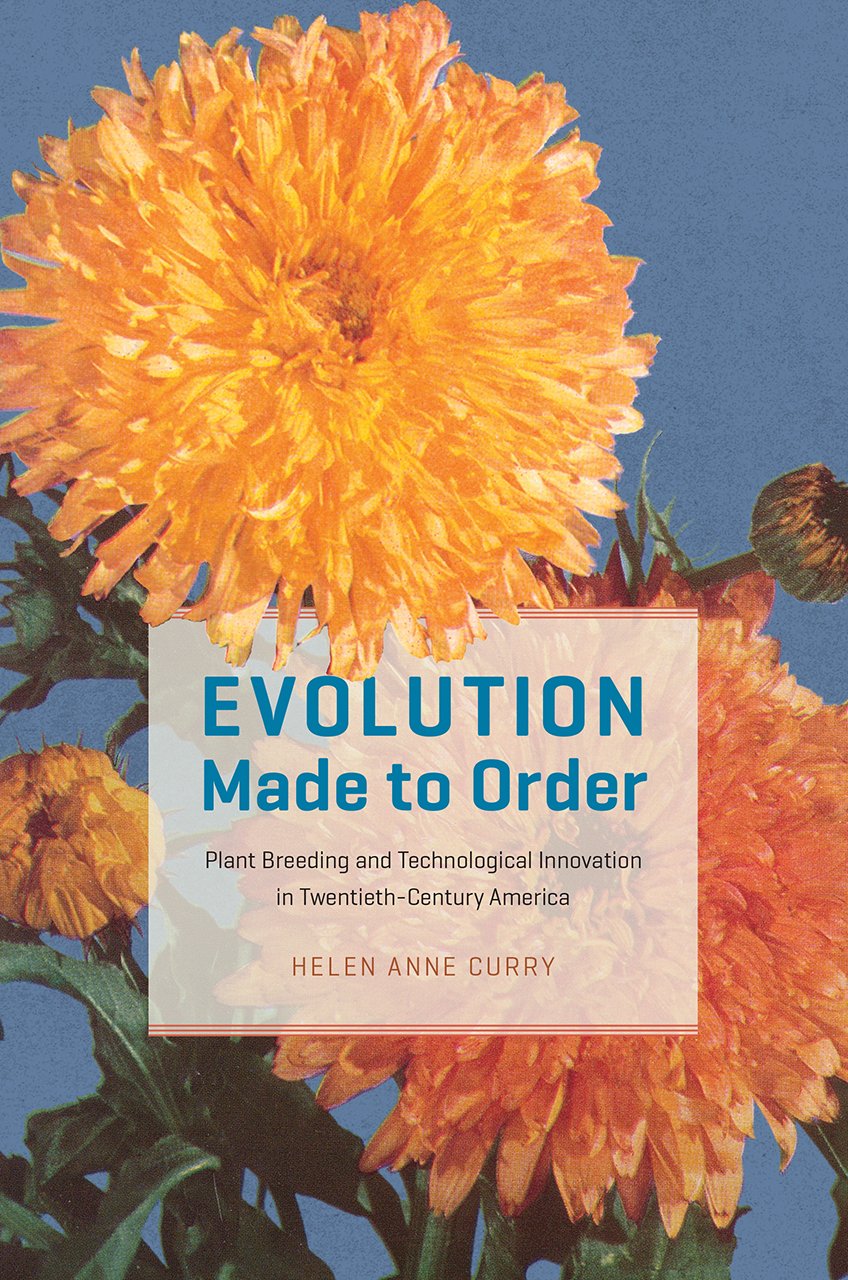
Evolution Made to Order: Plant Breeding and Technological Innovation in Twentieth-Century America
$59.24
by Helen Anne Curry



Plant breeders have long sought technologies to extend human control over nature. Early in the twentieth century, this led some to experiment with startlingly strange tools like x-ray machines, chromosome-altering chemicals, and radioactive elements. Contemporary reports celebrated these mutation-inducing methods as ways of generating variation in plants on demand. Speeding up evolution, they imagined, would allow breeders to genetically engineer crops and flowers to order. Creating a new food crop or garden flower would soon be as straightforward as innovating any other modern industrial product. In Evolution Made to Order , Helen Anne Curry traces the history of America’s pursuit of tools that could intervene in evolution. An immersive journey through the scientific and social worlds of midcentury genetics and plant breeding and a compelling exploration of American cultures of innovation, Evolution Made to Order provides vital historical context for current worldwide ethical and policy debates over genetic engineering. "A fascinating foray into a mutated cornucopia of agricultural and horticultural products and the tools that made them. Such varied and important insights into the history of biological innovation and its many aspirations seem as relevant as ever in our ongoing search for new tools to reshape living things to our goals, needs, and desires—and to envision life as it could be." ― Science "In this fascinating, well-researched history of genetic innovation, Curry explores the hype, intensive investigation, and, ultimately, the disappointment accompanying the application of new technologies offering the promise of human control over plant evolution to breed superior agricultural and horticultural crops in the early to mid-20th century. The utilization of these tools for plant breeding is placed in the broader context of innovations in the electromechanical, chemical, and nuclear industries and the desire to control living organisms in a manner similar to any other industrial product. Certain historical events, such as America’s entry into World War II and the subsequent desire for national self-sufficiency that developed, helped fuel the hope that these technologies could deliver the necessary genetic advances, despite the available evidence to the contrary. Fascinating and entertaining throughout, this historical account of genetic technological innovation helps provide context for discussion over current, and by every measure much more successful, genetic engineering technologies utilized for plant improvement and the societal, ethical, and ecological questions surrounding them. Highly recommended." ― Choice "Curry’s book is a clearly written and original history charting the activities of Americans who developed tools designed to manipulate genes and chromosomes in the early to mid-twentieth century. She focuses on three technologies: use of X-rays, chemical manipulation, and gamma radiation. These stories illustrate how readily scientists and the American public exploited new technologies as they became available, always with the hope of speeding up and controlling evolution." ― Isis: A Journal of the History of Science Society "In her book Evolution Made to Order , Curry elucidates three major innovations in American plant breeding techniques during the 20th century—the use of X-rays, colchicine, and radioisotopes to bring about mutations and speed up evolution. Along the way, she introduces us to important plant breeders and scientists, including Albert Blakeslee, David Burpee, Bernard Nebel, Mable Ruttle, Arnold Sparrow, Lewis Stadler, Ralph Singleton, and others who strove to feed the world." ― Quarterly Review of Biology "Curry’s clear and appealing writing, and her layered analysis, make this a wonderful and important book." ― Annals of Science "Curry’s history is well researched, well written, clear, and subtle.... She does us a service by taking 'failures' seriously. The bias toward studying successes blinds us to the alternative paths that seemed just as realistic, in their time and place, as the eventual successes. We need more studies of scientific and technological dead ends if we are to gain a full understanding of the ways scientists and engineers tried to change the world at any given time." ― Studies in History and Philosophy of Biological and Biomedical Sciences "Curry identifies several cross-cutting themes that strengthen her argument for a shared technological and industrial vision. . . . Throughout the book Curry raises key questions and builds important arguments, to which she returns in a suggestive Epilogue, about the overarching industrial values (to which I would add corporate values) that dominated the context of doing science in the twentieth century. She demonstrates the very real overlap of scientific, commercial, and industrial practices, and what might be called an obsession with prediction and control extending from the management of