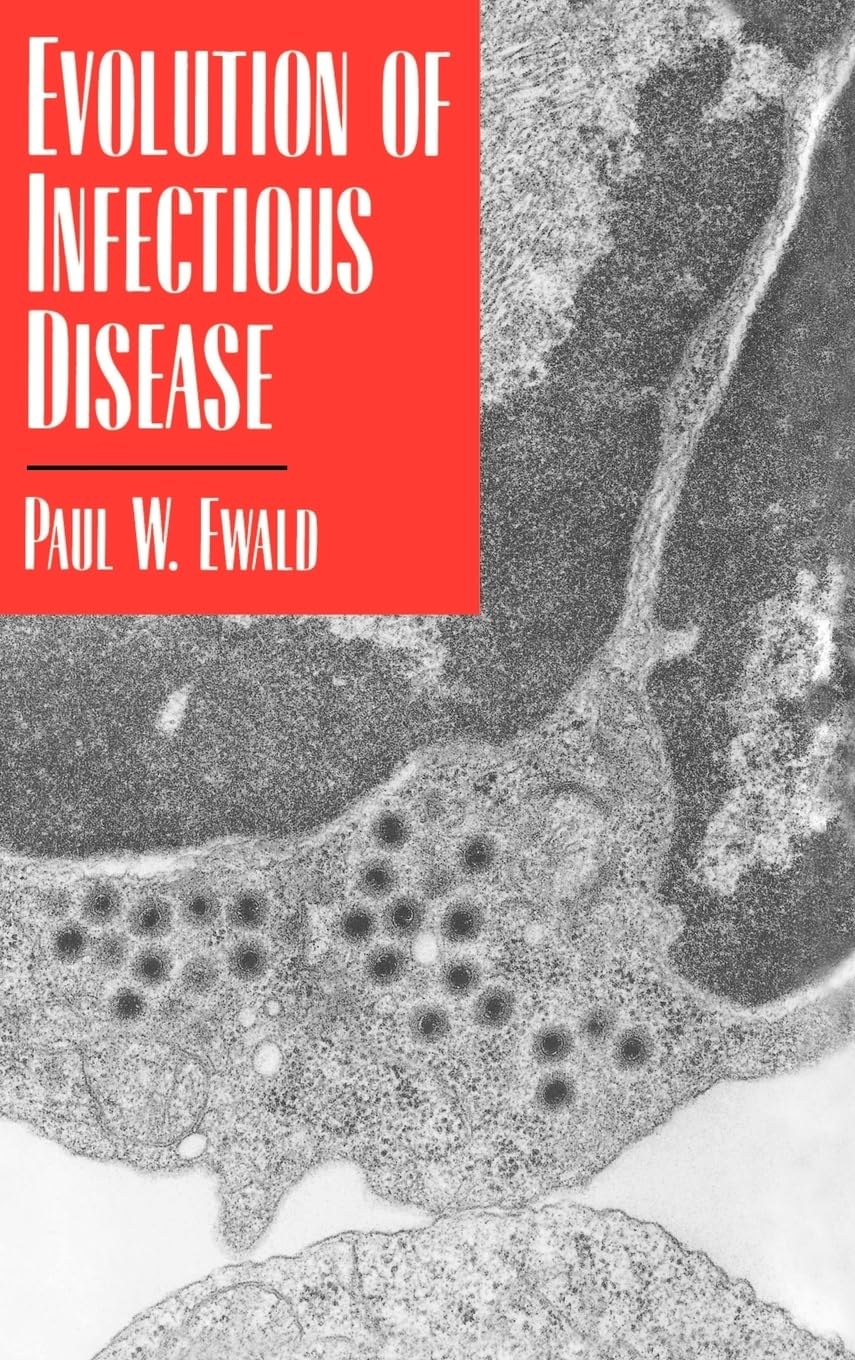



Findings from the field of evolutionary biology are yielding dramatic insights for health scientists, especially those involved in the fight against infectious diseases. This book is the first in-depth presentation of these insights. In detailing why the pathogens that cause malaria, smallpox, tuberculosis, and AIDS have their special kinds of deadliness, the book shows how efforts to control virtually all diseases would benefit from a more thorough application of evolutionary principles. When viewed from a Darwinian perspective, a pathogen is not simply a disease-causing agent, it is a self-replicating organism driven by evolutionary pressures to pass on as many copies of itself as possible. In this context, so-called "cultural vectors"--those aspects of human behavior and the human environment that allow spread of disease from immobilized people--become more important than ever. Interventions to control diseases don't simply hinder their spread but can cause pathogens and the diseases they engender to evolve into more benign forms. In fact, the union of health science with evolutionary biology offers an entirely new dimension to policy making, as the possibility of determining the future course of many diseases becomes a reality. By presenting the first detailed explanation of an evolutionary perspective on infectious disease, the author has achieved a genuine milestone in the synthesis of health science, epidemiology, and evolutionary biology. Written in a clear, accessible style, it is intended for a wide readership among professionals in these fields and general readers interested in science and health. ". . .Ewald's enthusiasm for his topic reaches out to the reader from every page. . . . Ewald's book will arouse considerable interest. The topic is important and is presented in a palatable form that will appeal to a wide readership."-- Politics and the Life Sciences "Paul Ewald, an evolutionary biologist at Amherst College, argues that HIV may have infected people benignly for decades, even centuries, before it started causing AIDS....The idea may sound radical, but it's not just flashy speculation. It reflects a growing awareness that parasites, like everything else in nature, evolve by natural selection."-- Newsweek "[Ewald] infects both students and colleagues with his enthusiasm."-- U.S. News and World Report "Of interest to professionals in health science, epidemiology, and evolutionary biology, but also accessible to general readers."-- SciTech Book News "Important...The arguments in this book are well supported by data. The references are germane, including classical articles and current literature. The book is well written and deserves the attention of biologists, health scientists, and enlightened planners."-- The Quarterly Review of Biology Findings from the field of evolutionary biology are yielding dramatic insights for health scientists, especially those involved in the fight against infectious diseases. This book is the first in-depth presentation of these insights. In detailing why the pathogens that cause malaria, smallpox, tuberculosis, and AIDS have their special kinds of deadliness, the book shows how efforts to control virtually all diseases would benefit from a more thorough application of evolutionary principles. When viewed from a Darwinian perspective, a pathogen is not simply a disease-causing agent, it is a self-replicating organism driven by evolutionary pressures to pass on as many copies of itself as possible. In this context, so-called "cultural vectors" - those aspects of human behavior and the human environment that allow spread of disease from immobilized people - become more important than ever. Interventions to control diseases don't simply hinder their spread but can cause pathogens and the diseases they engender to evolve into more benign forms. In fact, the union of health science with evolutionary biology offers an entirely new dimension to policy making, as the possibility of determining the future course of many diseases becomes a reality. By presenting the first detailed explanation of an evolutionary perspective on infectious disease, the author has achieved a genuine milestone in the synthesis of health science, epidemiology, and evolutionary biology. Written in a clear, accessible style, it is intended for a wide readership among professionals in these fields and general readers interested in science and health. Paul W. Ewald is a professor and Chair of the Biology Department at Amherst College, and holds an adjunct faculty appointment at the University of Massachusetts, Amherst. He has been named the first George E. Burch Fellow of Theoretic Medicine and Affiliated Sciences, a position awarded by the Smithsonian Institution and hosted by the Smithsonian Tropical Institute.